
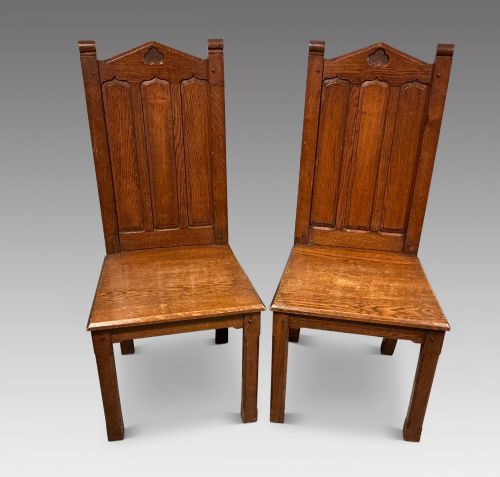


Victorian Timber Accent Seat
A Victorian timber accent seat brings enduring nineteenth-century character to an interior, offering functional seating shaped by regional cabinet-making traditions.
Victorian Timber Accent Seat
A Victorian timber accent seat encompasses a varied selection of nineteenth-century seating forms designed for halls, bedrooms, and reception spaces. These pieces function as decorative yet practical additions to a room, frequently featuring solid wood construction and carved detail.
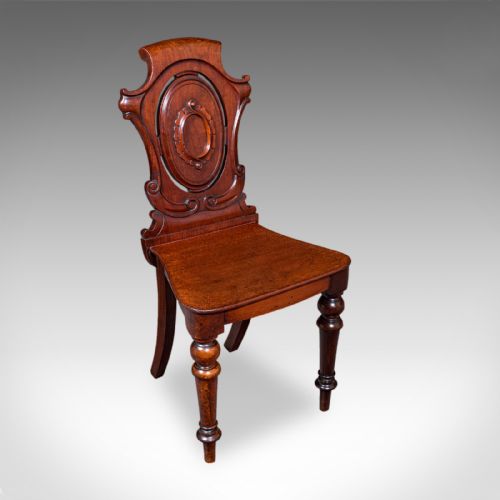
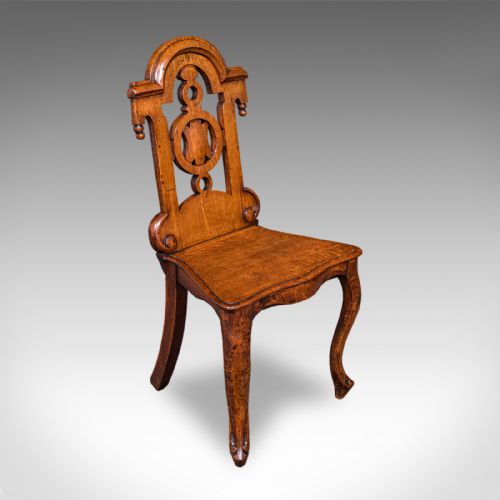
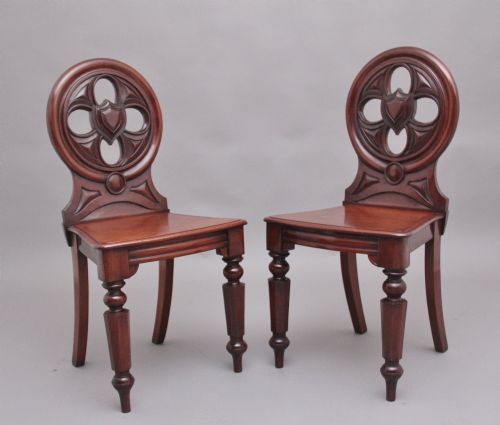
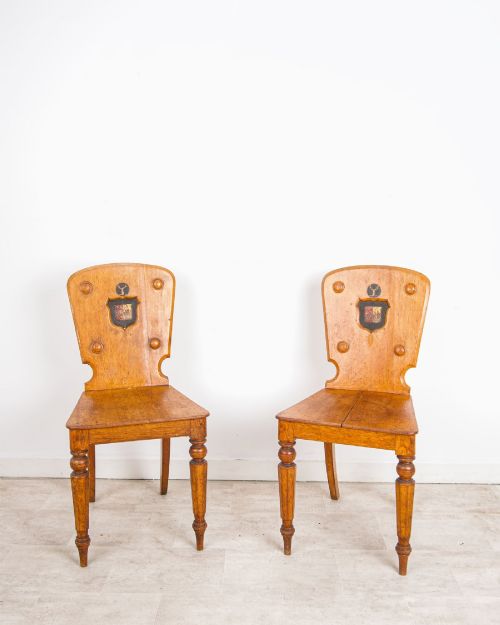
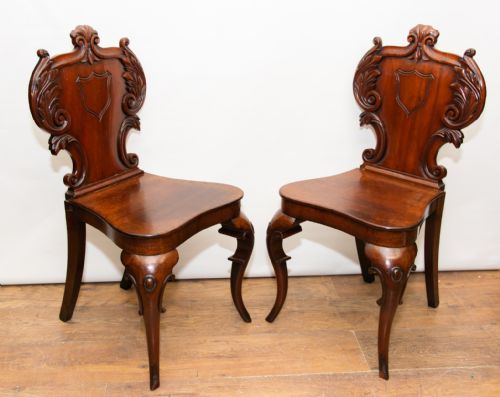
The version most commonly encountered on this page is the hall chair, often constructed in mahogany, oak, or walnut. These chairs typically present solid wooden seats alongside elaborately carved backs, including shield and shell motifs.
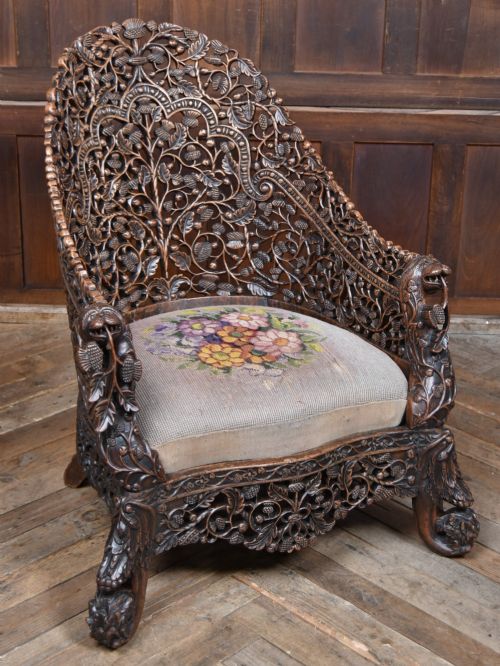
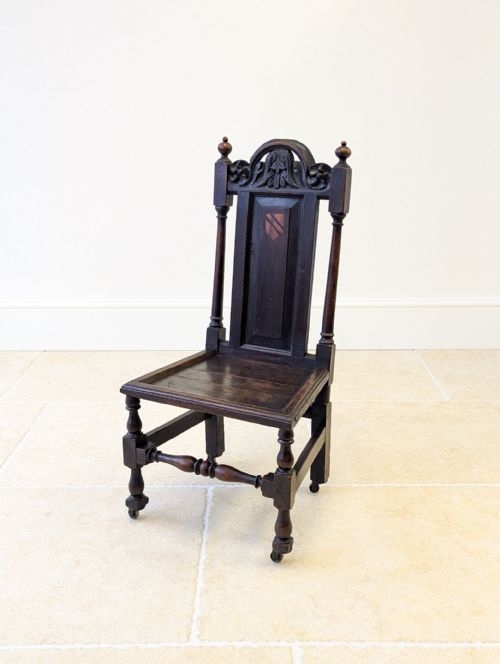
Beyond hall chairs, the selection includes armchairs, side chairs, nursing chairs, corner chairs, and rocking chairs. Styles range from Jacobean Revival and Gothic Revival to the Aesthetic Movement and English Country Vernacular.
How they were made
Makers utilised dense hardwoods such as mahogany, oak, walnut, beech, and elm to ensure structural integrity and longevity. Timber preparation involved traditional joinery techniques, allowing frames to withstand heavy daily use in busy household areas.
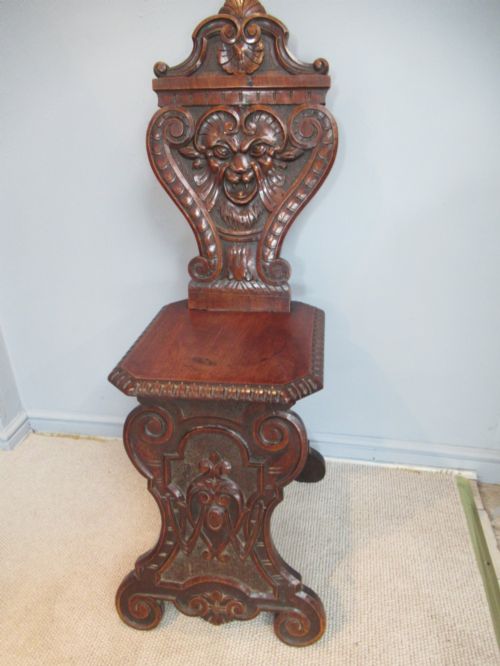
Carving represents a principal decorative method, with artisans applying detailed floral, heraldic, and geometric patterns directly into the solid wood backs. Brass fittings and modern or period fabric upholstery appear on specific armchair and bedroom variants to provide added comfort.
Listings feature eighteenth and nineteenth-century dates alongside styles ranging from Gothic Revival to English Country Vernacular.
What varies in quality
The calibre of a Victorian timber accent seat rests upon the selection of timber and the crispness of the hand-carved ornamentation. Superior examples display tightly grained hardwoods and deeply articulated carving that retains sharp definition across shield backs and crest rails.
Construction methods also dictate standard, with premier pieces demonstrating robust joinery that maintains structural rigidity over generations. The balance of proportions and the fidelity to specific historical styles, such as Gothic or Jacobean Revival, further distinguish finer workshop output.
Holland & Sons
The Victorian Timber Accent Seat Glossary
- Hall chair
- A rigid wooden seat traditionally placed in an entrance hall, characterised by a solid seat and an ornately carved back bearing crests or shields.
- Jacobean Revival
- A nineteenth-century decorative style drawing inspiration from seventeenth-century English furnishings, notable for heavy turned woodwork and geometric panelling.
- Gothic Revival
- An architectural and decorative movement utilising medieval motifs, pointed arches, and quatrefoil carvings within furniture design.
- Bobbin turning
- A woodwork technique producing cylindrical components shaped like a string of bobbins or spools, commonly found on nineteenth-century chair legs and framing.
- Aesthetic Movement
- A late nineteenth-century design approach emphasising visual beauty and artistic reform over heavy historical revivalism.
Victorian Timber Accent Seat: Frequently Asked Questions
Where were hall chairs placed?
Hall chairs stood in entrance halls, corridors, and reception spaces to offer brief seating for callers and visitors.
Their upright wooden construction discouraged lingering while adding a formal decorative element to the interior.
How do I identify a Victorian timber accent seat?
Look for dense hardwoods like mahogany and oak combined with nineteenth-century revival styles such as Gothic or Jacobean.
Characteristics include solid timber seats, carved shield backs, and traditional hand-joinery methods.
What is the difference between a side chair and a hall chair?
Side chairs are generally designed for general domestic placement in parlours or bedrooms with a focus on lightness.
Hall chairs feature rigid wooden seats and heavier carved backs intended for occasional use in entrance spaces.
Can I use these chairs in a modern home?
These pieces function effectively as accent seating in hallways, studies, and bedrooms alongside contemporary furnishings.
Their solid timber construction provides durable utility while introducing historic nineteenth-century character to a room.