



Victorian Tiered Trolley
A victorian tiered trolley is a practical multi-level serving stand designed to move food, books or drinks with ease.
Victorian Tiered Trolley
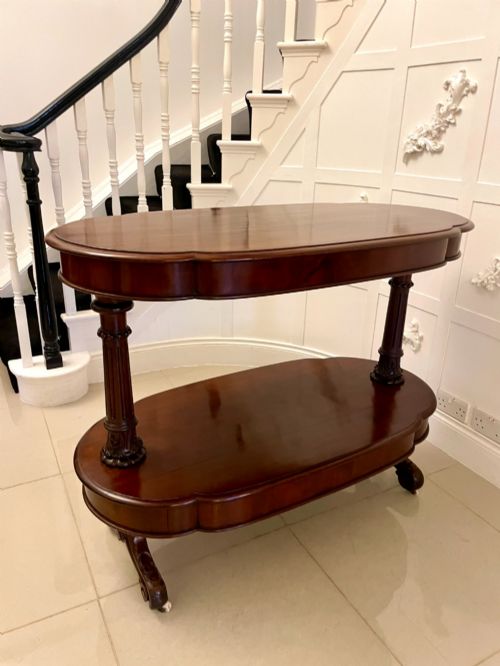
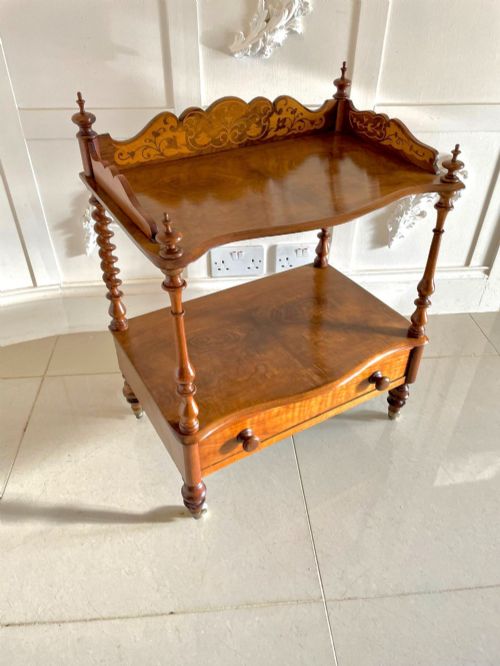
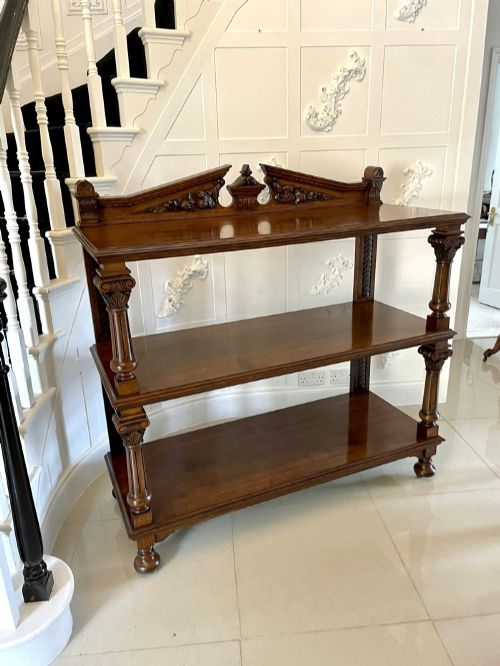
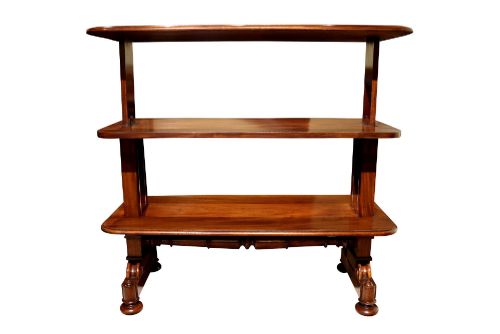
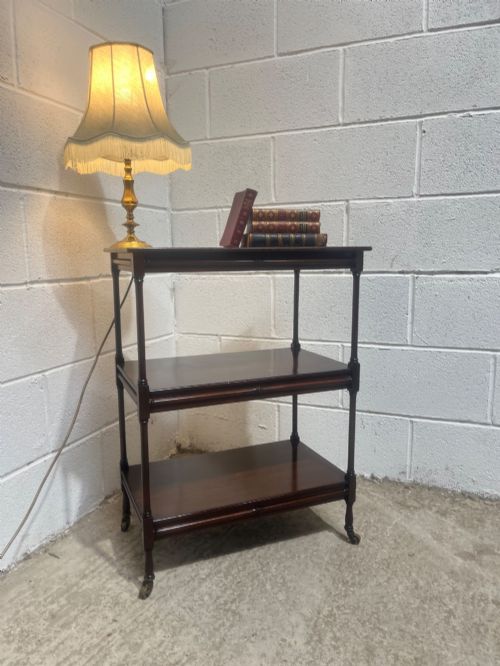
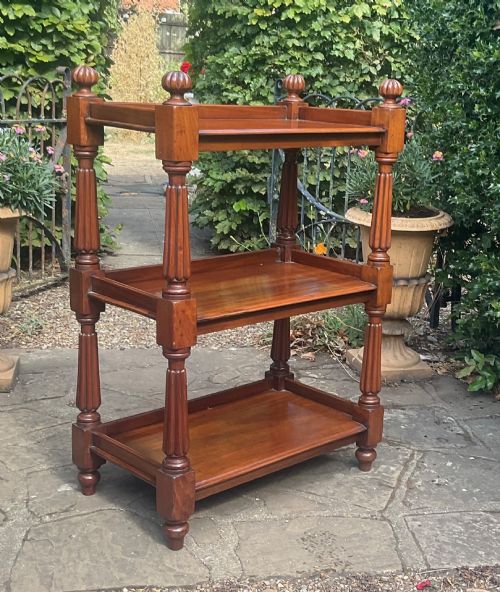
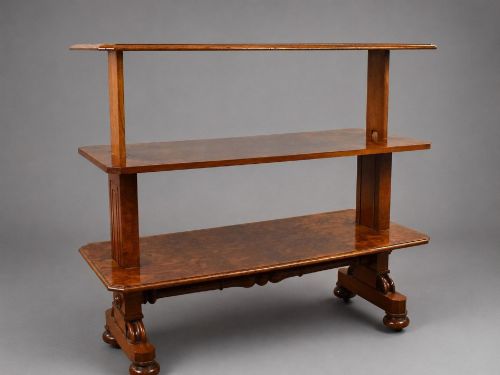
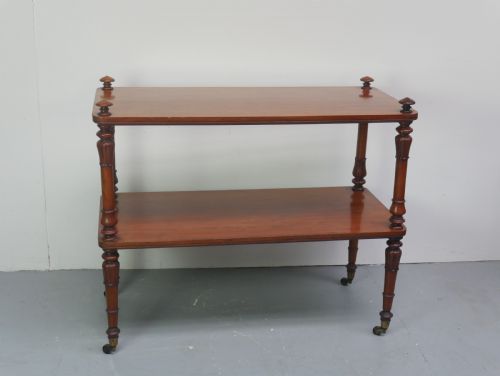
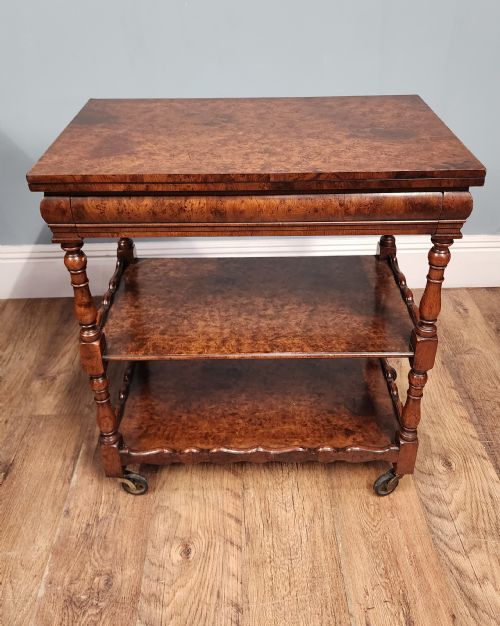
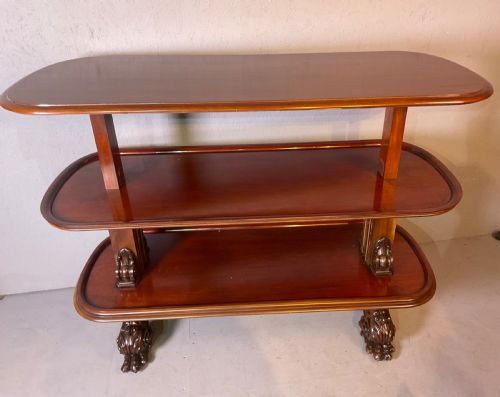
When you search for a victorian tiered trolley, you encounter practical multi-level wooden stands designed for serving and display during the nineteenth century. The examples on this page primarily take the form of three-tier buffets, etageres and dumb waiters in mahogany, walnut and oak.
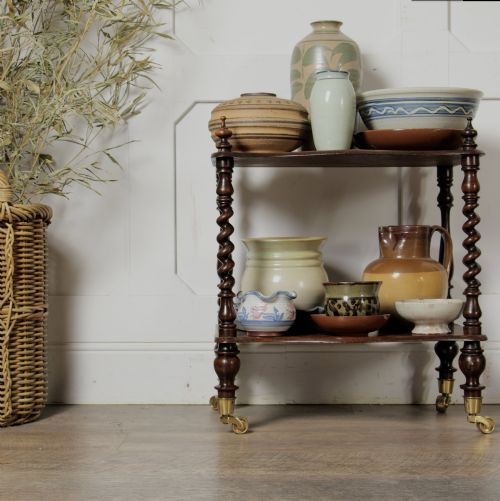
Makers constructed these pieces with multiple tiers supported by turned columns, barley twist supports or upright members, often fitted with original castors for movement. Many incorporate adjustable mechanisms, drop leaves or small cabinets to serve dining rooms and drawing rooms effectively.
How they were made
Cabinet makers built these pieces using solid timbers like mahogany, oak and walnut, alongside decorative veneers such as burr walnut. They incorporated structural details including barley twist turnings, carved enrichments and robust framing to support multiple heavy shelves.
Functionality dictated the construction, leading to rise-and-fall mechanisms, telescopic shafts, folding frames and brass castors. These mechanical elements allowed shelves to adjust in height or collapse entirely when not in use.
Some Victorian dining stands include ingenious folding mechanisms so they could vanish flat against a wall after tea.
What varies in quality
The distinction between standard utility items and superior examples lies in the selection of timbers, the crispness of carved details and the sophistication of mechanical parts. Pieces featuring figured veneers, complex barley twist turnings and stable rise-and-fall actions represent higher standards of workshop production.
Attribution to known firms like Gillows or Maple & Co elevates the status of a piece, reflecting finer joinery and thoughtful proportion. Original castors, smooth-running mechanisms and well-matched grain patterns separate everyday furniture from workshop masterpieces.
Gillows·Maple & Co
The Victorian Tiered Trolley Glossary
- Dumb Waiter
- A multi-tiered serving stand used in dining rooms to hold dishes without needing servants present. They often feature revolving or fixed shelves supported on central pedestals or corner columns.
- Buffet
- A serving piece with multiple shelves designed for displaying silver, ceramics or food during meals. These items frequently stand against dining room walls or move on castors.
- Etagere
- A set of open shelves for displaying ornaments and small objects, constructed with slender upright supports. The form became popular during the nineteenth century for drawing room use.
- Rise and Fall
- A mechanical feature allowing tiers to adjust in height through a central screw or ratchet system. This mechanism enabled the stand to transform for different serving requirements.
- Barley Twist
- A spiral-turned wooden column used as a structural support for legs and uprights. This decorative turning style appeared frequently across nineteenth-century tables and stands.
Victorian Tiered Trolley: Frequently Asked Questions
What is a dumb waiter?
A dumb waiter is a multi-tiered stand used during the nineteenth century to hold food, drinks or tableware in the dining room.
These pieces allowed diners to serve themselves without constant attendance from domestic staff during meals.
How were tiered trolleys used?
Victorian households utilised these stands to transport dishes between the kitchen and dining room or to display books and ornaments in the parlour.
The inclusion of castors made it simple to wheel the furniture across carpets and wooden floors as needed.
What is a rise and fall mechanism?
A rise and fall mechanism allows the shelves on a trolley or dumb waiter to adjust vertically using a central threaded rod or ratchet.
This clever engineering let owners alter the height of individual tiers for different serving tasks or storage.
How do I care for mahogany furniture?
Mahogany pieces require gentle dusting with a soft dry cloth and protection from direct sunlight and extreme temperature shifts to prevent the wood from drying out.
Applying a traditional beeswax polish occasionally helps nourish the timber and maintain its rich surface sheen.