

Victorian Tiered Shelves
Victorian tiered shelves bring multi-level display space into a room, combining practical storage with the decorative charm of the nineteenth century.
Victorian Tiered Shelves
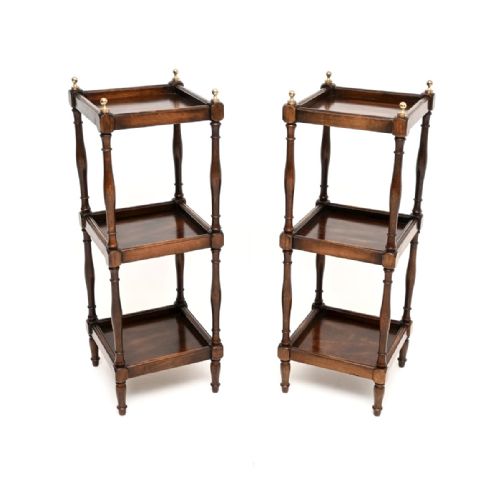
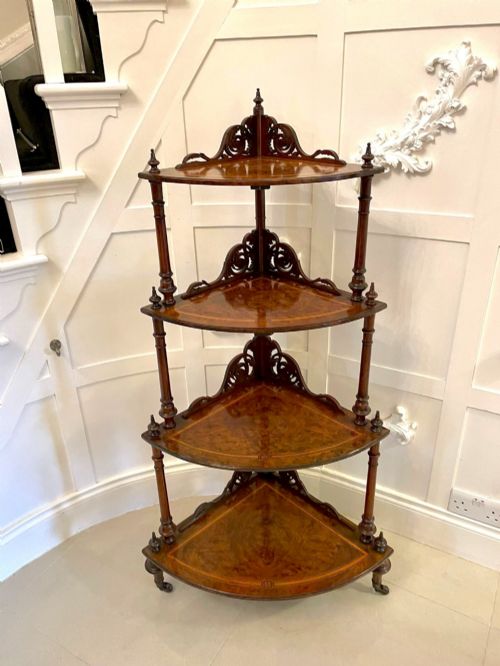
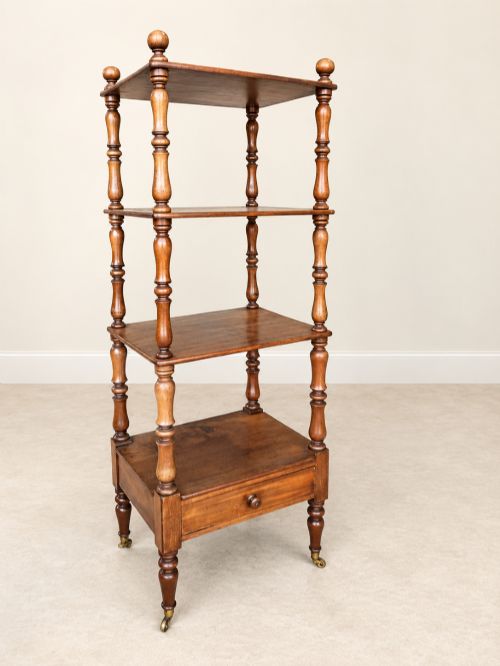
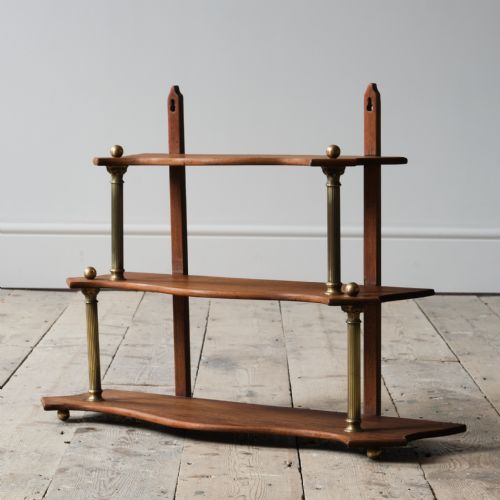
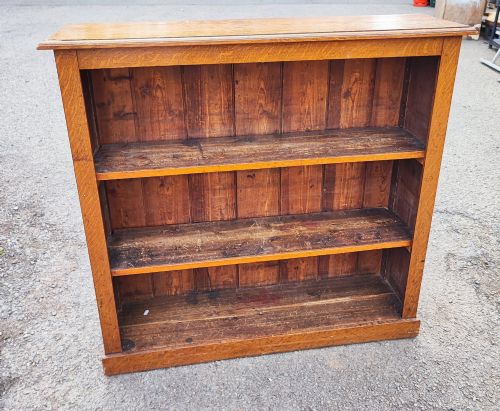
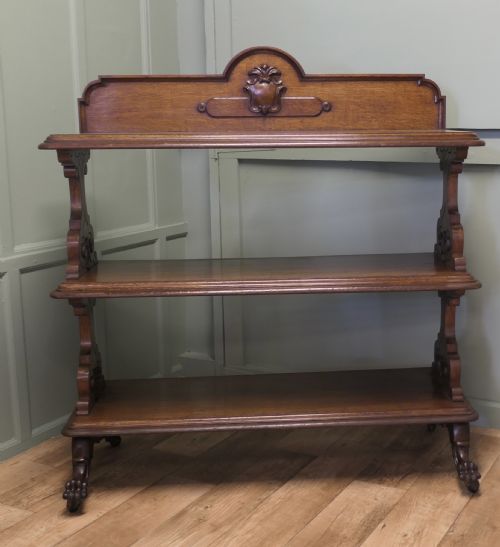
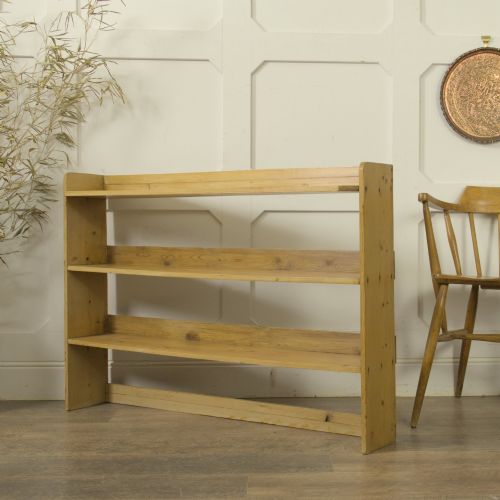
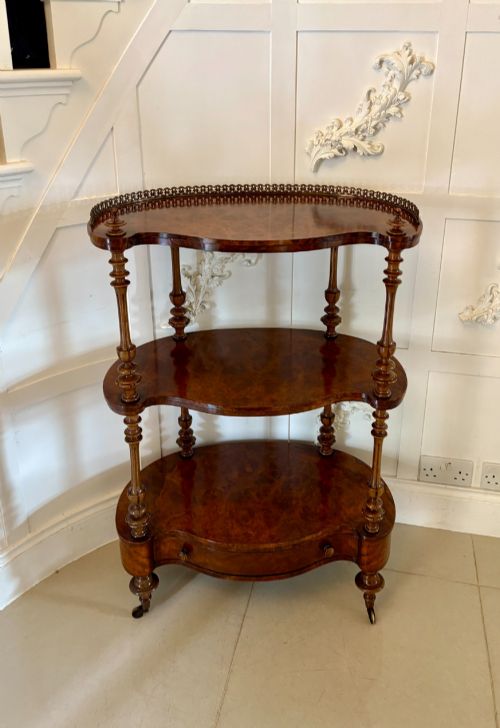
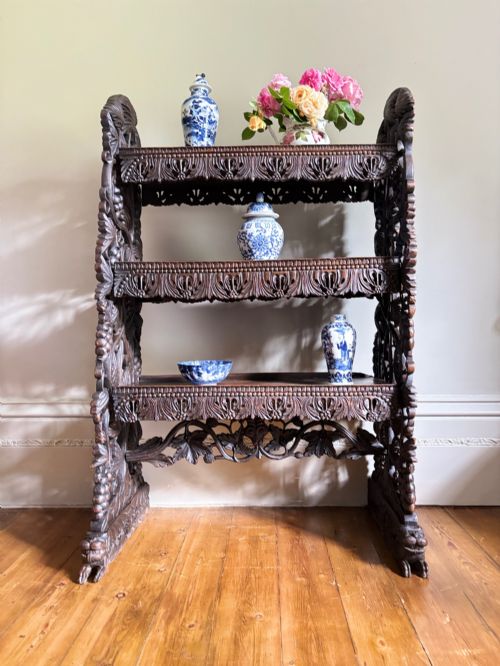
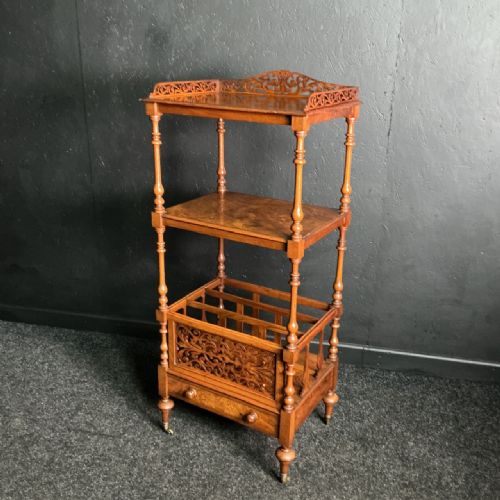
When searching for victorian tiered shelves, buyers encounter multi-tiered furniture designed to hold books, ornaments and display items across several levels. These pieces originate predominantly from the nineteenth century, encompassing distinct forms such as whatnots, etageres, wall-hanging shelves, and corner units.
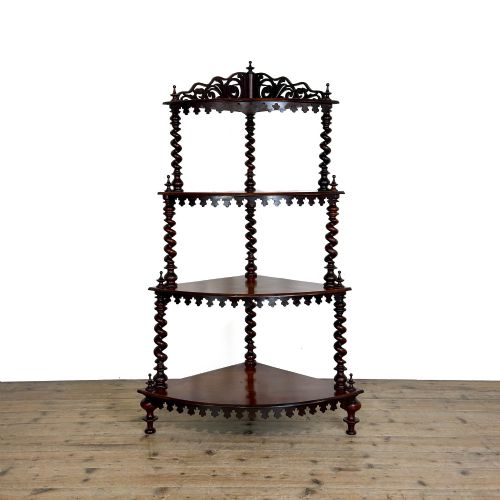
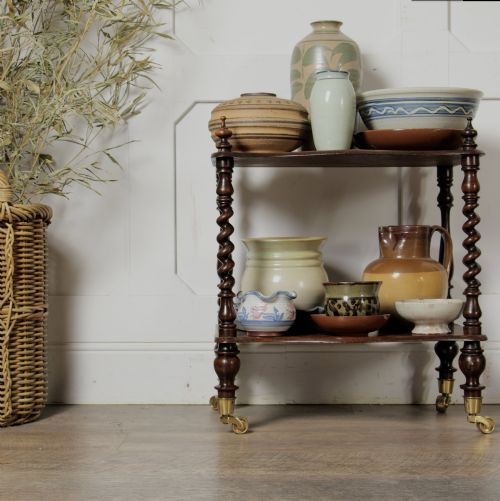
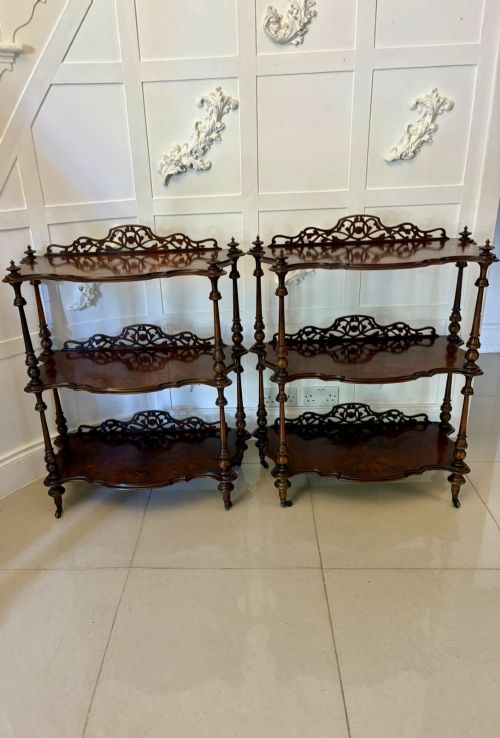
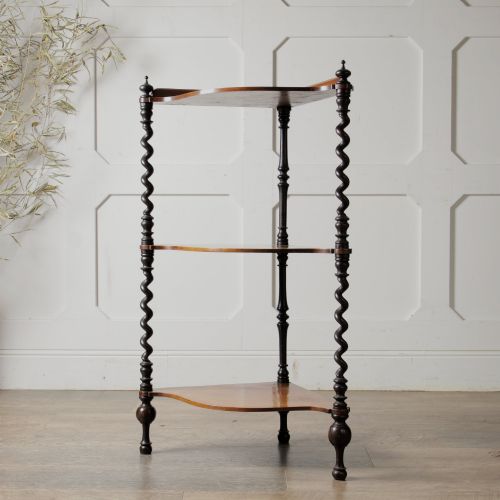
The most common formats on this page are freestanding whatnots and etageres featuring three or more tiers supported by turned or barley twist columns. Alongside these, wall-mounted variations and corner cabinets provide space-saving solutions for domestic interiors.
Stylistic influences range from classic Victorian walnut and mahogany designs to more decorative expressions such as the Aesthetic Movement, Anglo-Indian craftsmanship, and ebonised finishes. Each piece reflects the nineteenth-century domestic appetite for organised display surfaces.
How they were made
Cabinet makers utilised a selection of dense hardwoods including mahogany, walnut, burr walnut, and rosewood to construct the tiers and upright supports. Exotic materials such as padauk and teak also appear, often finished with brass fittings, gilt metal accents, or ebonised and parcel-gilded surfaces.
Construction relied on sturdy joinery to bear the weight of multiple shelves, incorporating turned barley twist columns, shaped serpentine edges, and carved detailing. Wall-hung versions utilised secure mounting brackets, while freestanding etageres and whatnots balanced stability with slender profiles.
Victorian households loved stacking things so much they even invented corner whatnots just to ensure zero dust-collecting empty spaces remained.
What varies in quality
The choice of timber underpins the distinction between standard utilitarian shelving and high-end parlour pieces, with figured burr walnut and rich rosewood marking out superior examples. Fine grain matching across multiple tiers demonstrates greater cabinet-making skill.
Detailing determines the upper tier of quality, seen in serpentine-shaped shelves, intricate carved mounts, parcel gilding, and the integration of brass or gilt metal hardware rather than plain turned supports alone.
The Victorian Tiered Shelves Glossary
- Whatnot
- A piece of furniture consisting of several open shelves for displaying ornaments or books. Originating in the eighteenth century, it became a staple of Victorian drawing rooms.
- Etagere
- A set of open shelves for displaying small objects or bric-a-brac. These pieces often feature slender uprights and multiple tiers.
- Barley twist
- A carved wooden column resembling a twisted rope. This turning technique was widely utilised in nineteenth-century furniture supports.
- Serpentine
- A curved line or edge that waves inward and outward. High-quality Victorian tiered pieces frequently employ serpentine shelves to soften the silhouette.
- Aesthetic Movement
- A late nineteenth-century design style emphasising visual beauty over narrative content. Pieces in this style often incorporate ebonised wood and Japanese-inspired motifs.
Victorian Tiered Shelves: Frequently Asked Questions
Where were tiered shelves placed?
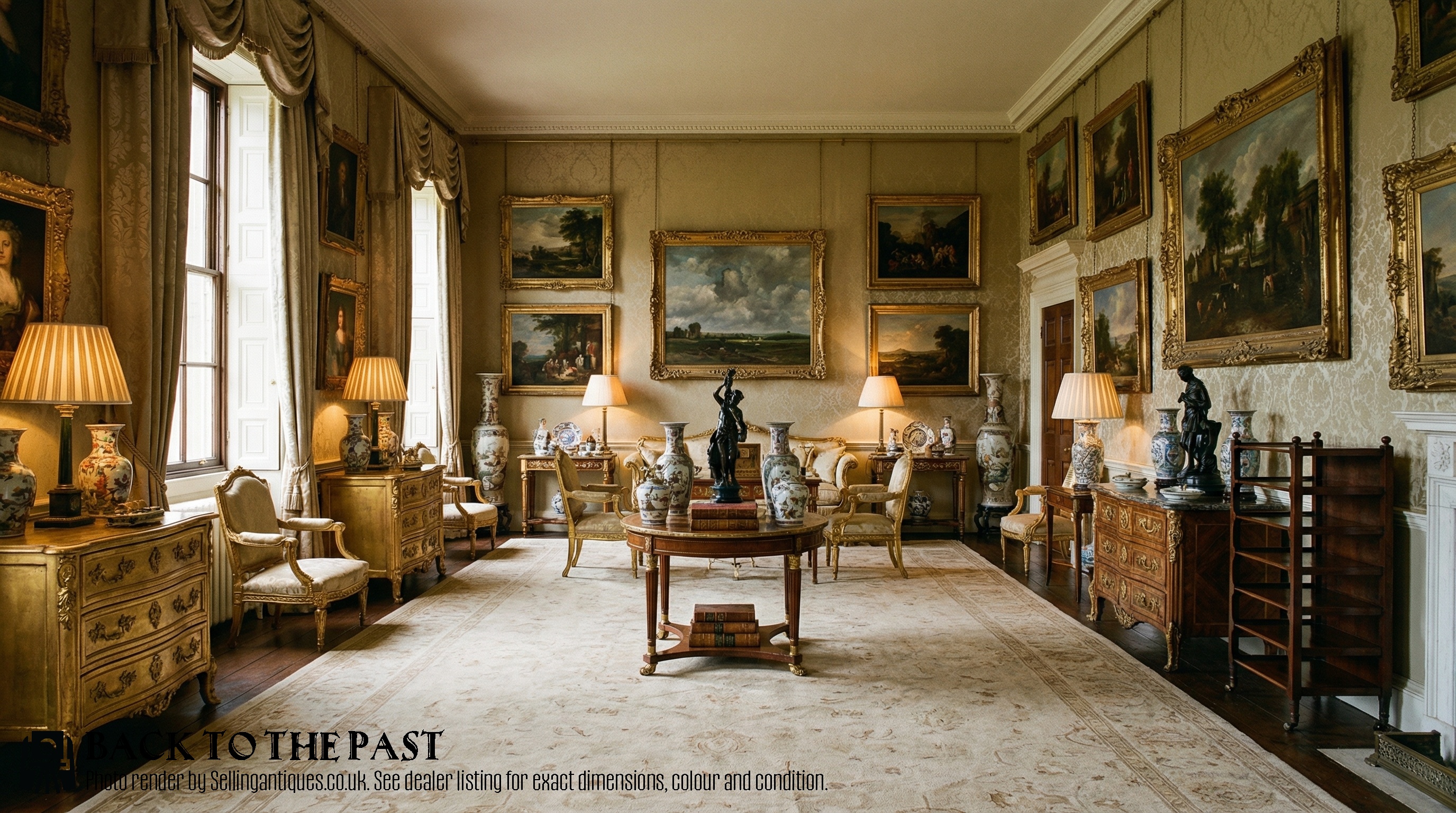
These multi-level units found homes primarily in Victorian parlours, drawing rooms, and studies where display space was at a premium. They stood against walls, filled awkward corners, or hung directly from picture rails to hold books and decorative ceramics.
Their open construction allowed light to pass through while keeping collections organised and visible from various angles within the room.
How do I care for wood tiers?
Maintenance requires regular dusting with a soft, dry cloth to prevent particulate accumulation on the horizontal surfaces. Avoiding direct sunlight and maintaining stable room humidity protects polished hardwoods like walnut and mahogany from drying out.
Applying a traditional beeswax polish occasionally preserves the lustre of the timber without building up heavy chemical residues.
What is the difference between a whatnot and an etagere?
While both describe multi-tiered open shelving, the term whatnot traditionally refers to freestanding multi-shelf furniture used for general storage and display. An etagere leans slightly more toward decorative display with a lighter, more ornate framework.
In nineteenth-century usage, makers often applied both terms interchangeably depending on the regional workshop and the specific proportions of the piece.
Can these shelves support heavy books?
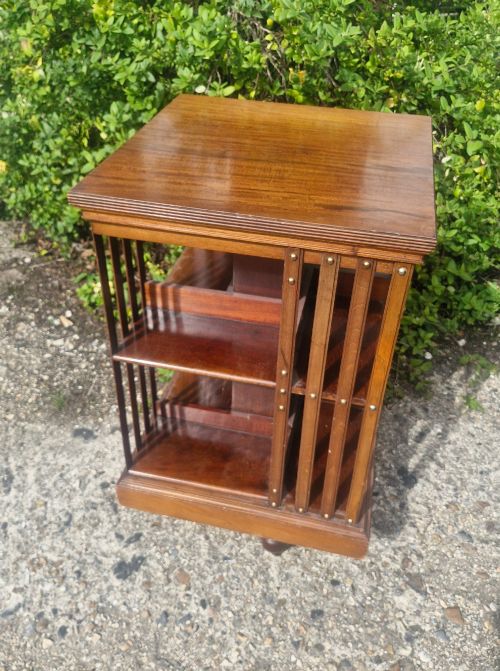
Freestanding etageres and large walnut bookcases or multi-tier units accommodate substantial volumes due to their robust timber construction and sturdy upright supports. Lighter wall-hanging shelves suit display plates, small ornaments, and lighter volumes rather than heavy reference sets.
Assessing the thickness of the timber and the strength of the vertical columns helps determine the appropriate weight capacity for each individual piece.