


Victorian Tester Bed
When you search for a victorian tester bed, you enter a world of towering timbers and gleaming metal canopies built for grand nineteenth-century chambers.
Victorian Tester Bed
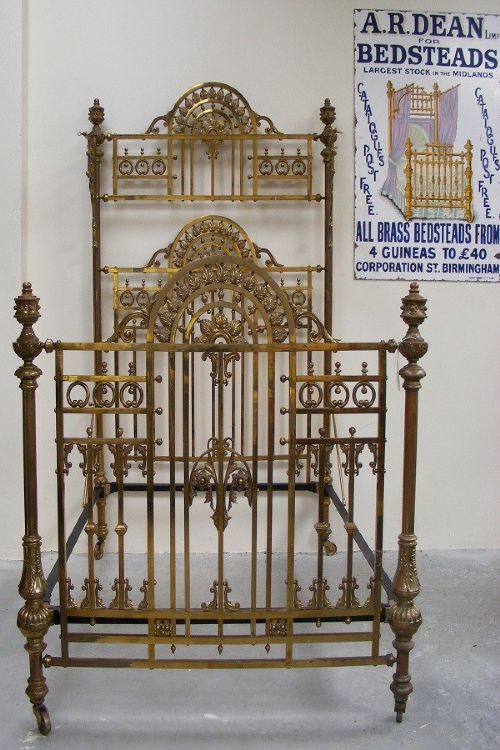
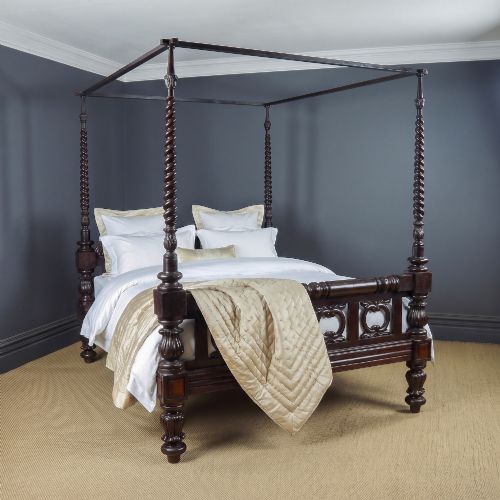
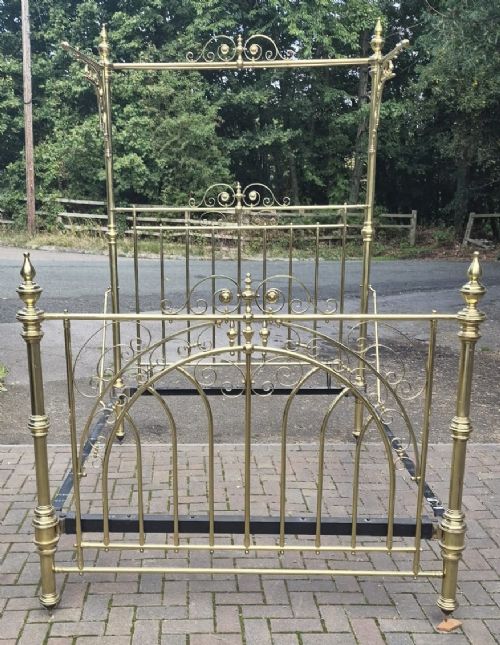
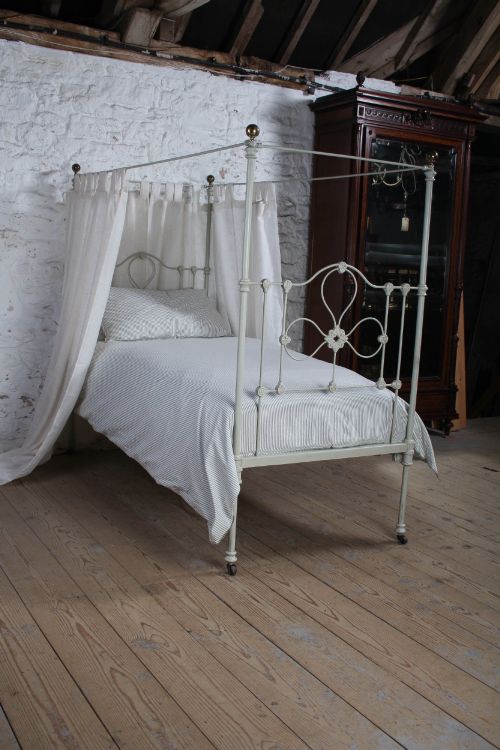
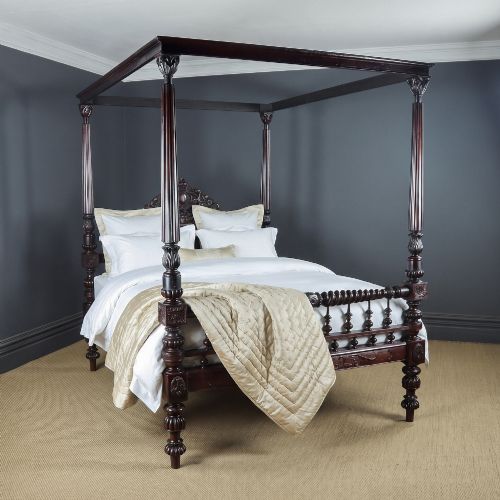
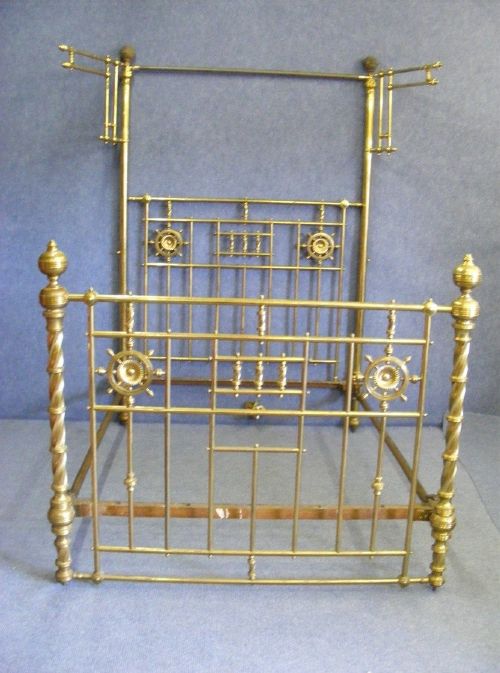
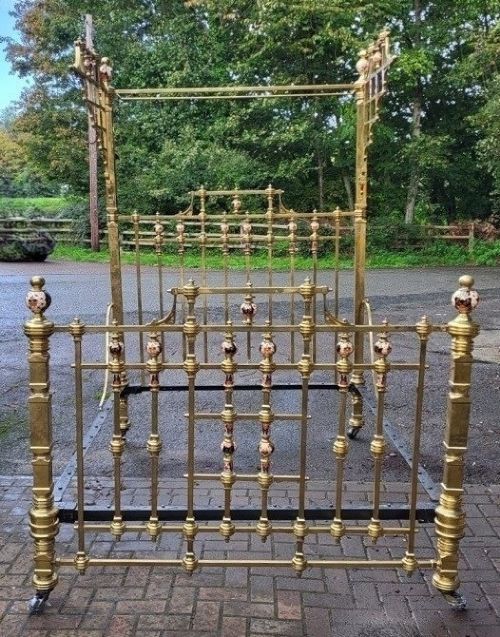
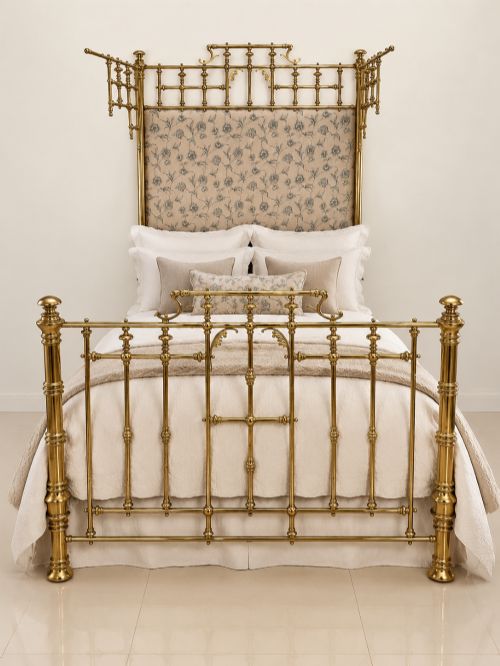
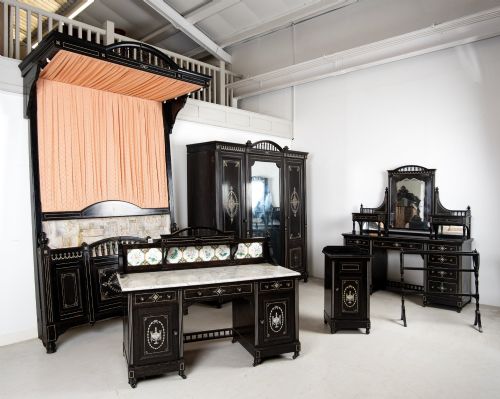
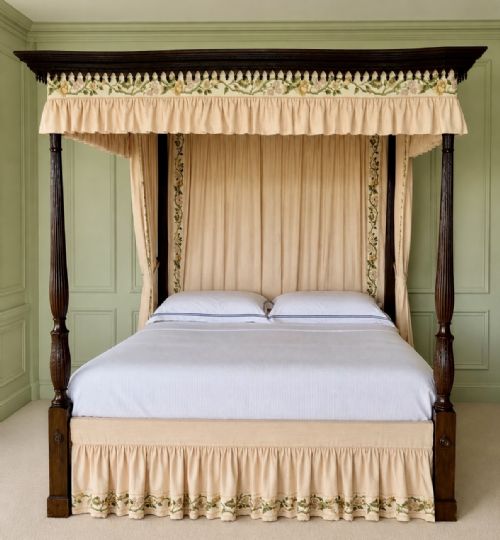
A victorian tester bed is a substantial sleeping platform topped by a wooden or fabric canopy, known as a tester, supported by four corner posts or extending from a wall-mounted half tester frame. The pieces seen here span from full four-poster structures to half tester bedsteads designed to project outward from the bedhead.
Most examples originate from the nineteenth century, encompassing solid hardwoods like mahogany and oak alongside metal frames constructed from brass, iron, and cast iron. Collectors encounter regional interpretations, including Anglo-Indian colonial pieces alongside standard Victorian workshop production.
How they were made
Makers shaped these frames from dense hardwoods like mahogany, burr walnut, and oak, often employing hand-carving for the pillars and panelled bases. Metal versions utilised combinations of solid brass, iron, and cast iron, sometimes featuring porcelain details or gilded finishes.
Joinery methods relied on sturdy knockdown bolts and pegged tenons to support the heavy overhead canopies and tester structures.
Listings feature woods such as mahogany, satin birch, burr walnut, and oak alongside solid brass and cast iron.
What varies in quality
Excellence in a victorian tester bed rests upon the ambition of the carving and the purity of the materials, with exhibition-quality brass frames and hand-carved flame mahogany standing apart from simpler workshop pieces. The handling of secondary timbers and the crispness of applied mouldings define the upper tiers of the craft.
Proportion and scale also dictate the hierarchy, where grander proportions, integrated panel work, and documented maker attribution elevate certain bedsteads far above standard domestic production.
Howard & Sons·RW Winfield·JAS Shoolbred
The Victorian Tester Bed Glossary
- Tester
- The flat wooden or fabric-lined canopy suspended over the upper portion or the entirety of a bedstead. It originally served to retain warmth and keep out drafts in large rooms.
- Half Tester
- A bedstead featuring a canopy that extends only partway over the head of the bed, supported by the headboard or two forward posts rather than four full pillars.
- Flame Mahogany
- A cut of mahogany timber displaying a distinctive feather-like or flame grain pattern, prized by cabinetmakers for prominent panels.
- Bedstead
- The framework of a bed, including the headboard, footboard, and side rails, designed to hold a mattress without necessarily including the hangings.
- Pollard Oak
- Oak timber taken from trees that have been pollarded, producing dense clusters of circular knots and a highly decorative grain figure.
Victorian Tester Bed: Frequently Asked Questions
How do I assemble a tester bed?
These frames rely on heavy iron bed bolts and tenon joints that slot together at the corners before the tester canopy is secured to the upper posts.
Working with a partner is essential to support the substantial weight of the timber or brass overhead structure during construction.
Will modern mattresses fit antique beds?
Nineteenth-century dimensions often differ slightly from contemporary standard sizes like king or queen, requiring careful measurement of the interior rails.
Many buyers commission bespoke mattresses or utilise custom wooden slats to ensure modern foundations sit securely within the antique frame.
How do I care for brass and iron frames?
Metal frames require dusting with a dry cloth and occasional gentle cleaning to preserve the original lacquer or patina on the brass components.
Harsh metal polishes should be avoided unless stripping modern lacquer, as they can remove aged patination built up over the decades.