

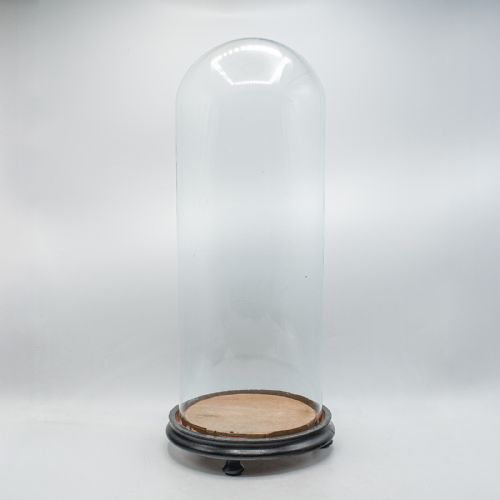


Victorian Taxidermy Showcase
These Victorian taxidermy showcase pieces are glass domes and wooden bases designed to preserve and display specimen mounts in period interiors.
Victorian Taxidermy Showcase
A victorian taxidermy showcase typically takes the form of a blown glass dome seated upon a timber base, designed to protect delicate specimens from dust and handling. The form ranges from tall, slender cylinders to wide ovoid covers intended for multi-specimen displays.
Most examples encountered on this page originate from the Victorian and Edwardian periods, utilising standard commercial glass production methods of the nineteenth and early twentieth centuries. Bases vary from simple turned ebonised wood to fitted mahogany or pine platforms.
Collectors frequently select these enclosures for preserved birds and mammals, though many originally housed clocks or botanical specimens. The proportion of the glass to the wooden plinth defines the visual weight of each individual piece.
Materials and Construction
The primary material is blown glass, shaped by hand into heavy transparent bells that often display slight surface imperfections, bubbles, and minor thickness variations characteristic of the era. These covers sit closely within rebated wooden bases turned from timbers such as oak, mahogany, pine, and ebonised wood.
Interiors frequently incorporate foundational layers of fabric, velvet, felt, or baize to mask the wooden floor and provide a dark, neutral background for mounted specimens. Timber bases are finished with traditional dark stains or polished varnishes to complement domestic furniture.
Victorian Taxidermy Showcase Retail Price Guide 2026
Typical asking prices for victorian taxidermy showcase among the pieces listed under this phrase on Sellingantiques today, from the lower quarter to the upper quarter. They describe what is for sale here now, not the wider market.
Some wide domes served a double life guarding carriage clocks before retiring to permanent duty under bird feathers.
Evaluating Quality and Period Detail
Quality in a victorian taxidermy showcase lies in the clarity and weight of the glass dome, with heavier, distortion-free blown glass representing superior manufacturing standards. Bases constructed from dense hardwoods like mahogany demonstrate finer cabinet work than simpler softwood or ebonised pine alternatives.
The precision of the fit between the glass edge and the groove in the wooden base indicates the original craftsmanship. Superior examples retain original interior linings such as clean baize or velvet without staining or moth damage.
Davis and Co Bristol
The Victorian Taxidermy Showcase Glossary
- Cloche
- A bell-shaped glass cover used to protect food, plants, or taxidermy specimens from dust. The term derives from the French word for bell.
- Ebonised wood
- Timber treated with a dark stain or finish to imitate expensive ebony. This treatment was common on Victorian display bases.
- Baize
- A coarse woolen material resembling felt, frequently used to line the interior floor of display domes. It provides a soft contrasting surface for specimens.
- Ovoid
- Egg-shaped in profile, describing glass domes with curved contours rather than straight vertical cylinders. This shape offers wider internal volume.
- Rebate
- A recessed groove cut into the edge of a wooden base to securely seat the rim of the glass dome.
Victorian Taxidermy Showcase: Frequently Asked Questions
How do I clean inside a glass dome?
Most glass domes lift away from the wooden base entirely, allowing you to access the interior directly.
Lift the glass with both hands on a flat surface and clean it with mild glass cleaner before replacing it over the base.
Can these domes be used for modern taxidermy?
These historical glass covers and wooden bases accommodate contemporary taxidermy mounts provided the dimensions match.
Measure the height and base diameter of your specimen carefully against the internal space available under the dome.
How do I tell Victorian domes from Edwardian ones?
Victorian examples often feature deeper ebonised or mahogany bases paired with heavier, hand-blown glass displaying distinct bubbles and ripples.
Edwardian pieces tend toward simpler oak or lighter timber plinths with slightly more uniform glass manufacturing techniques.
What is the difference between a dome and a showcase?
A dome strictly refers to the glass bell cover and its matching base, whereas a showcase can also describe glazed cabinet furniture.
In the context of these listings, both terms describe protective glass enclosures built for displaying specimens.