

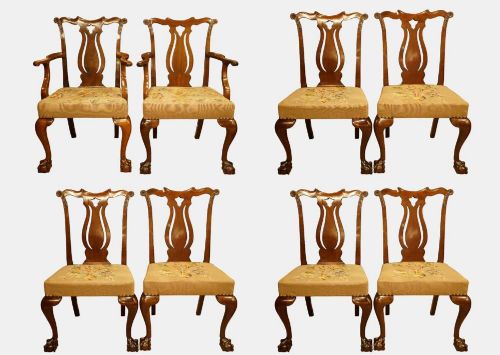


Victorian Tapestry Side Chair
A victorian tapestry side chair brings rich nineteenth-century needlework and polished timber together for smaller seating spaces.
Victorian Tapestry Side Chair
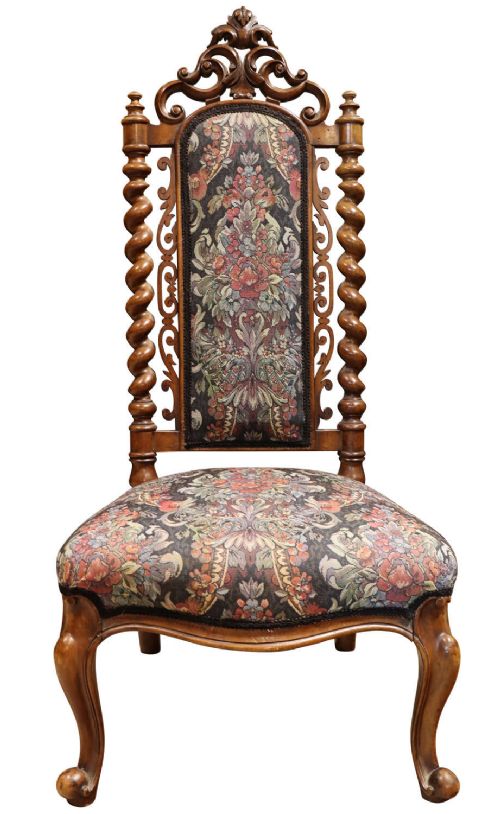
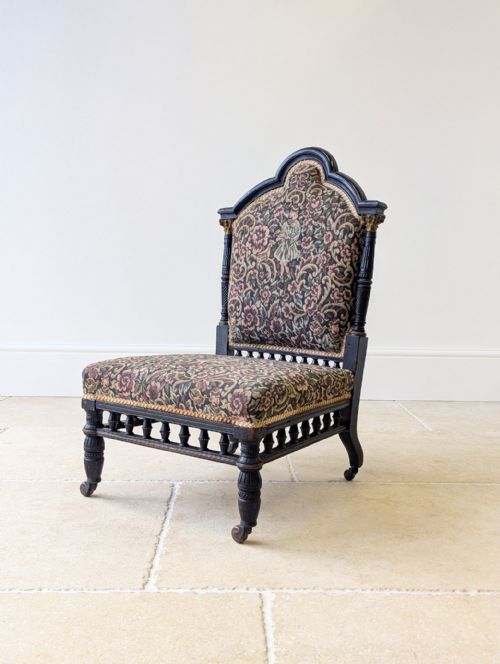
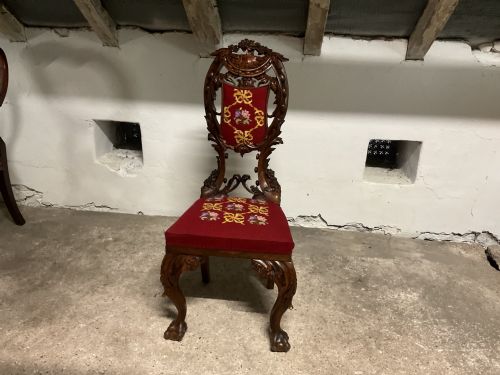
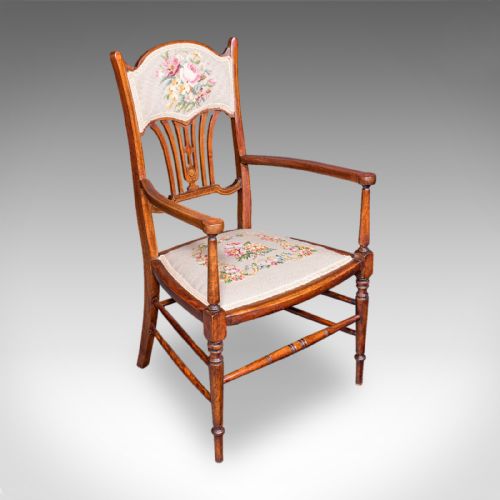
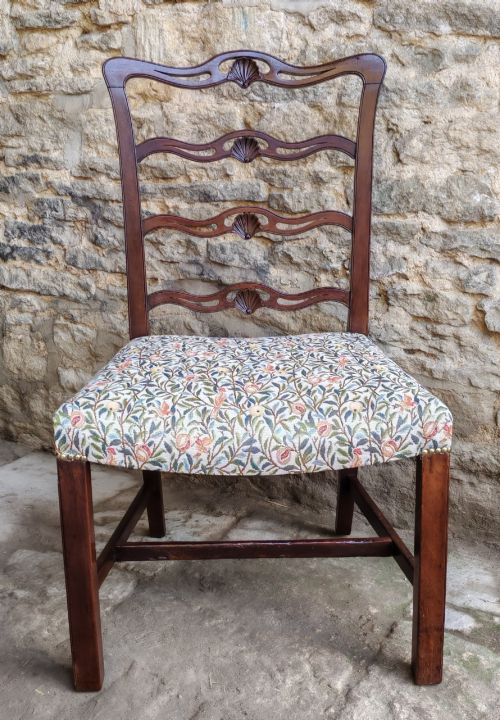
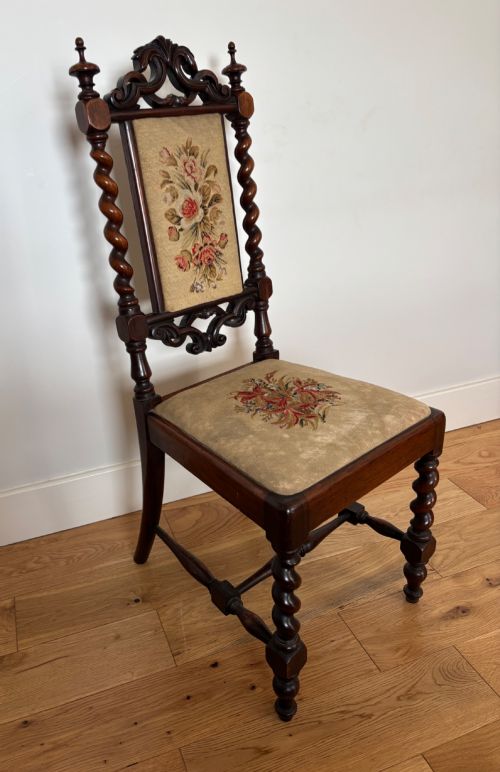
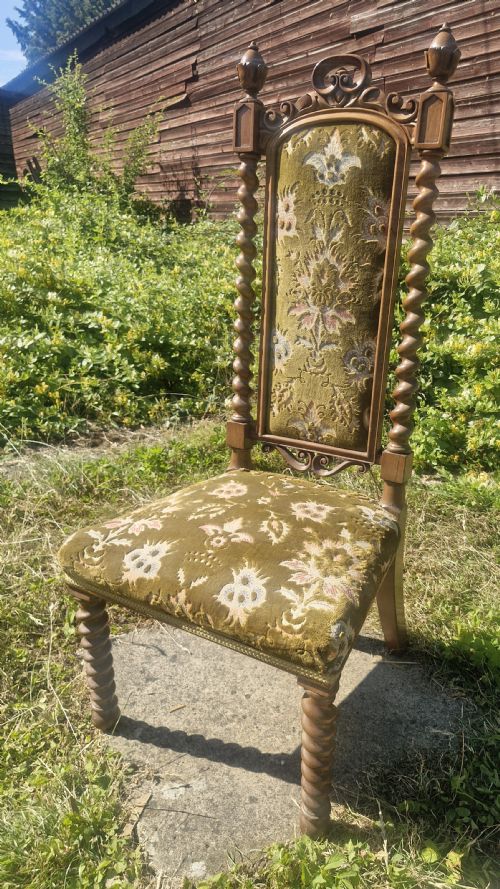
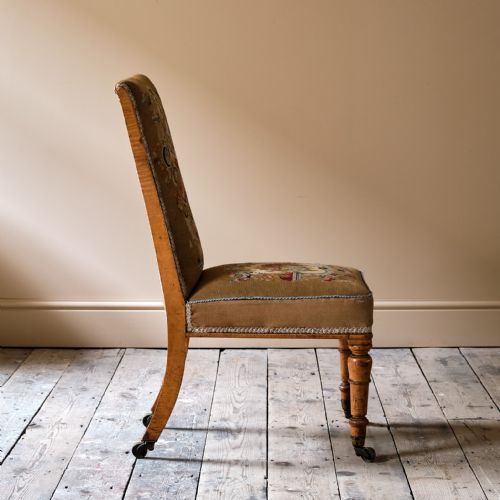
A victorian tapestry side chair is a smaller seat designed to sit against a wall or pull up to a table, distinct from larger armchairs through its open sides and upright stance. These pieces appear frequently in walnut and rosewood, often featuring carved frames and needlepoint or tapestry fabric seats.
The selections span the nineteenth century, taking forms such as salon chairs, nursing chairs, and dining seats. Makers of the period drew on diverse revivals, producing Gothic, Chippendale, and Rococo styles alongside cleaner Aesthetic Movement and Art Nouveau lines.
How They Were Made
Frames rely on dense hardwoods like mahogany, walnut, rosewood, and oak, shaped with hand-carving and sturdy joinery. Timber selection dictates the structural weight, ranging from dark mahogany and warm rosewood to ebonised finishes.
Upholstery relies on heavy textile and tapestry fabric, secured over webbing and stuffing to create firm, decorative pads. Needlepoint work forms a durable surface, often displaying floral or patterned designs stitched directly into the textile.
Victorian Tapestry Side Chair Retail Price Guide 2026
Typical asking prices for victorian tapestry side chair among the pieces listed under this phrase on Sellingantiques today, from the lower quarter to the upper quarter. They describe what is for sale here now, not the wider market.
Victorian children sometimes sat on miniature rosewood thrones just to match their parents' grand parlor seating.
What Varies in Quality
Timber carving defines the upper tier of execution, showing sharp, deep relief work rather than shallow, mechanical shaping. Superior examples display thoughtful grain matching and robust frame construction that withstands centuries of use.
The condition and fineness of the tapestry fabric or needlepoint determine much of the visual character. Tightly worked stitches and well-preserved textile designs elevate a piece far above simpler, plain-covered counterparts.
Warings·R Whytock of Edinburgh·Gillows
The Victorian Tapestry Side Chair Glossary
- Tapestry
- A heavy hand-woven or needlepoint textile depicting decorative patterns or pictorial scenes. It serves as the primary upholstery surface for seats in this category.
- Needlepoint
- A type of canvas work embroidery executed with a yarn threaded through a stiff open-weave mesh. It forms the durable, colourful seat covers found on many nineteenth-century chairs.
- Side Chair
- A small, armless chair intended for general use around a room or dining table. These pieces remain light and easily moved.
- Nursing Chair
- A low-seated chair designed for comfort, historically used for tending infants or sitting near nursery fires. They often feature generous upholstered backs and lower frames.
- Prie-Dieu
- A specialised prayer chair featuring a low seat and an upper rest for the arms or knees. Examples from this era incorporate rich carvings and tapestry covers.
Victorian Tapestry Side Chair: Frequently Asked Questions
Where should I place a side chair?
A side chair fits neatly into corners, bedrooms, or hallways where large furniture overpowers the floor plan. They offer practical seating without crowding a space.
Their decorative carved frames and textile seats also allow them to function as decorative accent pieces against plain walls.
How do I care for antique tapestry?
Protect the fabric by keeping the chair away from direct sunlight, which fades coloured threads over time. Gentle vacuuming with a low-suction attachment removes dust safely.
Avoid harsh liquid cleaners on antique textiles, as moisture can weaken old fibres and backing materials.
Are these chairs comfortable for daily sitting?
Nineteenth-century seating tends to be firmer and more upright than modern loungers. They suit brief sitting periods at a desk or dressing table.
Nursing chairs and low salon seats offer slightly more relaxed proportions for resting.
How can I tell the period?
Examining the timber, joinery, and stylistic revival cues reveals the likely decade of manufacture. Walnut and rosewood dominated mid-century output, while ebonised finishes and lighter satinwoods point to later decades.
Carving styles also shift from heavy Gothic and Rococo revival motifs toward simpler Aesthetic Movement lines as the century progresses.