



Victorian Tapestry Art
Victorian tapestry art brings needlework, woolwork and woven wall hangings into domestic spaces.
Victorian Tapestry Art
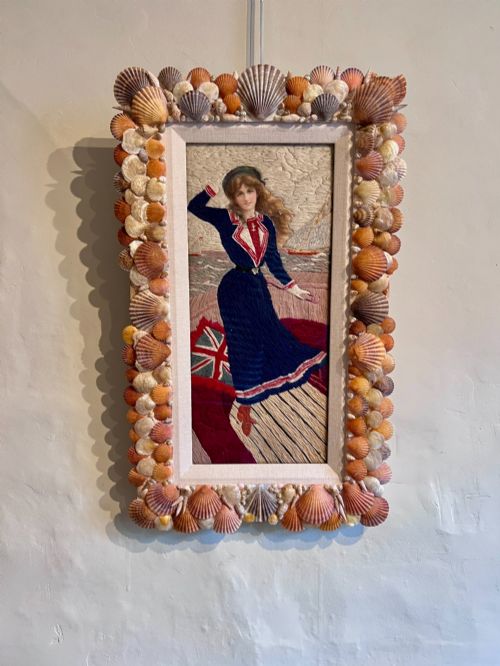
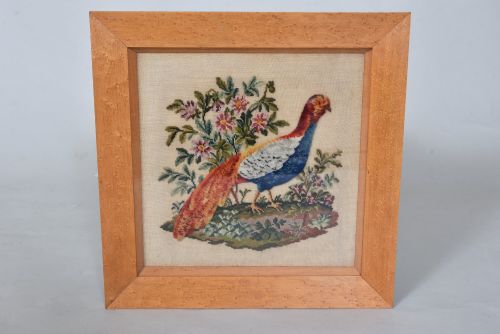
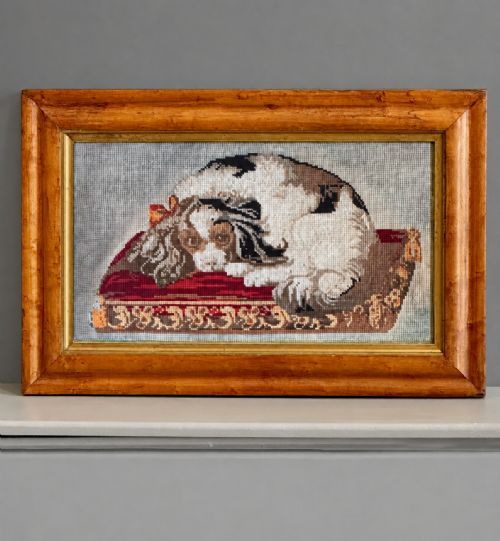
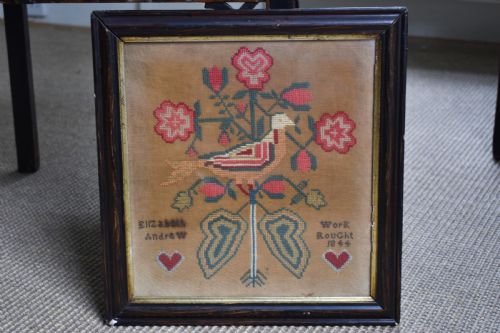
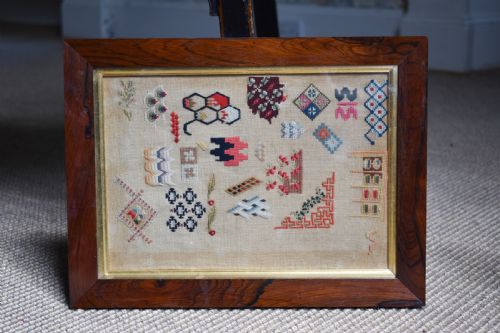
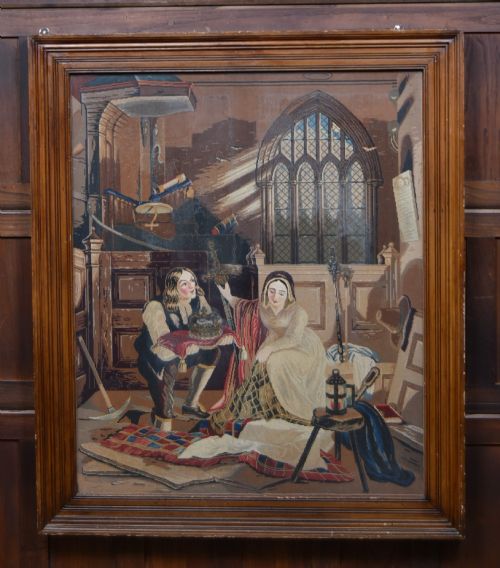
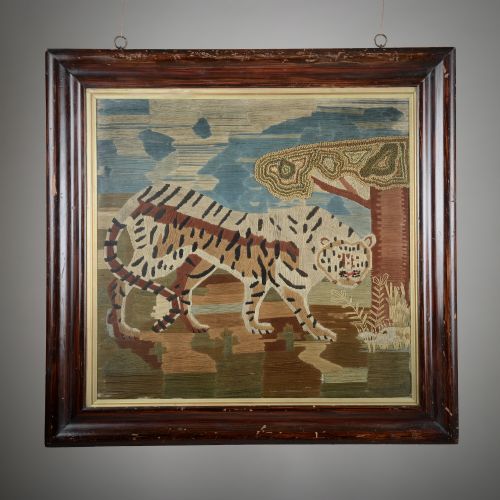
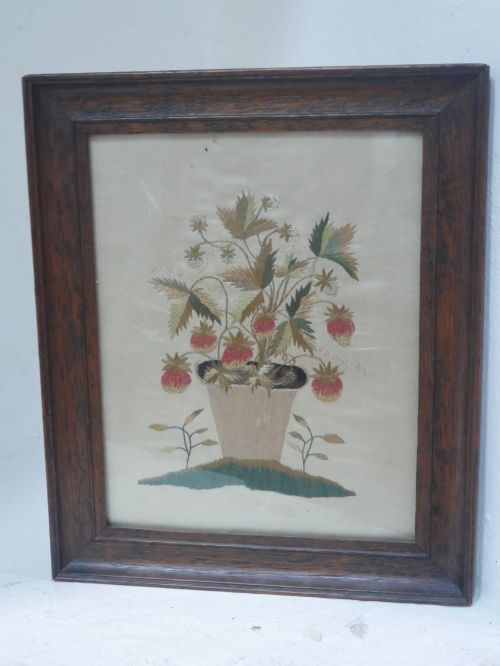
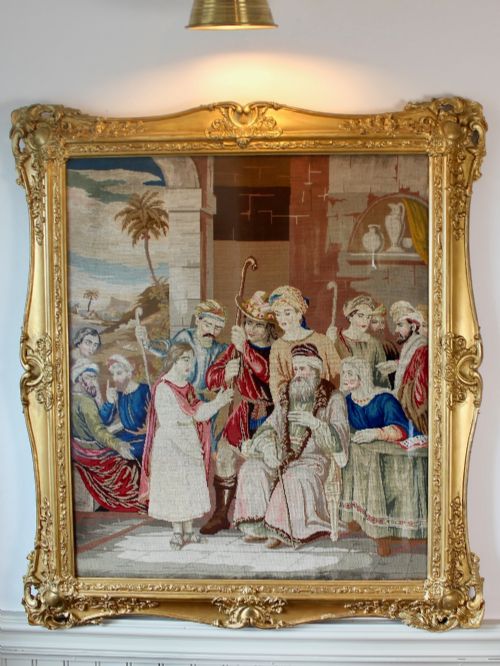
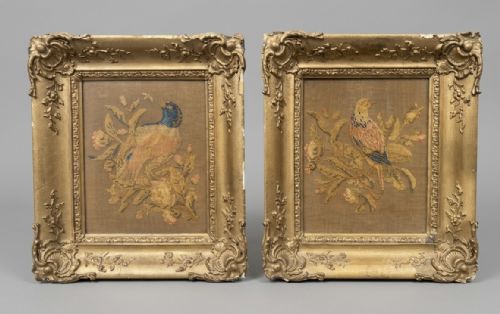
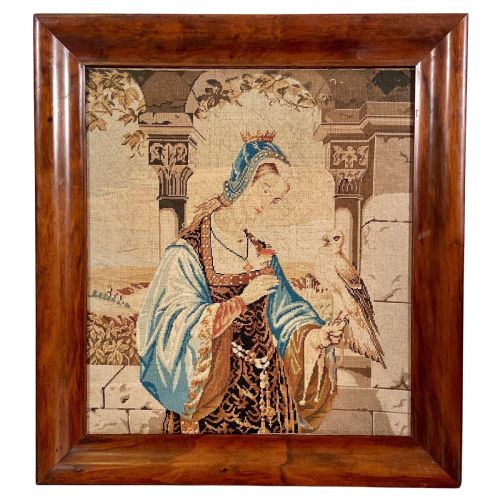
Victorian tapestry art spans framed needlework panels, samplers, woolwork woolies, and upholstered furniture inserts. The examples on this page are predominantly framed wall art and textile panels depicting animals, portraits, and scenes.
The objects derive from nineteenth-century homes, incorporating styles from Gothic Revival to Art Nouveau alongside traditional Berlin wool work and silk embroideries. Most survivors are mounted behind glass within original giltwood, burr maple, or wooden frames.
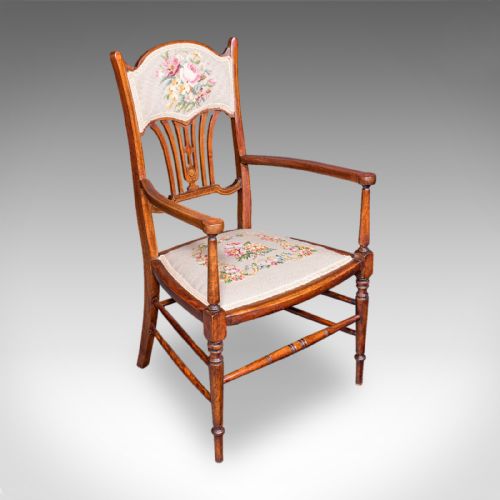
Beyond wall hangings, buyers encounter seating and decorative screens utilising heavy handworked needlepoint and tapestry fabric covers.
Materials and execution
Makers stitched wool, silk, and linen threads onto canvas, using gros-point and petit-point needlework techniques to build detailed pictorial surfaces. Plushwork and woolies introduce varied pile and texture to maritime and animal subjects.
Substantial frames fashioned from giltwood, rosewood, and burr maple protect these textiles, frequently paired with glass to preserve the delicate fibres of nineteenth-century silk and wool embroideries.
Recorded styles include Art Nouveau, Gothic Revival, Victorian Rococo Revival, and Victorian Folk Art.
Distinguishing quality in needlework
Quality rests upon the precision of the stitchwork, the complexity of the colour palette, and the fidelity of the pictorial composition. Finer needlepoint utilises smaller stitches to achieve nuanced facial expressions and shading in portraits and animal subjects.
The integrity of the original framing and the preservation of the textile ground separate superior examples from heavily restored or faded pieces.
Richard Ansdell·John Crossley·Thomas Webb
The Victorian Tapestry Art Glossary
- Berlin work
- A style of counted-thread embroidery popular during the nineteenth century, worked from printed and hand-coloured grid patterns using wool on canvas.
- Gros-point
- A coarse needlepoint stitch executed on canvas, often utilised for the background or bolder elements of Victorian tapestry pictures.
- Woolie
- A colloquial term for nineteenth-century sailor-made woolwork embroideries depicting British naval ships and maritime scenes.
- Sampler
- A piece of needlework demonstrating a maker's proficiency in various stitches, frequently displaying alphabets, numerals, and moral verses alongside dates and maker names.
- Plushwork
- A textile technique employing cut pile loops to create a raised, velvety surface texture within nineteenth-century pictorial embroideries.
Victorian Tapestry Art: Frequently Asked Questions
How should I clean antique tapestry art?
Antique needlework requires gentle surface dusting with a soft brush rather than liquid cleaning. Professional textile conservators should handle any deeper restoration.
Keep framed pieces away from direct sunlight to prevent the wool and silk threads from fading.
Are these tapestries hand-stitched?
The pieces recorded here consist of handworked needlepoint, woolwork, and silk embroidery executed by makers during the nineteenth century.
Printed guides like Berlin work charts provided the patterns, but every stitch was applied by hand.
What frames are original to these pieces?
Nineteenth-century needlework is commonly found in period giltwood, burr maple, or simple dark wood frames chosen by the original makers or contemporary framers. Original glass often displays bubbles or imperfections characteristic of the era.
Replacing a period frame alters the historic context of the textile.
How do I date a needlework sampler?
Many samplers include embroidered dates and the maker's age, providing a clear point of origin. Stylistic markers, lettering fonts, and framing materials help narrow the decade when dates are absent.