




Victorian Tapestry Armchair
A victorian tapestry armchair brings nineteenth-century needlework and carved timber together to anchor a room with pattern and substance.
Victorian Tapestry Armchair
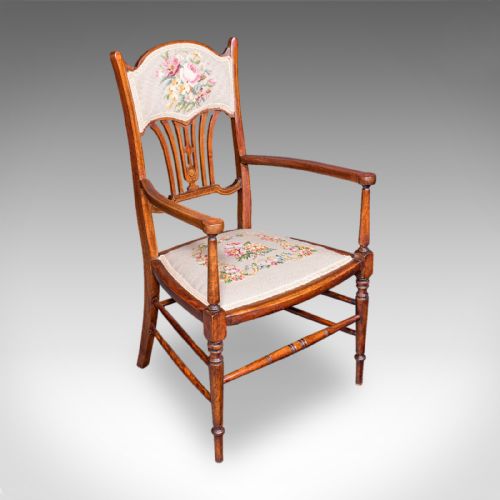
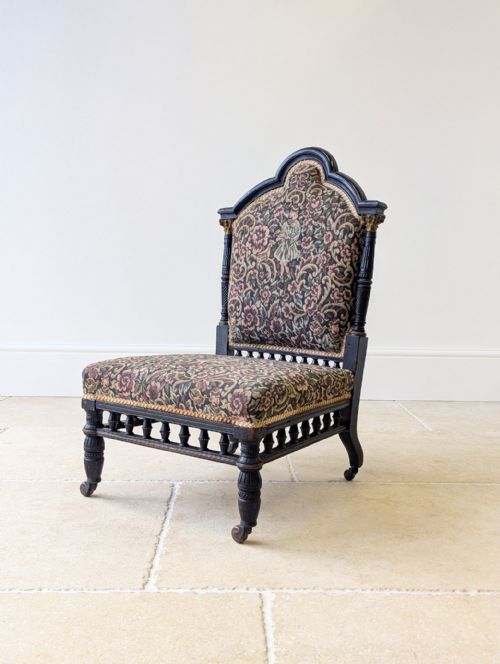
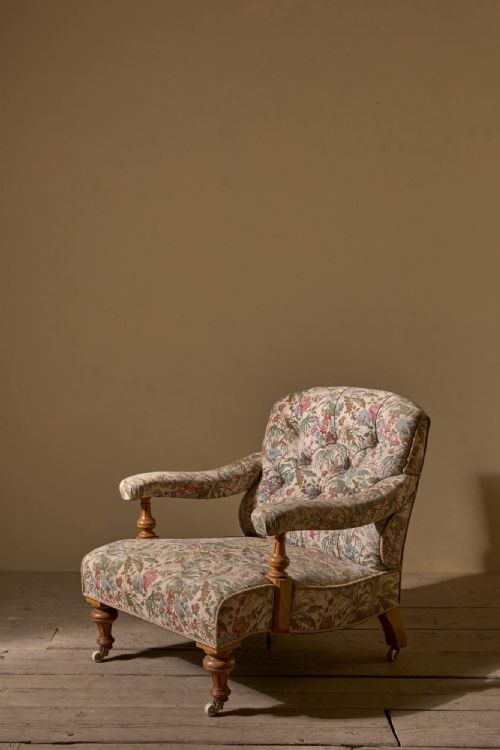
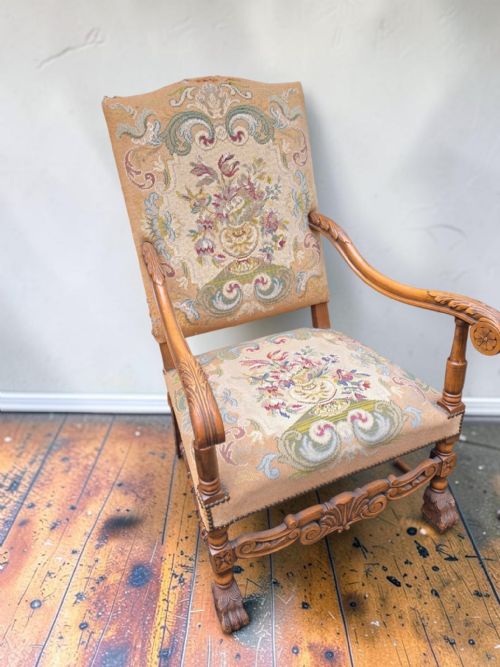
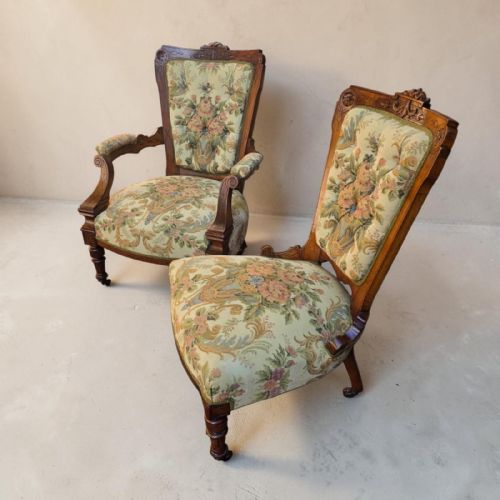
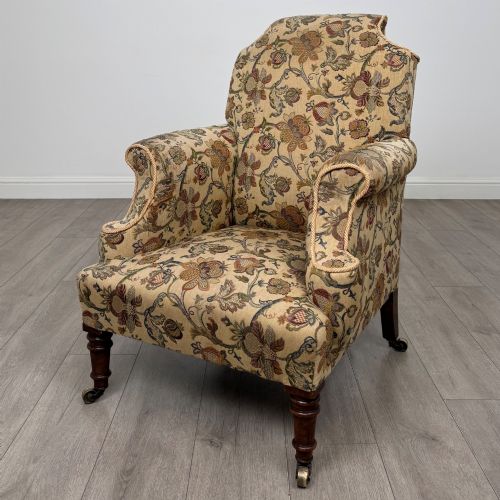
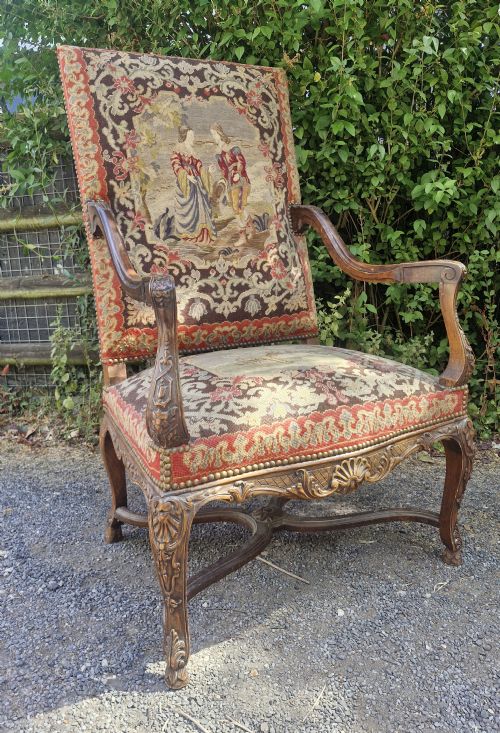
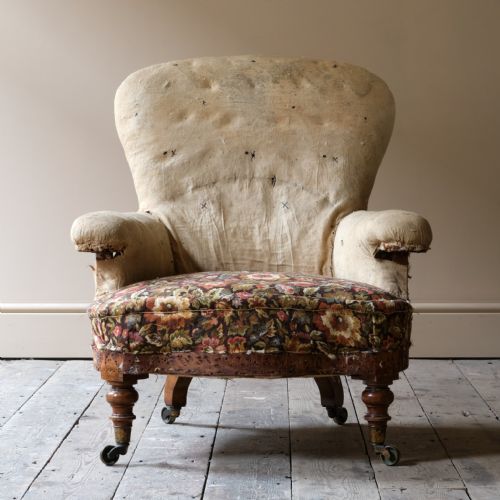
A victorian tapestry armchair combines nineteenth-century seating forms with needlepoint or woven textile coverings. The selection spans open armchairs, low salon chairs, and carved walnut or mahogany frames.
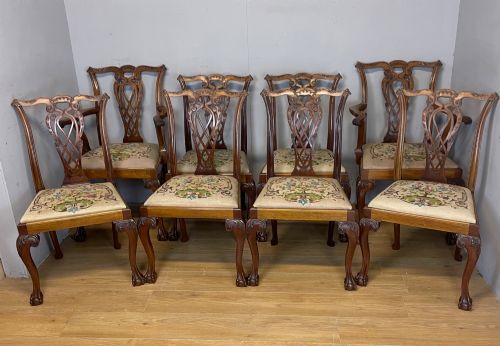
The examples originate predominantly from the Victorian era, alongside related nineteenth-century revivals in Gothic, Rococo, and Chippendale styles. Frames range from substantial library seats to lower nursing and occasional chairs.
Design and Execution
Quality rests on the crispness of the timber carving and the complexity of the wood selection, such as figured walnut or dense mahogany. Finer frames show deeper relief work and more considered proportions.
The standard of the tapestry covering dictates visual success, with hand-worked petit point and gros point needlework outperforming standard woven substitutes in texture and detail.
Victorian Tapestry Armchair Retail Price Guide 2026
Typical asking prices for victorian tapestry armchair among the pieces listed under this phrase on Sellingantiques today, from the lower quarter to the upper quarter. They describe what is for sale here now, not the wider market.
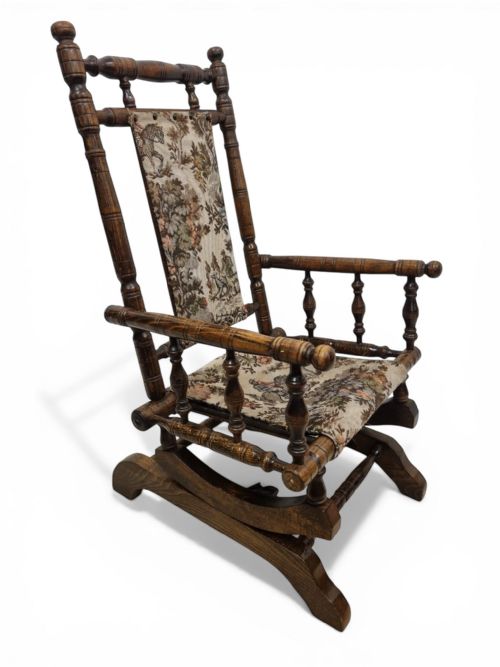
Children join the seating hierarchy with miniature rocking chairs upholstered in solid wood and tapestry.
Howard and Sons·Holland and Sons·Warings
The Victorian Tapestry Armchair Glossary
- Tapestry
- A heavy textile woven or worked with decorative designs, frequently depicting florals or figural scenes. It provides durable and colourful upholstery for nineteenth-century seating.
- Gros point
- A coarse needlepoint stitch worked on canvas, creating bold patterns with substantial wool yarn. This technique forms the robust surface found on many nineteenth-century chair seats and backs.
- Petit point
- A fine needlepoint stitch executed on single-mesh canvas, allowing intricate detail and shading. It denotes higher workmanship on select Victorian chair covers.
- Open armchair
- A wooden seat featuring uncovered armrests rather than padded upholstery. These forms highlight the carved structural frame beneath.
- Salon chair
- A smaller, decorative seating form designed for formal reception rooms. These pieces often exhibit lighter frames and ornate woodwork.
Victorian Tapestry Armchair: Frequently Asked Questions
How do I identify a Victorian armchair?
Look for characteristic nineteenth-century timber choices such as walnut and mahogany combined with Revival styling cues. Frame construction often incorporates hand-carving and sprung upholstery foundations.
Examine the textiles for hand-worked needlepoint or tapestry typical of the period. Secondary woods and traditional joinery methods help confirm nineteenth-century origins.
Where were these chairs used?
These armchairs served in nineteenth-century drawing rooms, morning rooms, and libraries as functional seating and decorative statements. Lower variants like nursing chairs suited bedroom and intimate parlour settings.
Larger library and open armchairs anchored heavier interior schemes, often paired with sofas or side chairs in matching timbers.
How do I care for antique tapestry?
Protect woven and needlepoint textiles from direct sunlight to prevent fading of wool and silk threads. Gentle vacuuming through a mesh screen removes surface dust without catching loose fibres.
Avoid moisture and chemical cleaners on historical fabrics. Professional textile conservators should handle any deep cleaning or structural repairs.
What is the difference between petit point and gros point?
Gros point utilises a larger stitch on heavier canvas to create bold, hard-wearing patterns suitable for daily seating. It offers strong texture and robust durability.
Petit point employs a much finer stitch count, permitting intricate pictorial detail and subtle tonal gradation. It appears on higher-status decorative panels.