



Victorian Tantalus Frame
A victorian tantalus frame holds spirits under lock and key, combining secure hospitality with handsome joinery.
Victorian Tantalus Frame
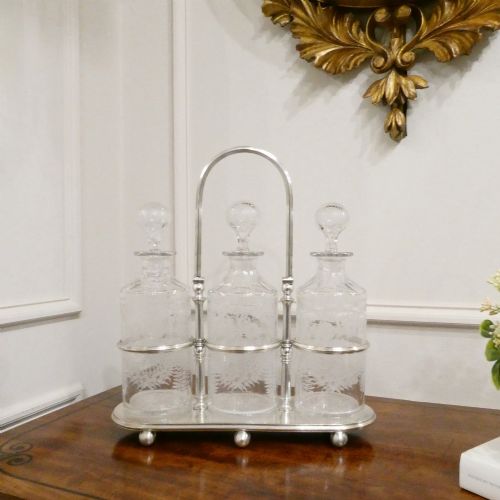
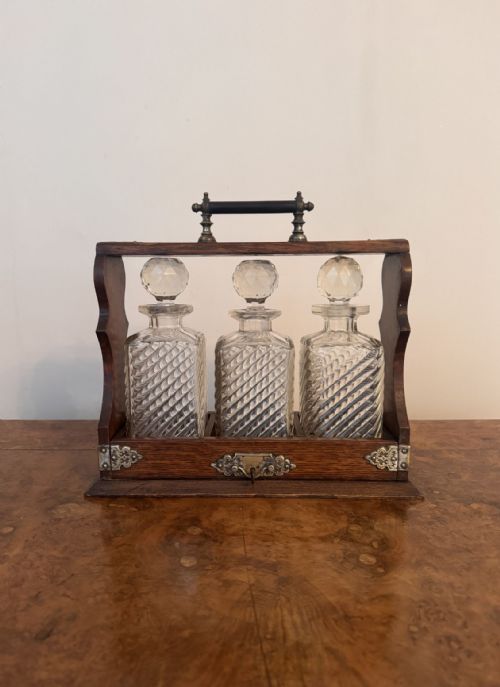
A victorian tantalus frame sits at the intersection of period barware and secure furniture, designed to keep household spirits safely contained while on display. These pieces appear most frequently as oak or walnut stands fitted with cut glass or crystal decanters and robust metal locking mechanisms.
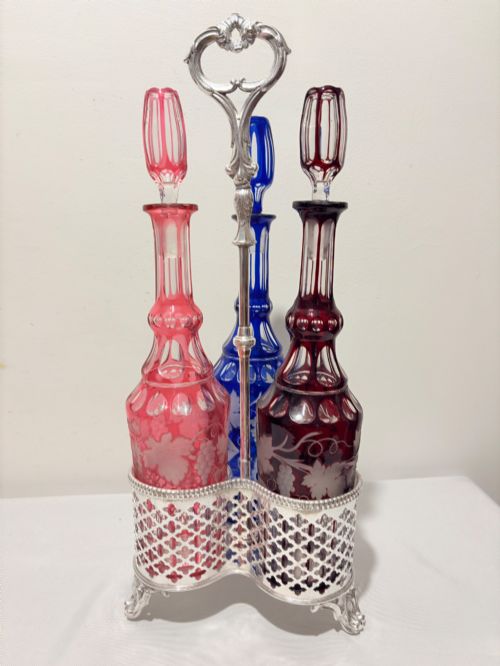
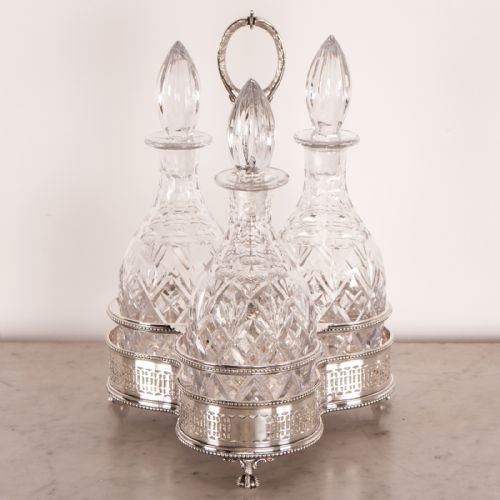
The objects span decanter sets, stands, and caddies originating from the mid nineteenth century through to the Edwardian era. Oak frames and silver plated mounts dominate the selection, often housing two or three bottles in dedicated lockable compartments.
Buyers meet variations ranging from simple table frames to elaborate tantalus boxes with inlaid wood and ornate handles. The core form remains a sturdy chassis that locks the stoppers in place until a key releases them.
Assessing quality in the range
Quality rests in the precision of the locking mechanism and the weight of the silver plating over the base metal. Smooth mechanical action in the lock and key separates superior examples from standard production pieces.
The choice of cabinet timber and the crispness of the glass cutting dictate the upper tier of the selection. Dense oak or figured walnut paired with deep, hand cut crystal denotes higher workshop standards.
Makers known for silver work add distinction through heavy gauge plating and refined handle castings that integrate seamlessly with the timber frame.
Victorian Tantalus Frame Retail Price Guide 2026
Typical asking prices for victorian tantalus frame among the pieces listed under this phrase on Sellingantiques today, from the lower quarter to the upper quarter. They describe what is for sale here now, not the wider market.
Named after a Greek myth, the tantalus cruelly lets guests admire the whiskey while keeping the key firmly in the host's pocket.
Walker and Hall·Elkington·The Goldsmith Co·Hukin and Heath·Philip Ashberry
The Victorian Tantalus Frame Glossary
- Tantalus
- A locking drink cabinet or frame that holds decanters securely while rendering the contents visible but unreachable without a key. The name derives from the mythological figure of Greek legend.
- Silver plate
- A thin layer of silver fused to a base metal such as copper, nickel, or brass. This technique provided the appearance of solid silver at a lower production cost during the period.
- Cut crystal
- High clarity glass containing lead oxide, cut with facets that refract light. It forms the heavy decanters typically housed within these frames.
- Coromandel
- A dense, dark timber with contrasting light streaks imported from Asia. Cabinetmakers utilised this exotic wood for high end nineteenth century luxury boxes and frames.
- Decanter stand
- An open frame or caddy designed to hold serving bottles without a locking mechanism. These pieces served similar display purposes to the tantalus without the security feature.
Victorian Tantalus Frame: Frequently Asked Questions
How does the locking mechanism work?
A metal bar drops across the glass stoppers, secured at one end by a spring loaded lock that engages when the key turns.
Once locked, the decanters cannot be lifted from the frame until the key releases the restraining bar.
What is the difference between a tantalus and a decanter stand?
A tantalus incorporates a locking bar that traps the glass stoppers to prevent unauthorised pouring.
Standard decanter stands hold the bottles securely for serving without any locking mechanism attached to the frame.
Which woods were used for the frames?
Makers predominantly utilised domestic oak and walnut for the structural boxes and chassis.
Exotic timbers such as coromandel also appear on finer examples from the nineteenth century.
How do I date these pieces?
Dating relies on registration marks, maker stamps on the silver plate, and prevailing furniture styles.
Victorian pieces show heavier oak and ornate metal mounts, while Edwardian versions lean towards simpler lines.