
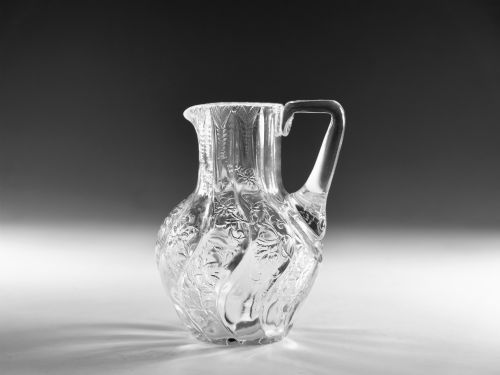
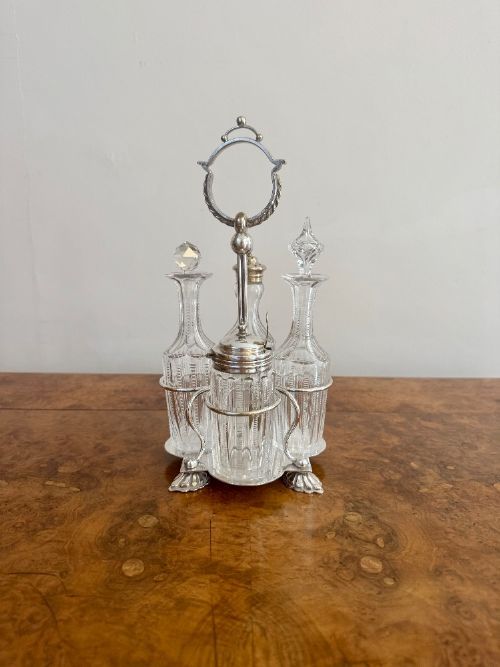
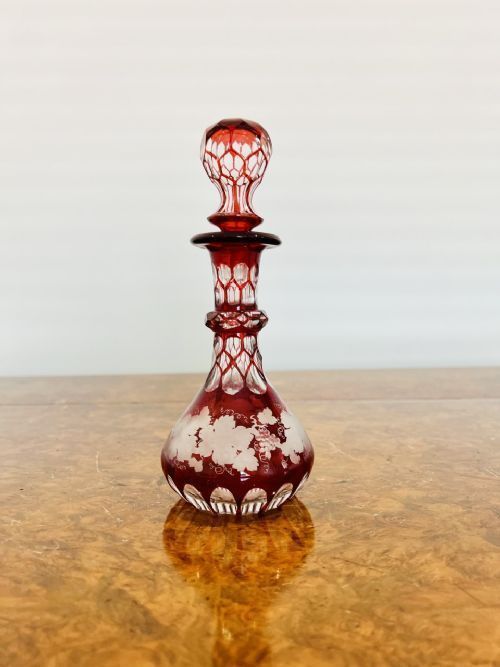


Victorian Table Glass Decanter
These victorian table glass decanter pieces range from ruby and amber glass vessels to silver-mounted cruet sets.
Victorian Table Glass Decanter
A victorian table glass decanter encompasses a variety of glassware forms including wine decanters, claret jugs, and smaller perfume or spirit bottles. Buyers searching this phrase typically encounter vessels produced during the Victorian and Edwardian periods, alongside a few pieces originating in the Georgian era or the early twentieth century.
The selection frequently includes paired items, scent bottles, and multi-bottle cruet sets housed in silver-plated frames. Forms span standard table decanters as well as amber glass, ruby glass, and cranberry glass variations fitted with stoppers and sometimes silver collars.
Originating predominantly from English workshops, these items serve functional dining and dressing table roles. The material composition relies heavily on cut glass, lead crystal, and coloured glass paired with silver or silver plating.
Materials and construction
Makers shaped these vessels using traditional glassblowing techniques before applying decorative wheel-cutting to the lead crystal or plain glass surfaces. Coloured pieces achieved their distinct ruby, cranberry, and amber hues through specialised mineral additions during the melting process.
Many examples incorporate fitted silver collars, mounts, or frames produced by silversmiths to complement the glass bodies. Cruet sets and scent caskets integrate multiple bottles within structured metal stands or hinged boxes.
Some multi-bottle cruet sets require a steady hand and an appreciation for tiny glass stoppers that have stayed together for over a century.
Distinctions in quality
The precision and depth of the cut glass ornamentation dictate the refinement of individual pieces. Crisp, deep facets catch the light more effectively than shallow or smoothed engraving.
The integration of precious metals, such as hallmarked silver mounts or heavy silver plating on frames and stoppers, separates standard utility items from more elaborate parlour pieces.
Stevens and Williams·Wade Wingfield Wilkins
The Victorian Table Glass Decanter Glossary
- Cruet set
- A matched collection of glass bottles or cruets held within a metal stand for condiments or oils. These sets often include silver-plated frames.
- Lead crystal
- A heavy glass variety containing lead oxide to increase brilliance and weight. It allows for sharper facets when cut.
- Claret jug
- A large pouring vessel designed specifically for serving red wine at the table. They frequently feature silver handles and mounts.
- Scent bottle
- A small container intended for perfume, often fitted with a stopper and silver collar. Examples range from single bottles to sets housed in caskets.
- Cranberry glass
- A transparent pinkish-red glass created by adding gold to the molten batch. It appears frequently in nineteenth-century decanters.
Victorian Table Glass Decanter: Frequently Asked Questions
How do I clean old glass decanters?
Use warm water and mild detergent with non-abrasive tools to protect the surface.
Avoid harsh scrubbing on any silver collars or plated mounts attached to the glass.
Are these decanters safe for modern wine?
Most glass and lead crystal vessels remain suitable for serving wine after proper cleaning.
Check the interior for stubborn residue before filling.
What is the difference between a decanter and a claret jug?
Decanters generally feature stoppers and straight or slightly tapered bodies for storing spirits or wine.
Claret jugs incorporate handles and pouring spouts designed for immediate table service.
How do I date a Victorian glass decanter?
Examine the cutting style, the pontil mark on the base, and any accompanying metal mounts.
Victorian pieces often display heavier lead crystal and distinct decorative motifs compared to later periods.