


Victorian Table Garniture
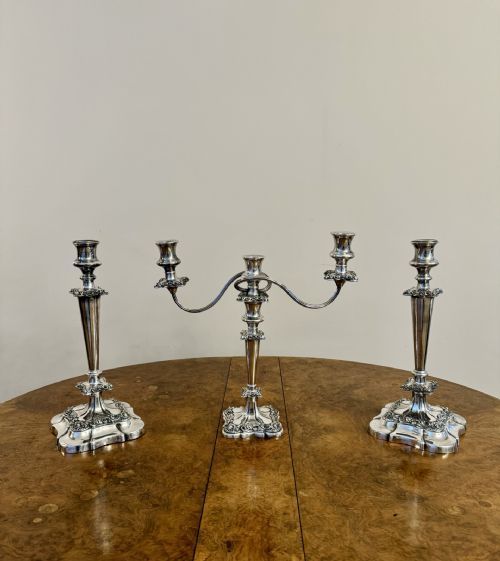
A victorian table garniture brings matched elegance to a mantelpiece, pairing a central clock with flanking candelabras or vases.
Victorian Table Garniture
A victorian table garniture unites a central timepiece with matching side pieces such as candelabras, urns, or vases to create a balanced decorative scheme. The offerings span the nineteenth century, including periods like the regency era and the late nineteenth century alongside distinct Victorian interpretations.
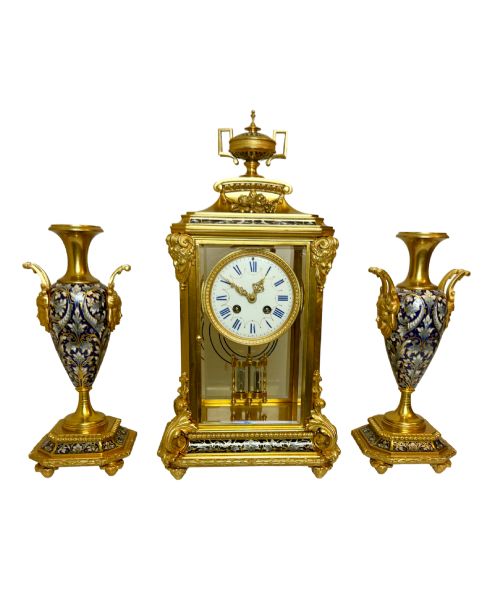
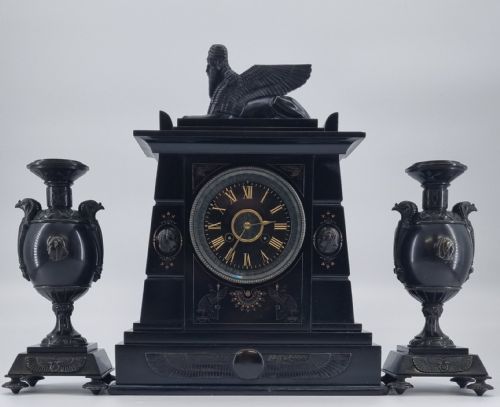
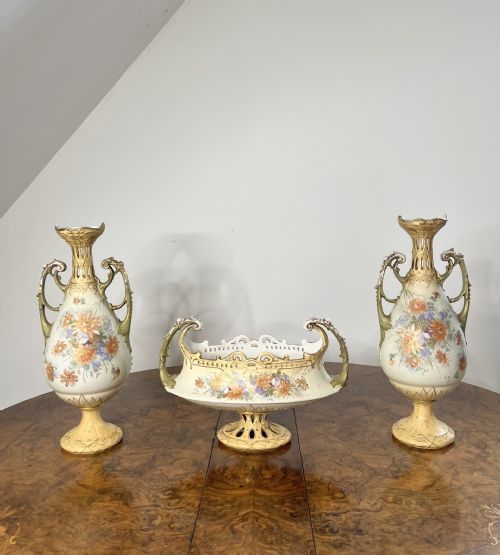
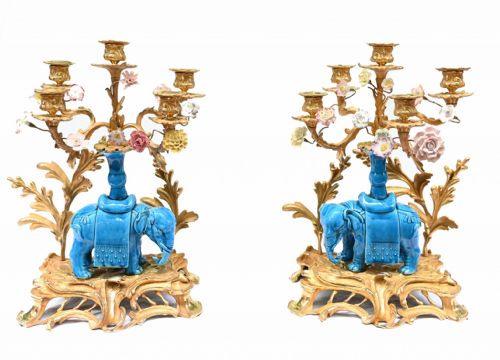
Most compositions on this page combine mantel clocks with paired candlesticks or urns, frequently following French nineteenth-century fashions. Forms range from black slate and block marble clock garnitures to bronze vases mounted on marble plinths and porcelain figures.
Stylistic influences vary widely across the selection, taking shape through French rococo revival, egyptian revival, and black forest carved woodwork. Buyers encounter everything from monumental carved clock sets to delicate champleve enamel and gilt bronze assemblies.
Materials and construction methods
Metalwork forms a core component of these sets, utilising cast brass, gilt bronze, ormolu, and silver plating alongside durable structural materials like black slate and block marble. Artisans shaped metals through detailed casting and gilding, often mounting bronze elements securely onto heavy stone plinths.
Decorative surfaces frequently incorporate fired porcelain, intricate champleve enamel, and carved wood as seen in black forest pieces. These diverse mediums required specialised firing, hand-painting, and precise carpentry to unite disparate elements into a cohesive garniture set.
Design influences span multiple nineteenth-century aesthetics, encompassing rococo revival, egyptian revival, and black forest carved woodwork.
Factors of quality and execution
The refinement of the casting and the crispness of the chased detail separate standard sets from superior examples. Finer pieces display deeply articulated foliage, cleanly defined figural elements, and precise joinery between stone bases and metal mounts.
The choice and integrity of materials dictate overall merit, distinguishing solid marble or carved wood from simpler constructions. Completeness also plays a role, as intact sets retaining their original matching side pieces hold greater stylistic unity than assembled groups.
A.D Mougin
The Victorian Table Garniture Glossary
- Garniture
- A set of ornamental objects designed to be displayed together, typically comprising a central clock flanked by two matching vases or candelabras. These arrangements dominated nineteenth-century interior decoration.
- Ormolu
- Gilt bronze, created by applying a mercury-gilt coating to a bronze object. The technique produces a rich golden finish that resists tarnishing over decades.
- Champleve
- An enamelling technique where troughs or cells are sunk into the surface of a metal object and filled with vitreous enamel powder before firing. It creates vibrant coloured patterns against a metallic grid.
- Candelabra
- A multi-branched candlestick designed to hold several candles simultaneously. In garniture sets, they mirror the decorative motifs of the central clock.
Victorian Table Garniture: Frequently Asked Questions
How do I style a clock garniture?
A clock garniture is traditionally placed at the exact centre of a mantelpiece or large table. The matching side pieces flank the clock symmetrically to create visual balance.
Keeping the pieces together on a substantial surface allows the entire ensemble to function as a unified decorative focal point in a room.
What materials were used in these sets?
Garniture sets incorporate a wide array of materials depending on the workshop and period of origin. Common structural elements include black slate, block marble, and carved wood.
Decorative surfaces frequently feature gilt bronze, brass, champleve enamel, and painted porcelain, often enhanced with ormolu mounts and figural bronze castings.
Are these clock sets still working?
Many nineteenth-century mantel clocks retain their original mechanical movements, though operational condition varies across individual pieces. Some examples may require professional servicing to function accurately.
Buyers often appreciate these items as much for their sculptural metalwork and decorative stone bodies as for timekeeping ability.