



Victorian Table Epergne
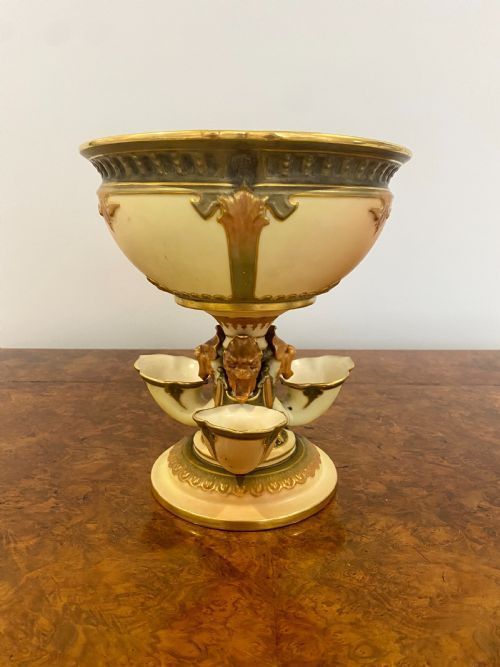
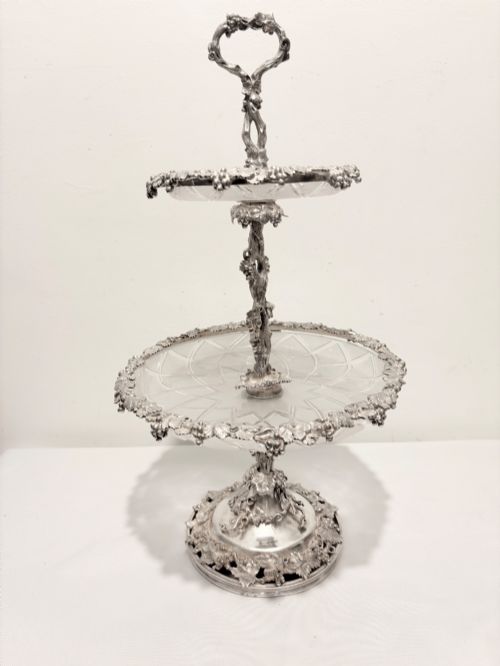
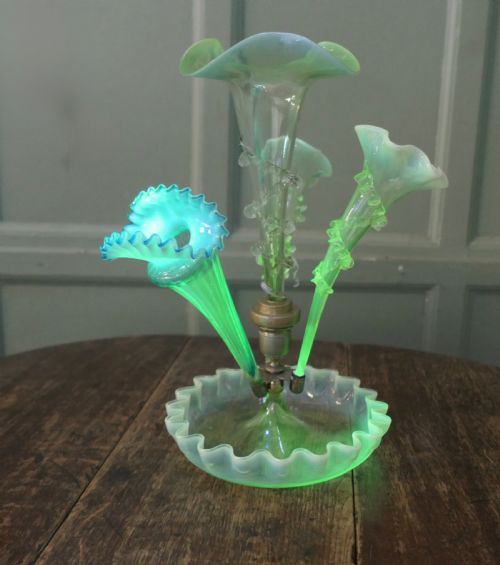
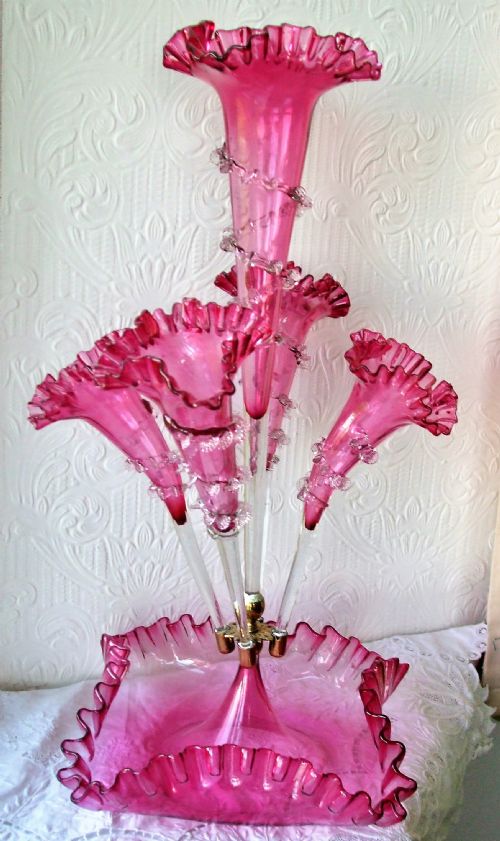
A Victorian table epergne stands as a dramatic centrepiece of coloured glass and silver plate designed to hold fruit or flowers at formal dining tables.
Victorian Table Epergne
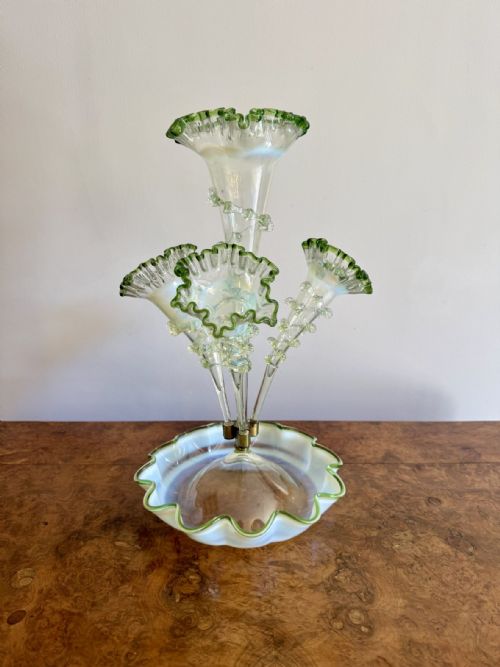
A Victorian table epergne serves as a towering centrepiece designed to anchor a formal dining table, combining decorative metalframes with multiple glass flutes, trumpets or hanging baskets. These pieces functioned primarily to display fruit, sweetmeats or fresh flowers during elaborate nineteenth-century dinners.
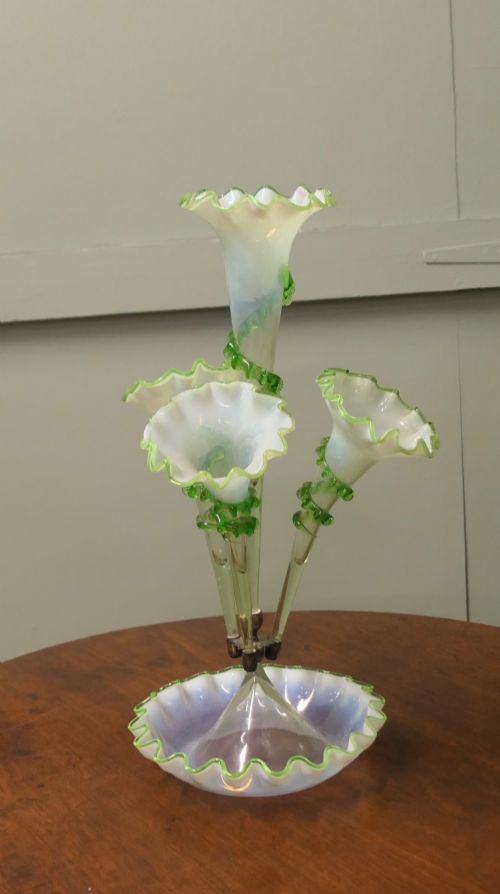
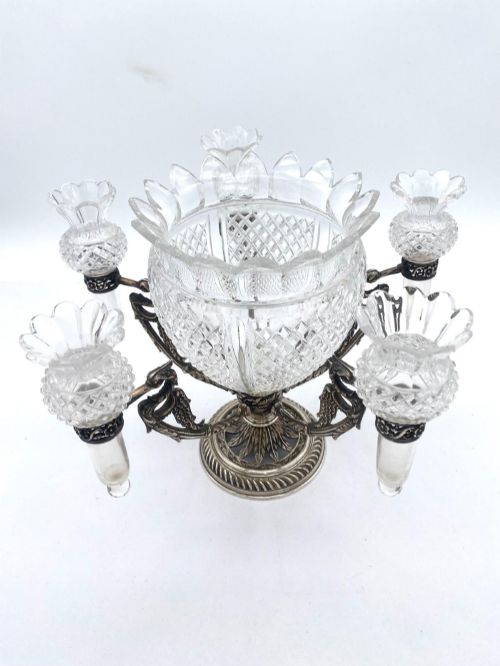
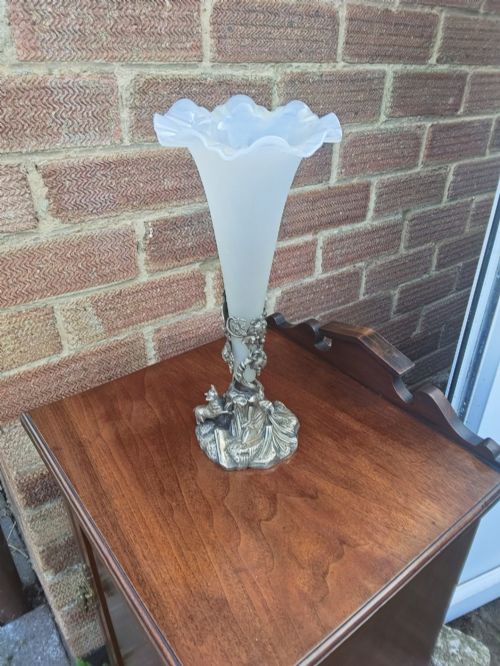
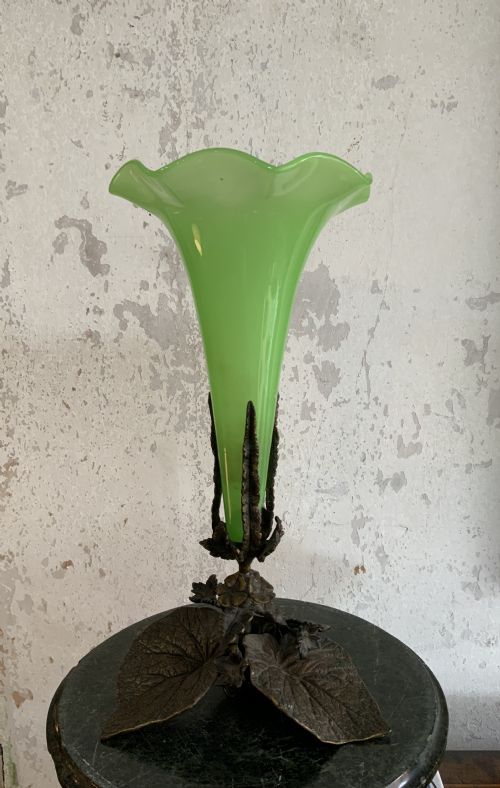
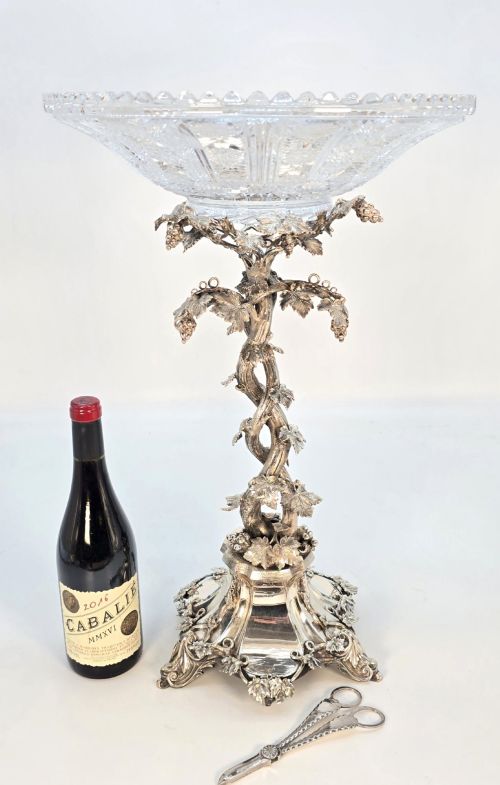
The most common examples encountered on this page feature vibrant cranberry glass, vaseline glass or clear cut crystal mounted in silver plate, EPNS or gilt bronze stands. Forms range from simple posy vases and single trumpets to grand multi-branched structures with matching subsidiary dishes.
Origins span English, French and Black Forest workshops, capturing periods from the mid nineteenth century through to the Edwardian era. Buyers encounter everything from compact table centrepieces to substantial constructions incorporating carved wood bases and intricate metalwork.
How they were made
Makers combined silver plate, white metal, brass and gilt bronze for the structural framework, often casting mounts into complex naturalistic or architectural forms. Glass components were hand-blown, etched, cut or moulded, producing the characteristic translucent hues of cranberry, opaline and uranium glass.
Specialised techniques united metal and glass safely, using fitted collars, screw threads and weighted bases to support heavy trumpets without tipping. Wood carvers shaped elaborate Black Forest stands, while silversmiths utilised electroplating to coat base metals with a durable layer of silver.
Victorian Table Epergne Retail Price Guide 2026
Typical asking prices for victorian table epergne among the pieces listed under this phrase on Sellingantiques today, from the lower quarter to the upper quarter. They describe what is for sale here now, not the wider market.
Listings feature 19th Century, Victorian, 1880, 1900, 1860, 1920 and 1890 periods.
What varies in quality
Quality rests upon the harmony between the metal mount and the blown glass inserts, where heavier silver plating and heavier crystal or glass weight denote superior manufacture. Finer pieces display crisp hand-etching on the glass trumpets and robust, well-balanced metal branches that securely hold every detachable vase.
Distinction also lies in the ambition of the design, separating standard commercial centrepieces from complex sculptural works featuring figural bronze elements or intricate carved wood supports. Original matching glass components that retain their intended colour and form elevate an epergne above pieces assembled from mismatched parts later on.
Walker & Hall·James Deakin·James Dixon
The Victorian Table Epergne Glossary
- Epergne
- A large table centrepiece featuring multiple branches and vessels for holding fruit, flowers or confectionery. This grand form dominated formal nineteenth-century dining room tables.
- Cranberry glass
- A rich red glass coloured with gold chloride during the manufacturing process. It appears frequently in Victorian table epergnes.
- Vaseline glass
- A yellowish-green glass containing uranium dioxide that glows under ultraviolet light. Makers utilised it widely for striking Victorian table decorations.
- EPNS
- Electroplated nickel silver, a common base material for nineteenth-century metalwork. Manufacturers plated a thin layer of pure silver over a durable nickel brass alloy.
- Trumpet
- A flaring, cone-shaped glass vase used as the central or subsidiary arm of an epergne. These slender vessels held individual blooms.
Victorian Table Epergne: Frequently Asked Questions
How were epergnes used on the dining table?
These tall centrepieces sat in the middle of the dining table during multi-course meals. Servants filled the hanging baskets and bowls with fruit or sweetmeats while the glass trumpets held fresh floral arrangements.
Because of their height, they were designed so guests could easily converse underneath or around the branching arms. They acted as both a decorative focal point and a functional serving display.
Are all the glass trumpets original?
Glass components on epergnes are frequently separated or broken over a century of use, meaning replacement trumpets do occur. Examining the shade of colour, glass thickness and matching etchings helps determine if the pieces belong together.
Even when individual vases are later replacements, a well-matched set still creates a striking display. Closely inspecting the fit within the metal collars reveals whether the vessels sit securely as intended.
How do I tell Victorian epergnes from later copies?
Nineteenth-century pieces typically feature hand-blown glass with polished pontil marks on the base rather than smooth machine-moulded edges. The silver plate on older frames is applied over white metal or brass, often showing natural wear patterns.
Examining the construction methods of the joints and mounts provides clear clues to the period. Makers from the era utilised specific casting and plating techniques that modern reproductions struggle to replicate accurately.