

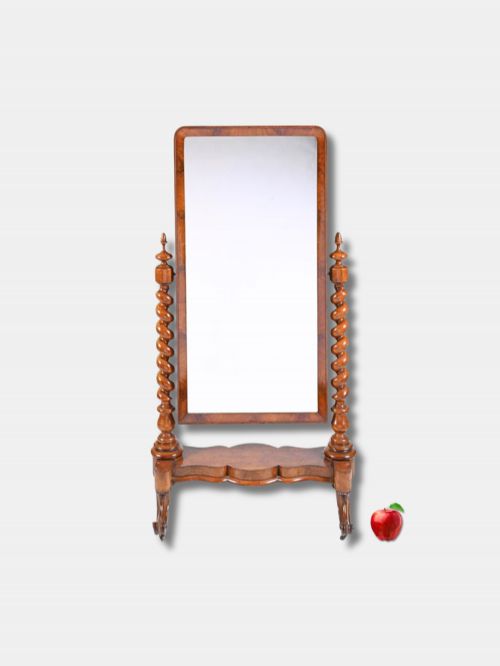


Victorian Swivel Glass
These Victorian swivel glass pieces are tilting table and floor mirrors that pivot on side pivots, offering adjustable reflections for dressing and grooming.
Victorian Swivel Glass
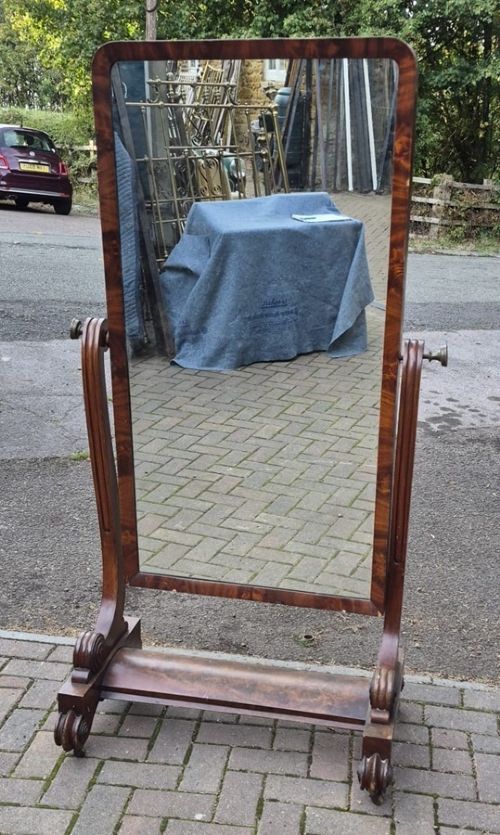
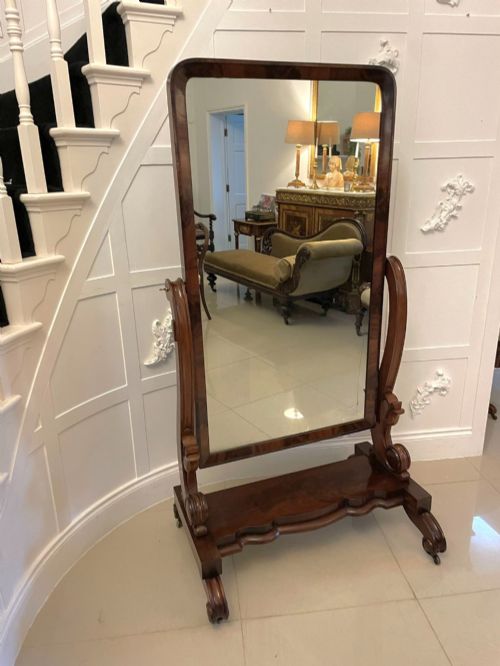
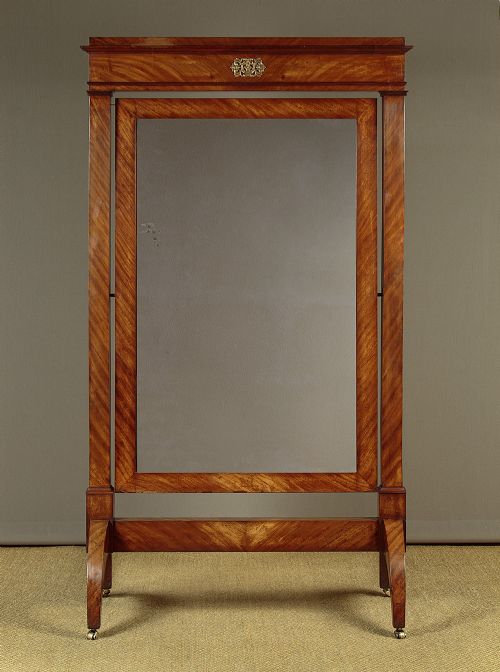
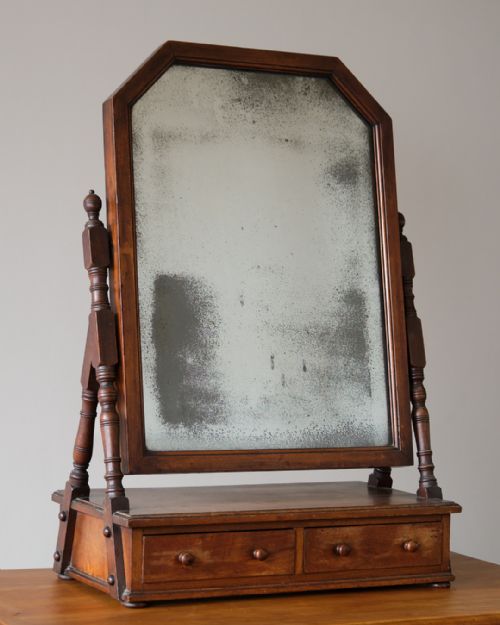
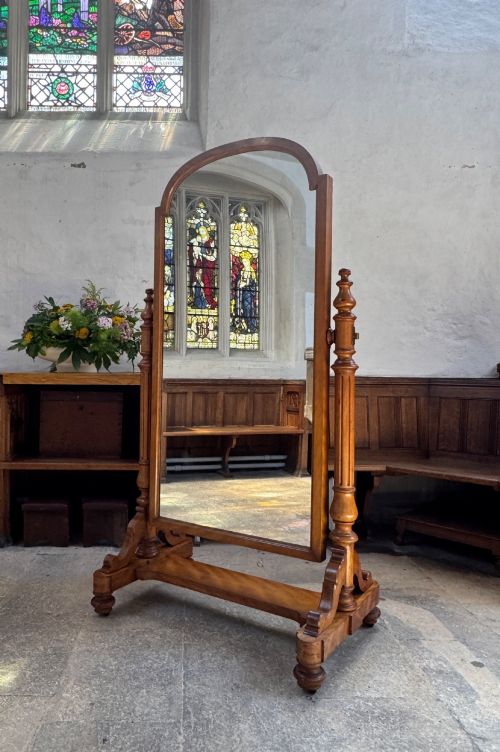
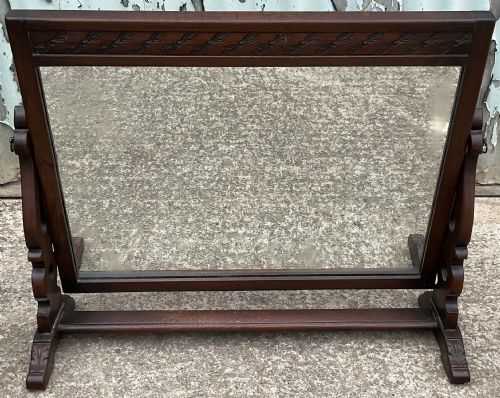
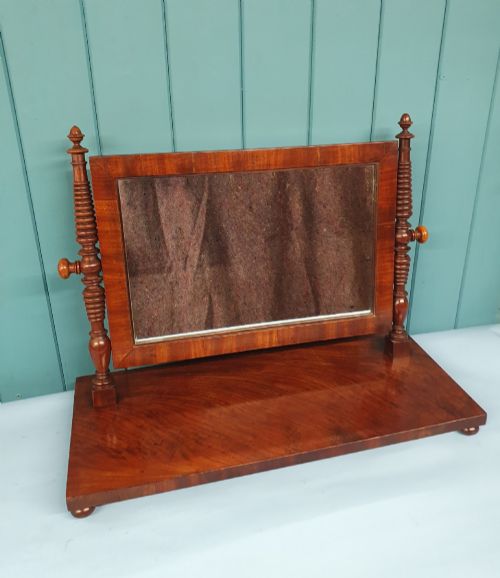
When you search for Victorian swivel glass, you encounter movable mirror plates mounted within upright frames that tilt on axis supports. The form divides primarily into larger floor-standing cheval mirrors and smaller table or toilet mirrors designed to sit upon furniture.
Mahogany remains the dominant timber for these frames, though examples also appear in walnut, oak, and satin birch. The tilting mechanism relies on brass screws or side pins, occasionally accompanied by candle holders or marble-topped supports.
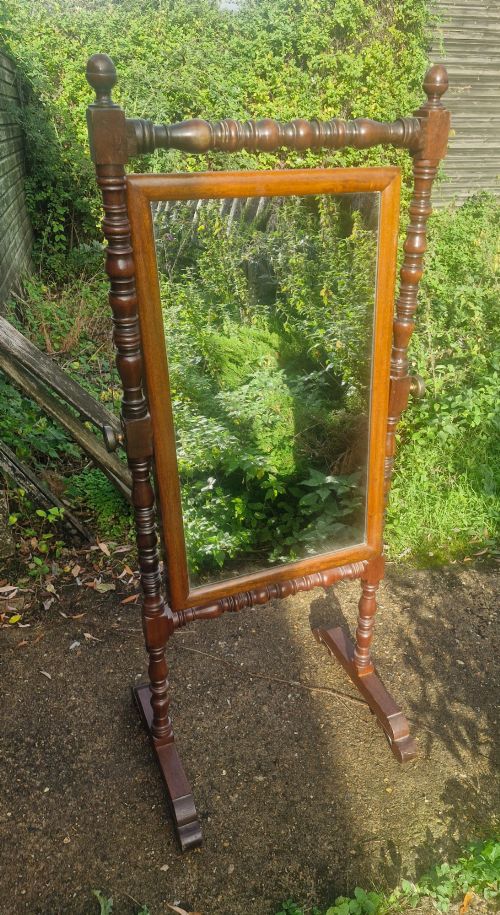
The pieces span the nineteenth century, including specific dates from the eighteen-fifties through to the eighteen-nineties alongside related Regency and early twentieth-century examples. Smaller dressing mirrors feature serpentine fronts, box bases, or barley twist supports, while full-length cheval mirrors stand on heavy scrolled feet.
Materials and construction methods
Cabinetmakers constructed the frames using dense hardwoods like mahogany and walnut, jointed with traditional techniques to support the weight of the heavy glass plate. Timber surfaces received hand-polished finishes that accentuate the natural grain of the wood.
The mirror plates themselves are set into pivoting frames controlled by brass thumb screws or pivot pins, allowing the glass to tilt to various angles. Metal components such as cast bronze, brass candle arms, and gilded metal provide both structural support and decorative contrast against the dark wood.
Victorian Swivel Glass Retail Price Guide 2026
Typical asking prices for victorian swivel glass among the pieces listed under this phrase on Sellingantiques today, from the lower quarter to the upper quarter. They describe what is for sale here now, not the wider market.
Some dressing mirrors arrived with built-in candle arms so you could inspect your cravat by candlelight.
Distinctions in craftsmanship and materials
The grade of timber and the weight of the brass fittings dictate the distinction between standard utilitarian mirrors and finer salon pieces. Superior examples utilise well-figured mahogany, substantial bronze or brass hardware, and intricate turnings such as barley twist uprights.
The stability of the frame and the retention of the original mirror glass and backing boards also indicate standard. Finely finished mouldings, serpentine drawer bases, and secondary woods like satin birch mark out the better productions from the period.
Heal & Sons·Thomas Rubergall of London·Gillows
The Victorian Swivel Glass Glossary
- Cheval mirror
- A large floor-standing dressing mirror supported in a frame that allows the glass to swing freely. These tall mirrors permit a full-length reflection.
- Toilet mirror
- A smaller mirror designed to sit on a dressing table or chest of drawers. They often incorporate small drawers in the base plinth.
- Swivel mirror
- A glass plate mounted on lateral pivots enabling the angle of reflection to be adjusted up and down. This mechanism sits between two vertical upright posts.
- Barley twist
- A spiral turning carved into wooden support columns or furniture legs. This decorative woodworking style appears on mid-nineteenth-century frames.
- Satin birch
- A pale, fine-grained hardwood utilised for cabinetwork and decorative veneers. The timber yields a lustrous, light-reflecting surface.
Victorian Swivel Glass: Frequently Asked Questions
What is a Victorian swivel glass mirror?
A Victorian swivel glass mirror is a pivoting mirror plate mounted within a wooden frame, designed to tilt on side axes for adjustable viewing angles. These pieces include both large floor-standing cheval mirrors and smaller toilet mirrors meant for dressing tables.
Cabinetmakers built them primarily in mahogany, walnut, and satin birch throughout the nineteenth century. The tilting mechanism uses brass pins or screws set into upright supports.
Where were these mirrors placed in a home?
Smaller toilet mirrors sat upon dressing tables, sideboards, or chests of drawers in bedrooms and dressing rooms. Their box bases often provided small compartments for storing personal items.
Larger cheval mirrors stood directly on the floor in bedrooms or dressing quarters to provide a full-length reflection. Some included added brass candle holders to illuminate the user during grooming.
How do I adjust the mirror angle?
The glass frame pivots between two vertical side posts on threaded brass screws or pivot pins. Tightening or loosening these side fittings holds the mirror plate at the desired angle.
Original brass hardware ensures smooth movement without the glass slipping out of position. Maintenance involves gentle adjustment of these side screws rather than forcing the frame.
What woods were used for the frames?
Mahogany is the predominant timber found in these mirror frames, appearing in various tones from deep red to brown. Other woods include walnut, oak, and pale satin birch.
Cabinetmakers selected these dense hardwoods to support the weight of the heavy glass and the stress of the pivoting mechanism. Secondary woods were often employed for internal drawer linings in box bases.