



Victorian Swiss Clock
These Victorian Swiss clock pieces are handsome timepieces crafted from carved wood and brass, offering both utility and traditional charm to any interior.
Victorian Swiss Clock
When you search for a victorian swiss clock, you are looking at nineteenth-century timepieces that bridge Alpine woodworking traditions and precision horology. The pieces on this page span mantel clocks, wall clocks, and miniature carriage clocks originating from the broader Swiss and Black Forest regions.
The most common forms you will meet here include robustly carved wooden mantel clocks and classic railway station or school wall clocks. These items range from domestic parlour pieces to travel clocks housed in original leather cases, reflecting diverse nineteenth-century domestic and commercial uses.
Makers and origins in this selection stretch across the nineteenth century into the early twentieth century, incorporating Swiss and German influences. You will encounter styles running from straightforward timepieces to elaborate French Rococo revivals executed in carved walnut and linden wood.
How They Were Made
These clocks rely on traditional joinery and carving techniques applied to timbers such as mahogany, walnut, and linden wood. Carvers utilised hand tools to render intricate foliage and architectural elements on Black Forest wooden cases.
Metal components such as brass, gilt brass, and glass were integrated to form robust movements, bezels, and protective face covers. Enamel dials provide clear legibility, often paired with striking or chiming mechanisms housed within the wooden or brass structures.
Several carriage clocks were exported specifically for the Chinese market, travelling halfway across the world in the nineteenth century.
What Varies in Quality
The distinction between standard examples and superior pieces rests on the depth and crispness of the wood carving. Finer mantel and wall clocks display deeply undercut foliage and balanced proportions rather than flat or mechanical surface relief.
Movement complexity further differentiates the range, moving from basic timepieces to sophisticated grande sonnerie mechanisms with alarm functions. The inclusion of original fitted cases, undamaged enamel dials, and intact maker signatures elevates the standing of an individual clock.
Bergen and Co·Anglo Swiss Watch Co·J. F. Bautte Et Cie
The Victorian Swiss Clock Glossary
- Grande Sonnerie
- A complex clock movement that strikes both the hours and the quarters automatically on every quarter hour. This mechanical complication requires sophisticated gear trains and multiple gongs.
- Linden Wood
- A pale, fine-grained timber frequently utilised by nineteenth-century carvers for its cooperative texture. It allows for sharp detail without excessive splitting during intricate work.
- Carriage Clock
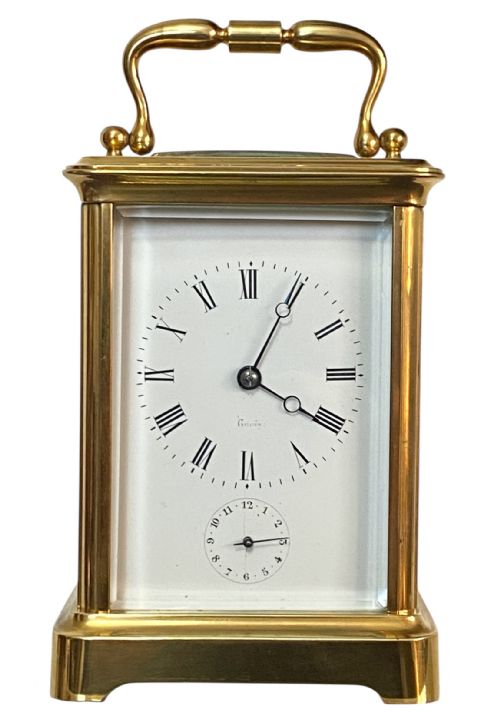
- A small, portable spring-driven timepiece designed for travellers during the nineteenth century. They are typically housed in brass frames with glass panels and often feature swing handles.
- Black Forest
- A mountainous region in Central Europe known for distinctive carved wooden clocks and automata. Makers in this tradition employed regional timbers and naturalistic motifs.
Victorian Swiss Clock: Frequently Asked Questions
How do I wind a mechanical Victorian clock?
Most of these mechanical clocks utilise a key inserted into arbors on the dial to tension the internal springs. Care must be taken not to overwind the movement.
Consult the specific requirements of the timepiece, as eight-day movements and those with striking trains require measured turns to avoid damaging the internal components.
Where should I place a wooden mantel clock?
Position your mantel clock on a stable, level surface away from direct heat sources and strong draughts. Wooden cases react to sudden changes in ambient temperature and humidity.
A mantel or sturdy sideboard shelf provides an ideal environment where the movement can rest without vibration or interference.
How do I identify a Black Forest clock?
Black Forest clocks are primarily recognised by their carved wooden cases featuring naturalistic motifs such as leaves, animals, and rustic scenes. They often utilise linden wood or walnut.
The regional style emerged strongly in the nineteenth century, combining Alpine woodworking skills with reliable mechanical movements housed behind enamel or wooden dials.
What is a railway station wall clock?
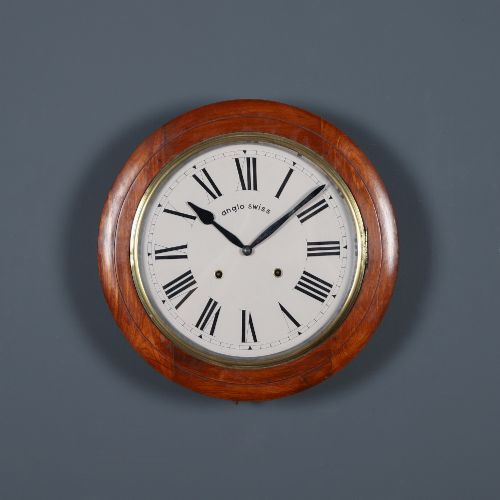
Railway station and school clocks are functional, utilitarian timepieces designed for public visibility with clear dials and robust cases. Anglo-Swiss examples often feature mahogany surrounds.
These clocks were built for reliability in public spaces, prioritising legibility and durable chiming or striking mechanisms over decorative carving.