


Victorian Style Earrings
Victorian style earrings bring enduring romanticism to the ear, offering historic forms and gemstones that span genuine nineteenth-century pieces and later revivals.
Victorian Style Earrings
Victorian style earrings encompass genuine nineteenth-century pieces alongside later revivals from the Edwardian era through the mid-twentieth century. The selection ranges from delicate drop designs to ornate cluster earrings, reflecting changing tastes across several decades.
Drop earrings and screwback configurations appear frequently, often incorporating pearls, paste, and coloured gemstones. Many examples adhere strictly to historic aesthetics, including Etruscan revival granulation and sunburst motifs.
Buyers encounter metals spanning silver, silver gilt, and various carats of gold, alongside organic materials such as coral, tortoiseshell, and shell cameos. The array demonstrates how jewellers reinterpreted historic nineteenth-century motifs well into the twentieth century.
Materials and construction
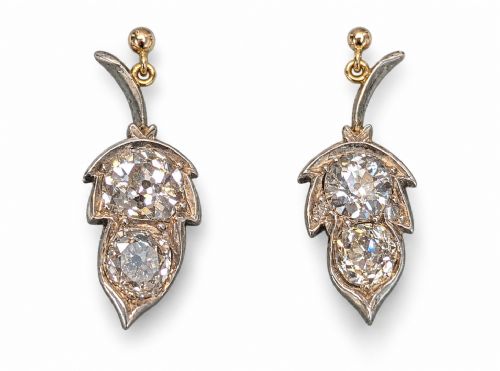
Goldsmiths utilised silver and multiple grades of gold, including nine-carat and fifteen-carat variants, often combining silver settings over gold to enhance the brilliance of old-cut diamonds. Metalwork incorporates fine wirework, granulation, and gilt finishes to achieve rich surface textures.
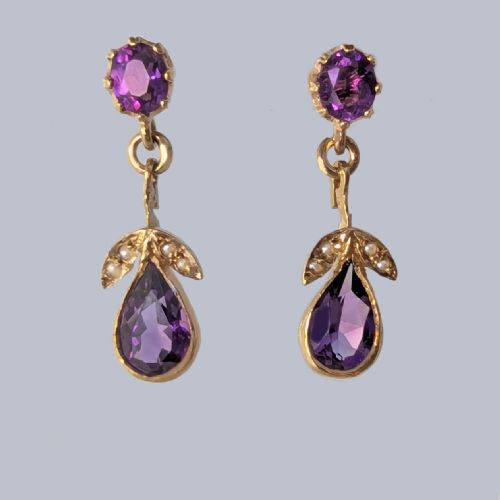
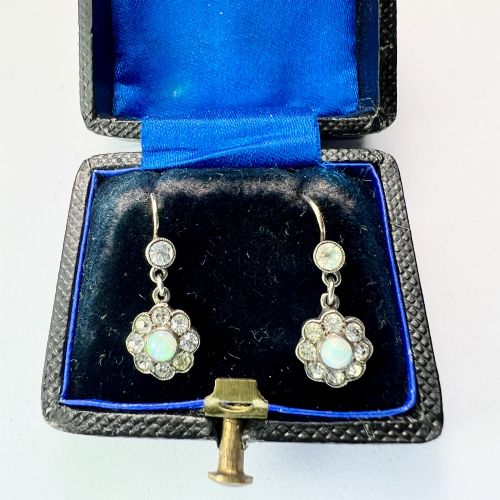
Gemstones such as amethysts, citrines, opals, and banded agates meet glass paste and seed pearls in secure bezel or prong settings. Screwback mechanisms and wire hooks provide the primary means of fastening, reflecting the period's evolving jewellery technology.
Listings feature periods spanning the Victorian era, Edwardian period, and mid-twentieth-century decades through the nineteen-sixties.
Distinctions in craftsmanship
The sophistication of the metalwork defines the upper tier, where hand-applied granulation and precise wire twisting distinguish meticulous workshop production from simpler output. Superior examples display seamless integration between the primary mount and the suspended drops.
Gemstone selection and cutting further separate grades, with old-cut diamonds and natural pearls commanding greater regard than moulded glass paste or synthetic substitutes. The integrity of the original settings and the weight of the gold or silver chassis indicate the original investment in the piece.
Knoll and Pregizer
The Victorian Style Earrings Glossary
- Etruscan Revival
- A nineteenth-century design movement inspired by archaeological discoveries, characterised by applied wirework and tiny gold granules. This style frequently appears on ornate gold drop earrings.
- Paste
- Hand-cut and polished lead glass used to imitate precious gemstones. Historic paste settings often achieve remarkable brilliance.
- Seed Pearl
- Very small natural or cultured pearls threaded or sewn onto jewellery. They appear extensively in floral and cluster designs.
- Dormeuses
- French sleeping earrings designed with secure closures comfortable enough to wear overnight. They often feature small diamond or pearl clusters.
Victorian Style Earrings: Frequently Asked Questions
How do I care for antique earrings?
Store them individually in soft pouches to prevent metal friction and gemstone scratching. Avoid chemical dips, particularly with pieces containing organic materials like pearls or tortoiseshell.
Clean gently with a soft, dry cloth after wearing to remove natural oils. Professional inspection ensures the security of older claw and bezel settings.
Are these earrings comfortable for daily wear?
Many designs incorporate lightweight drops or secure screwbacks that distribute weight evenly across the lobe. Heavier cluster and tassel configurations suit occasional wear rather than continuous daily use.
Consider the fastening type, such as wire hooks versus screw mechanisms, to match your personal comfort preferences. Proper balancing prevents undue strain on the earlobe.
How do I distinguish Victorian from later revivals?
Genuine nineteenth-century pieces display specific construction methods, such as hand-cut stones, closed-back settings in older examples, and characteristic patination on the metal surfaces. Hallmarks, when present, provide definitive chronological markers.
Later revivals from the mid-twentieth century often utilise modern findings or standardised stampings while mimicking earlier aesthetic movements. Examining the mount under magnification reveals the hand of the maker.
What materials are typical in these earrings?
Metals range from sterling silver and silver gilt to nine-carat and fifteen-carat yellow gold. Gemstones include amethysts, opals, banded agates, and old-cut diamonds alongside glass paste.
Organic elements such as seed pearls, coral, tortoiseshell, and carved shell cameos also feature prominently. These diverse materials reflect the changing decorative priorities of successive eras.