



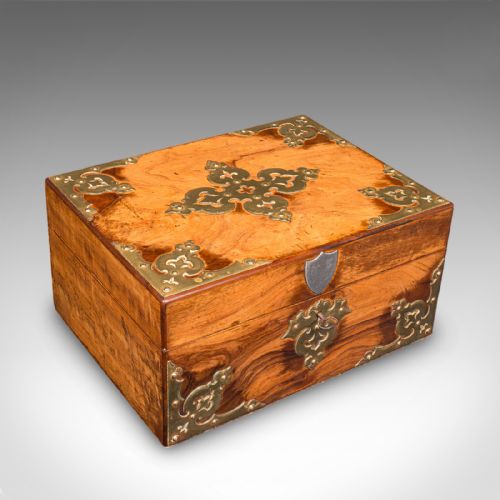


Victorian Strapwork Box
These Victorian strapwork box pieces combine heavy timber with decorative metal mountings to secure and display personal valuables.
Victorian Strapwork Box
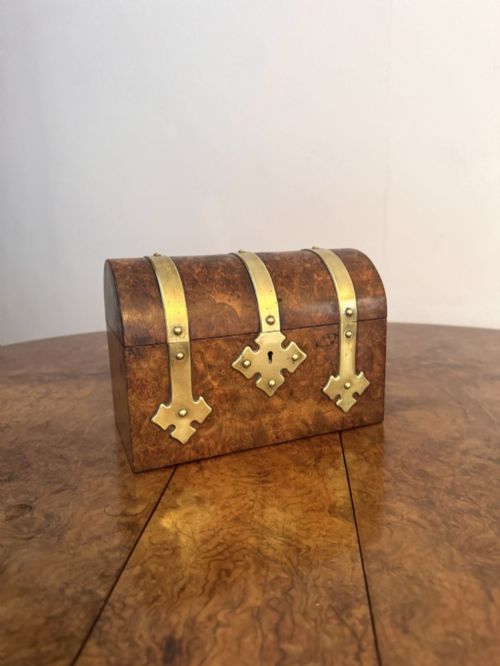
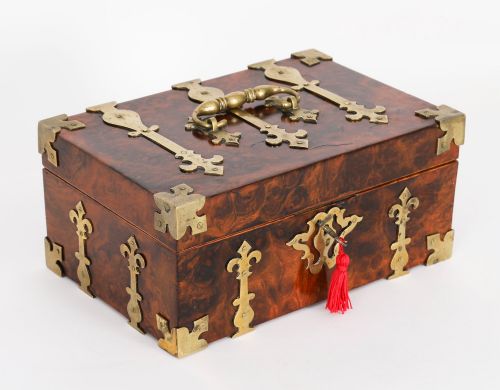
When you search for a Victorian strapwork box, you encounter desk accessories, stationery cabinets, and tea caddies constructed during the nineteenth century. These containers protect correspondence, writing implements, or jewellery with sturdy lids and reinforced corners.
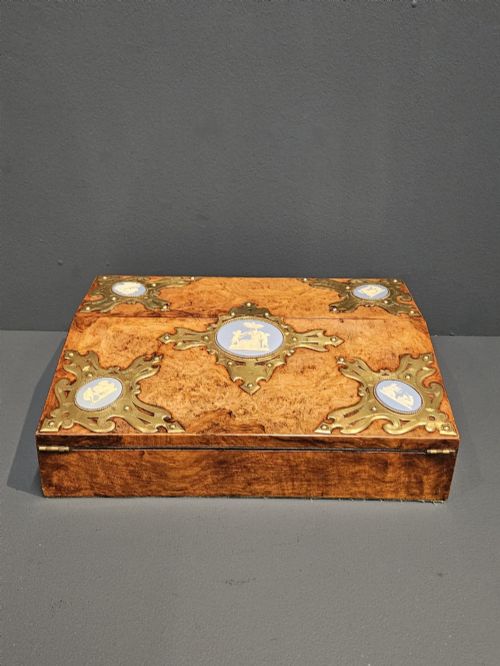
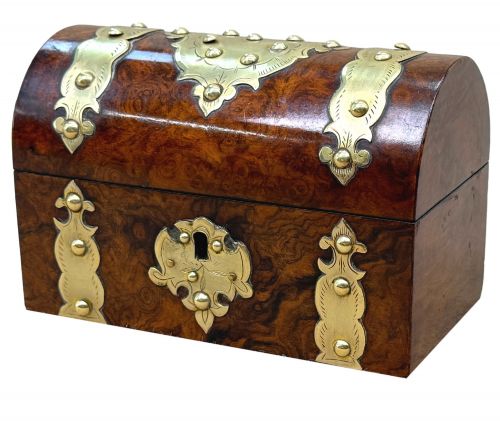
Burr walnut and coromandel wood dominate the selection, frequently paired with brass mountings and strapwork bands that wrap the exterior. Oak and pollard oak also appear, showing the heavy timber construction characteristic of the period.
Stationery boxes and jewellery caskets represent the most common forms on this page, often featuring domed lids or fitted interiors designed for nineteenth-century domestic use.
How they were made
Cabinetmakers used dense hardwoods such as walnut, burr walnut, and coromandel as the primary carcass materials, applying decorative veneers to curved and flat surfaces alike. These timbers provided the stable foundation necessary for housing fitted compartments and velvet linings.
Brass strapwork and mounts were screw-fixed or pinned across the wooden panels to reinforce corners and provide structural rigidity. Artisans incorporated cast iron, ormolu, and malachite details to accent the metal bands.
Victorian Strapwork Box Retail Price Guide 2026
Typical asking prices for victorian strapwork box among the pieces listed under this phrase on Sellingantiques today, from the lower quarter to the upper quarter. They describe what is for sale here now, not the wider market.
What varies in quality
The refinement of the brass strapwork and the selection of the wood grain determine the standing of each piece. Finely figured burr walnut and coromandel veneers with precise metal inlays separate finer workshop output from simpler utilitarian boxes.
Internal arrangement and hardware execution dictate the overall finish. Complete fitted stationery slots, original glass inserts, and intact lock mechanisms indicate higher production standards.
The Victorian Strapwork Box Glossary
- Strapwork
- Ornamental bands of metal applied across the exterior of a box for reinforcement and decoration. This technique originates from Renaissance design traditions revived during the nineteenth century.
- Burr Walnut
- Timber taken from the growth excrescences of a walnut tree, yielding complex, swirling grain patterns. Cabinetmakers prized this veneer for decorative lid panels.
- Coromandel
- A dense, heavily figured southeast Asian timber with dark brown and black striations. It was frequently selected for luxury nineteenth-century caddies and desk accessories.
- Casket
- A small decorative box or chest intended for holding jewellery or valuables. These containers often featured domed lids and elaborate metal mounts.
- Stationery Box
- An upright desk accessory designed to hold folded paper, envelopes, and writing implements. They often incorporate sloping front panels or tiered interior dividers.
Victorian Strapwork Box: Frequently Asked Questions
What is a Victorian strapwork box?
These pieces are nineteenth-century wooden containers reinforced with decorative metal bands across the exterior. They encompass stationery cabinets, tea caddies, and jewellery chests.
Cabinetmakers built them from dense timbers like walnut and coromandel to protect household valuables and writing materials.
How were these boxes used originally?
Households placed them on desks and tables to organise correspondence, store writing equipment, or lock away tea and jewellery. The fitted interiors kept small personal items sorted.
Their robust construction allowed owners to transport valuable papers and keepsakes safely within the home.
How do I care for wood and brass?
Keep wooden surfaces away from direct sunlight and sudden temperature shifts to prevent timber shrinkage and veneer lifting. Dust the brass mountings gently without abrasive metal cleaners.
Applying microcrystalline wax occasionally protects the polished hardwood finish from moisture and handling marks.
How can I tell the period?
Nineteenth-century construction methods, such as hand-cut dovetails and traditional brass hardware fixings, indicate the era. Design motifs often reflect Gothic Revival or Arts and Crafts influences.
Materials like coromandel and burr walnut point directly to mid-to-late Victorian workshop preferences.