




Victorian Sterling Sugar Tongs
Victorian sterling sugar tongs are small domestic implements designed for lifting lumps of sugar, frequently found paired in fitted cases or matching flatware sets.
Victorian Sterling Sugar Tongs
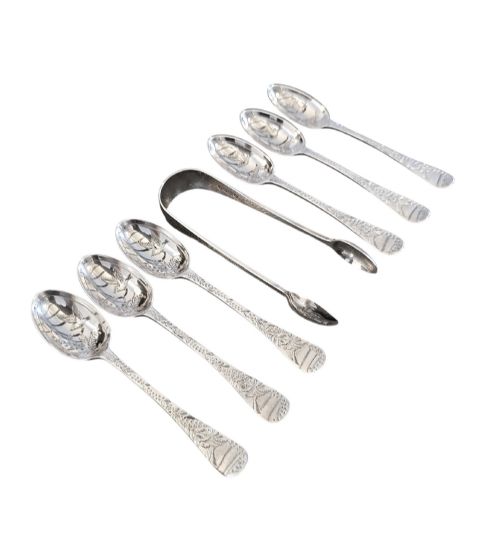
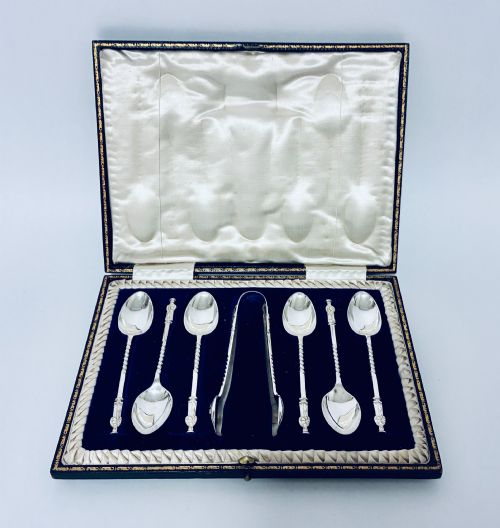
Victorian sterling sugar tongs are practical serving implements created during the nineteenth century, encompassing both spring-action scissor forms and bowed pivot designs. These pieces often appear alongside matching teaspoons, apostle spoons, or within larger boxed cutlery sets.
The selection on this page demonstrates various regional assay offices across the British Isles, including Dublin, Birmingham, Exeter, Newcastle, and Chester. Dates span the mid to late nineteenth century into the early twentieth century, reflecting standard Victorian domestic dining habits.
Materials and Construction
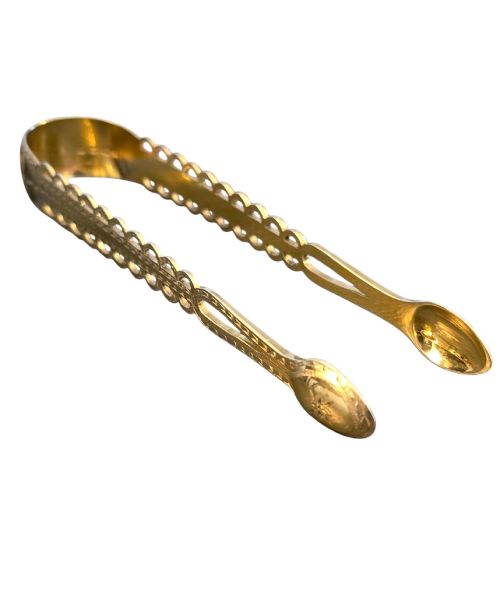
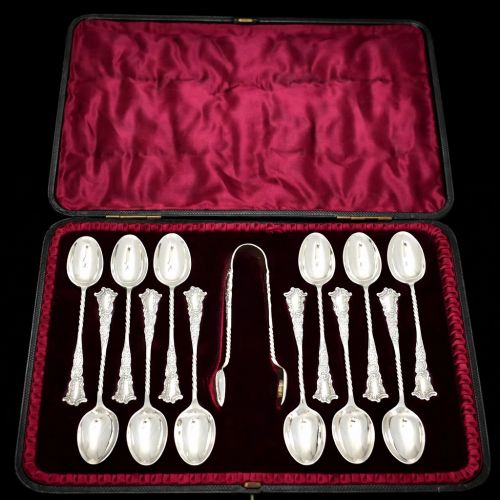
Makers shaped sterling silver and silver-gilt through hammering, piercing, and embossing, frequently employing naturalistic foliate designs or ornate decorative patterns. Certain examples utilise fitted presentation boxes lined with velvet, silk, satin, leather, and leatherette.
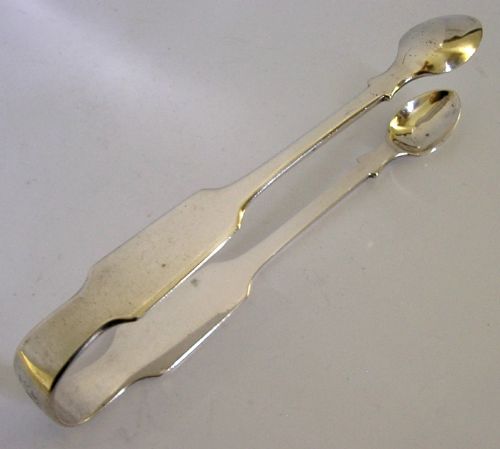
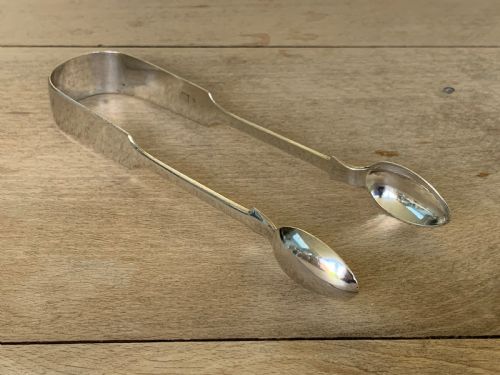
The structural integrity relies on the spring tension of the central bow or the pivot mechanism of scissor-type sugar nips. Hallmarks stamped directly into the metal indicate the assay office, standard of silver, and date of manufacture.
Listings feature sterling silver and silver-gilt pieces bearing hallmarked dates from the Victorian period through to the early twentieth century.
Judging Quality
The distinction between standard examples and superior pieces rests on the crispness of the chased or pierced ornamentation and the weight of the silver. Substantial gauge metal ensures the implement retains its spring tension without bending during use.
Provenance indicated by clear hallmarks from regional assay offices and recognised makers adds distinction. Complete original cased sets with intact velvet and silk linings also elevate the standing of a piece.
Josiah Williams & Co·John Walton·Francis Higgins·Robert Stebbings
The Victorian Sterling Sugar Tongs Glossary
- Sterling silver
- A standard alloy consisting of ninety-two point five percent silver and seven point five percent other metals, usually copper. This composition provides the necessary durability for functional tableware.
- Silver-gilt
- Silver that has been coated with a thin layer of gold on the surface. This technique produces a rich, warm tone often seen on interior bowls of tongs or accompanying spoons.
- Assay office
- An official body that tested precious metals and stamped items with official hallmarks. Marks from regional offices like Exeter or Dublin help identify the origin of a piece.
- Sugar nips
- An alternative term for sugar tongs, particularly those featuring scissor-like handles and pivot mechanisms rather than a single bent bow. They offer a firm grip for breaking or moving sugar lumps.
Victorian Sterling Sugar Tongs: Frequently Asked Questions
How do I clean sterling sugar tongs?
Clean these silver implements using a soft cloth and a reputable silver polish, avoiding harsh abrasive materials that can wear away the delicate chasing and hallmarks. Rinse them thoroughly in warm water and dry immediately to prevent tarnishing.
Take particular care with pieces that feature silver-gilt surfaces or delicate hinges, as aggressive scrubbing will damage the finish. Store them away from damp environments to maintain the metal.
Are these tongs suitable for modern sugar cubes?
Most Victorian sugar tongs easily accommodate standard sugar cubes or loose sugar lumps used in contemporary settings. The spring action is designed for everyday handling during tea service.
While functional, many owners choose to use them selectively for formal dining or display them alongside matching teaspoons in fitted presentation cases.
How do I read the hallmarks?
British hallmarks typically include a standard mark for sterling silver, a town mark indicating the assay office, a date letter, and a maker's mark. These stamps are usually located on the inside of the bow or along the handles.
Reference guides can help match specific date letters and town marks to narrow down the exact year and location of manufacture for each piece.
What is the difference between tongs and nips?
Traditional sugar tongs are formed from a single piece of metal bent into a bow shape, relying on spring tension to squeeze the two arms together. Sugar nips generally feature two separate arms joined by a pivot pin in a scissor configuration.
Both forms served the same purpose during tea service, though nips often allowed for a firmer grip when handling hard sugar loaves or refined lumps.