



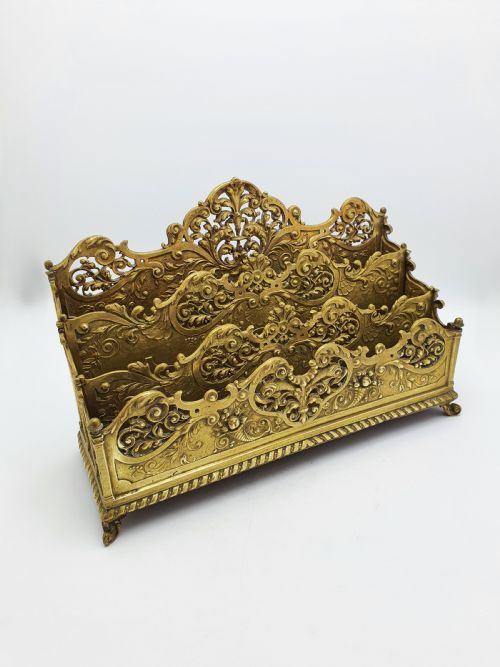

Victorian Stationery Organiser
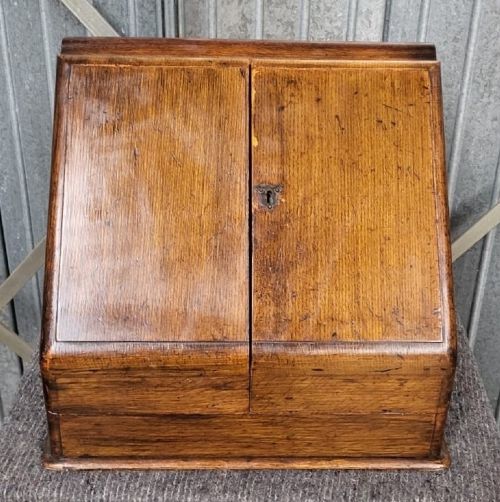
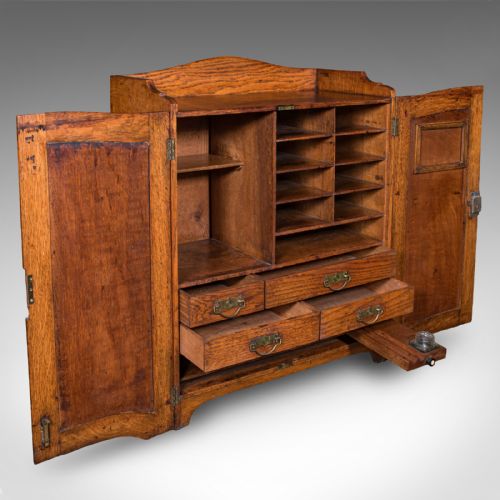
A victorian stationery organiser brings order to correspondence, offering compartments for letters, envelopes, and nibs upon a writing desk.
Victorian Stationery Organiser
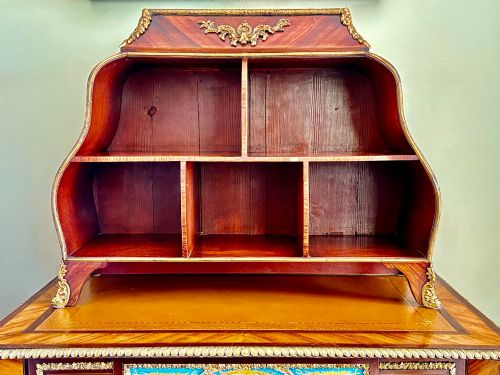
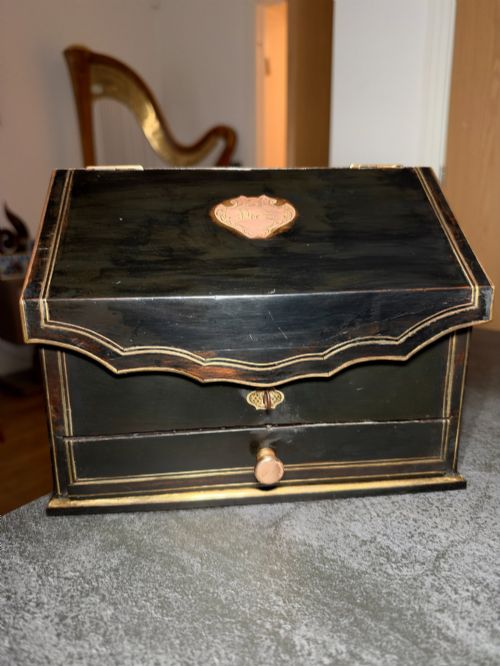
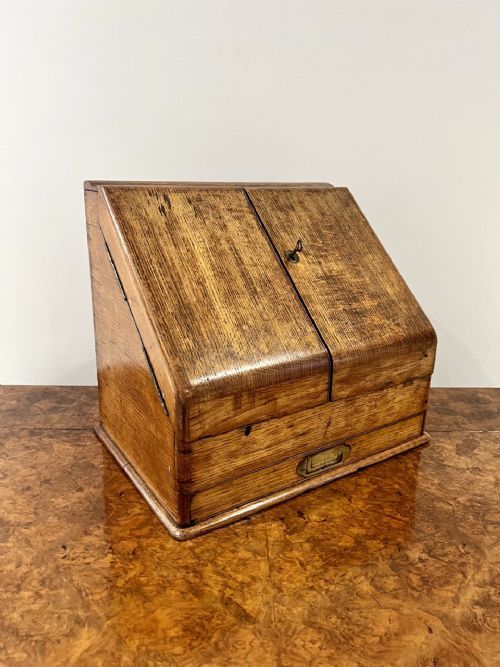
A victorian stationery organiser encompasses tabletop letter racks, correspondence boxes, and sloping desk cabinets designed for domestic and office use. These pieces belong to the nineteenth century, spanning from the eighteen-sixties through the Edwardian period.
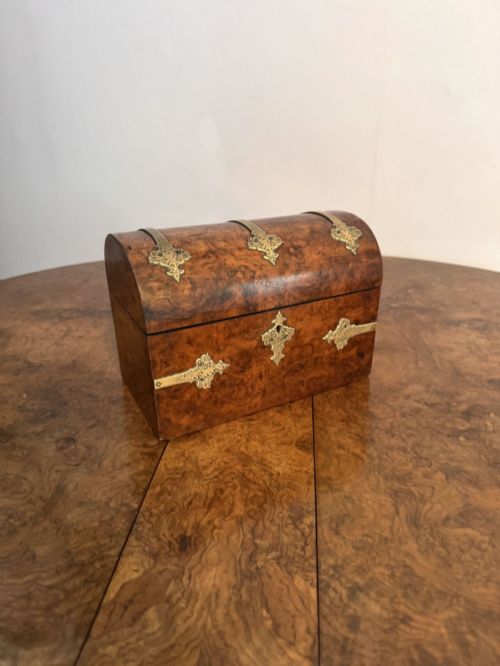
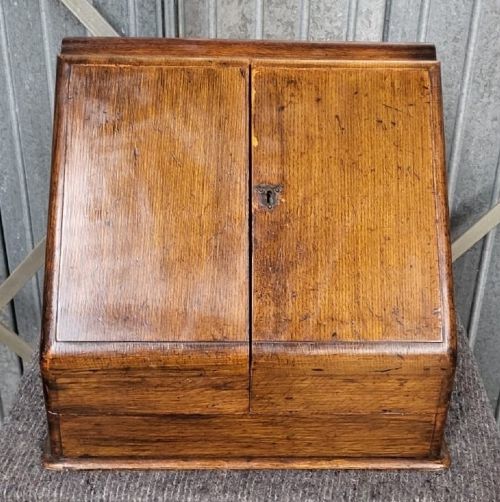
Oak and walnut dominate the selection, often accented with brass hinges, mounts, and lock escutcheons. Cabinet makers constructed these desktop pieces to house incoming post, folded papers, and writing implements.
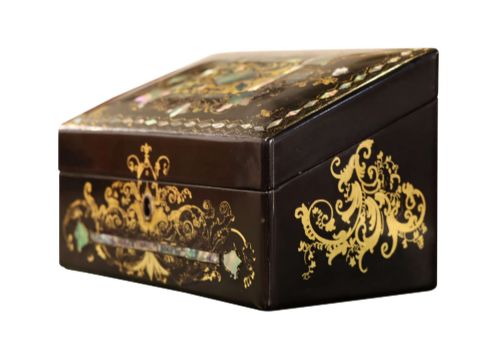
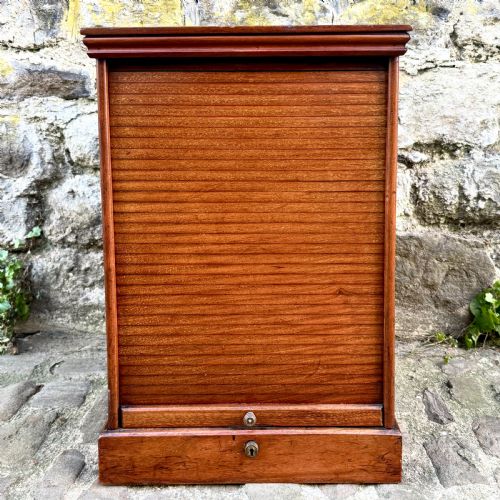
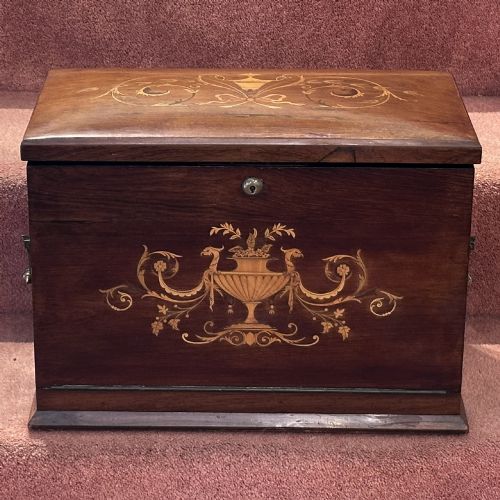
Examples range from utilitarian oak clerk cupboards and filing cabinets to decorative rosewood, mahogany, and coromandel boxes inlaid with satinwood or mother-of-pearl.
Materials and Techniques
Carpenters utilised sturdy hardwoods such as oak, walnut, mahogany, and rosewood for the primary carcass, frequently employing dovetailed joinery for internal drawers and partitions.
Decorative embellishments include cast brass strapwork, ormolu mounts, marquetry inlay, and carved gothic motifs applied to correspondence box lids and letter rack dividers.
Specialised workshops also produced papier-mâché, Japanese lacquer, and Tunbridge Ware mosaic designs, lining interiors with velvet, roan leather, or watered silk.
Victorian Stationery Organiser Retail Price Guide 2026
Typical asking prices for victorian stationery organiser among the pieces listed under this phrase on Sellingantiques today, from the lower quarter to the upper quarter. They describe what is for sale here now, not the wider market.
Listings feature oak, walnut, mahogany, rosewood, coromandel, and lacquer materials across the Victorian and Edwardian periods.
Judging Quality
Superior stationery organisers display timber with rich natural grain and depth, selected carefully for visible surfaces and matched across panels. Lesser examples rely on plain, unfigured wood with heavy stained finishes.
Hardware distinguishes high-end cabinet work, with robust brass hinges, working lever locks bearing original keys, and finely detailed cast mounts rather than stamped sheet metal.
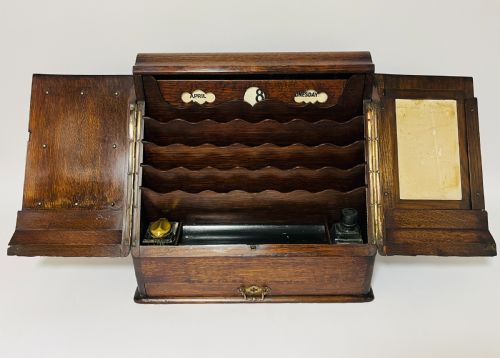
Internal complexity elevates a piece, such as tiered letter slots, built-in perpetual calendars, secret compartments, and matching glass inkwells fitted securely within a desk tidy.
Edmund Nye·W and J Milne
The Victorian Stationery Organiser Glossary
- Cartonnier
- A desktop cabinet containing multiple drawers or compartments for holding loose papers, documents, and stationery. These upright pieces stood upon grand library desks.
- Standish
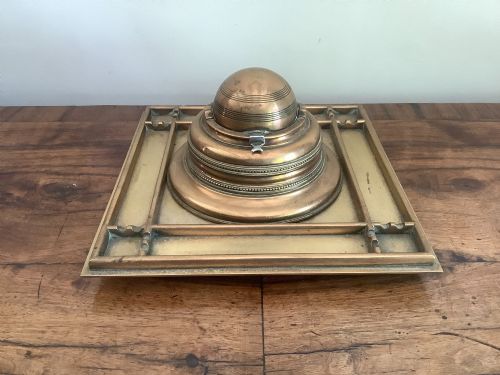
- An inkstand or tray designed to hold inkwells, sanders, and pen holders. Standishes often incorporate small drawers for wafers and nibs.
- Tunbridge Ware
- Woodware decorated with tiny mosaic tiles assembled from different coloured natural timbers to form geometric or pictorial patterns. This technique reached its height in nineteenth-century Kent.
- Ormolu
- Gilded bronze mounts applied to furniture and desk accessories for decorative effect. The technique involves coating metal with a mercury and gold amalgam.
Victorian Stationery Organiser: Frequently Asked Questions
What is a victorian stationery organiser?
A victorian stationery organiser is a desktop container designed to hold envelopes, writing paper, and letters in an orderly fashion.
These pieces include slope-front boxes, upright cabinet organisers, and open letter racks used in nineteenth-century studies and offices.
How were stationery boxes used?
Stationery boxes held daily correspondence, incoming mail, and blank writing sheets ready for use.
Many incorporated pen trays, inkwells, and small drawers for stamps and sealing wax to keep the writing surface tidy.
How do I identify a gothic revival organiser?
Gothic revival pieces feature architectural motifs derived from medieval buildings, including pointed arches, trefoils, and heavy chamfered framing.
Cabinet makers paired these dark oak or walnut structures with strapwork brass hinges and iron lock plates.
Where should I place a desk tidy?
A desk tidy sits upon a partner desk, library table, or writing bureau to manage daily post and writing accessories.
Wall-mounted letter racks also function in hallways or studies to hold incoming correspondence near an entrance.