
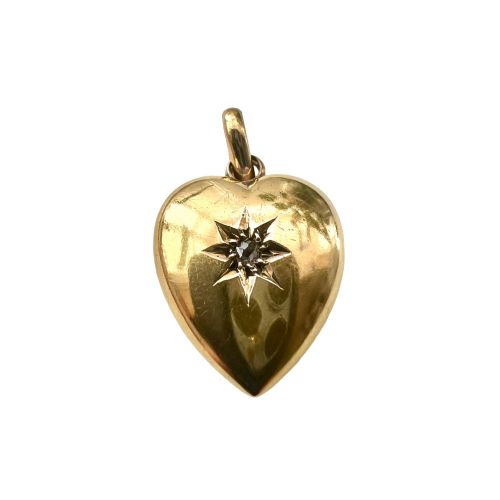
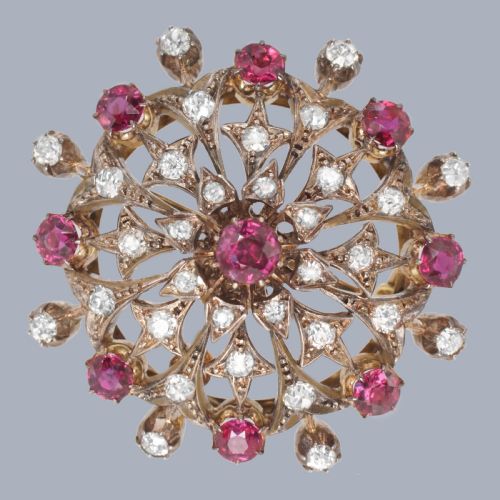


Victorian Starburst Pendant
A victorian starburst pendant catches the light with celestial brilliance, offering a wearable piece of the nineteenth century cosmos.
Victorian Starburst Pendant
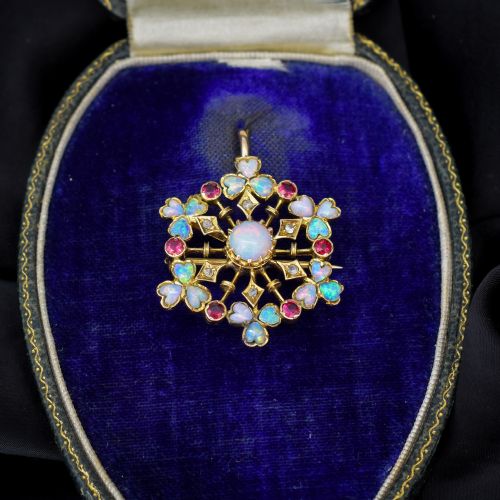
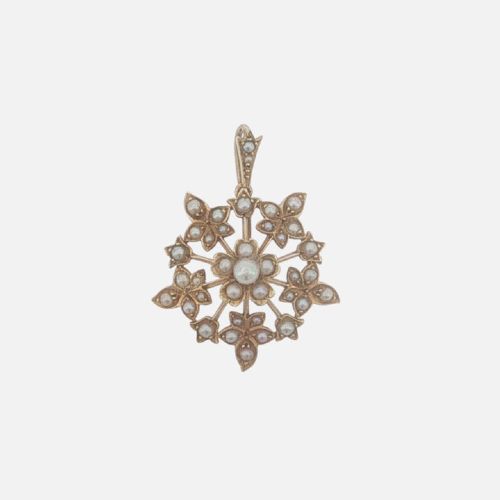
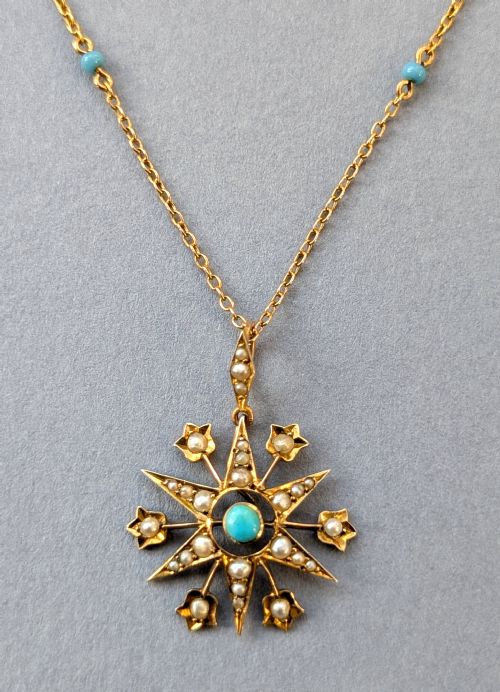
A victorian starburst pendant takes the form of a celestial motif, radiating outward from a central gem to capture the nineteenth century fascination with the night sky. Buyers searching for a victorian starburst pendant encounter pieces that double as brooches, utilising clever convertible mechanisms designed for versatile fastening.
The pieces on this page stem primarily from the Victorian and Edwardian eras, spanning the late nineteenth century into nineteen hundred. Alongside distinct starbursts, related designs incorporate seed pearls, turquoise, opals, and old cut diamonds set within yellow gold and silver.
How They Were Made
Goldsmiths utilised varying purities of yellow gold, ranging from nine carat up to eighteen carat, frequently pairing gold with silver to mount old cut diamonds effectively. Silver settings on the upper face enhanced the cold brilliance of diamonds, while gold formed the supportive reverse and bale structures.
Gemstones such as seed pearls, turquoise, garnets, and rubies were secured using fine claw settings or intricate collet work suited to delicate floral and celestial arrangements.
Victorian Starburst Pendant Retail Price Guide 2026
Typical asking prices for victorian starburst pendant among the pieces listed under this phrase on Sellingantiques today, from the lower quarter to the upper quarter. They describe what is for sale here now, not the wider market.
Some nineteenth century stars doubled as secret love tokens, hiding tiny compartments for locks of hair behind the sparkling stones.
What Varies in Quality
The calibre of a piece rests on the precision of the stone arrangement and the symmetry of the radiating points. Superior examples display harmonious proportions where old cut diamonds or natural pearls are matched carefully for size and lustre.
Construction details also distinguish the range, particularly the integration of convertible brooch and pendant fittings that function smoothly without compromising the structural integrity of the delicate gold or silver work.
The Victorian Starburst Pendant Glossary
- Old cut diamond
- A diamond cut by hand during the nineteenth century, featuring a smaller table and a higher crown that produce a distinctive soft sparkle under candlelight.
- Seed pearl
- A very small, naturally occurring or early cultured pearl, often drilled and threaded onto fine silk or wire to create clustered floral and star designs.
- Convertible pendant
- A piece of jewellery engineered with a detachable or folding pin and a hidden loop, allowing it to be worn interchangeably as a brooch or a necklace.
- Rose cut diamond
- A stone faceted with a flat base and a domed crown of triangular facets, resembling an opening rosebud and popular in earlier jewellery.
- Celestial motif
- A design scheme drawing inspiration from stars, sunbursts, and comets, reflecting Victorian romanticism and astronomical discoveries.
Victorian Starburst Pendant: Frequently Asked Questions
How do I wear a convertible pendant?
Many starburst pieces feature a hinged pin and a concealed loop on the reverse, allowing the item to function as a brooch on a lapel or suspend from a chain around the neck.
Securing the safety catch properly ensures the piece remains stable when shifted between these two distinct formats.
What metals were commonly used?
Jewellers utilised nine carat, fifteen carat, and eighteen carat yellow gold, frequently combining gold with silver on the face to mount diamonds securely.
Silver was favoured for its bright white surface that made old cut diamonds appear more brilliant against the darker gold backing.
Are these pieces original to the period?
The listings encompass items originating from the Victorian and Edwardian eras, typically dating from the mid-nineteenth century through to nineteen hundred.
Materials, hand-cut stones, and traditional construction methods align with the manufacturing practices of these specific historical periods.
What gems appear in starburst designs?
Old cut diamonds and seed pearls form the core components of celestial and starburst configurations, often supplemented by turquoise, rubies, garnets, and opals.
These stones were chosen for their colour and contrast, enhancing the illusion of a sparkling night sky.