

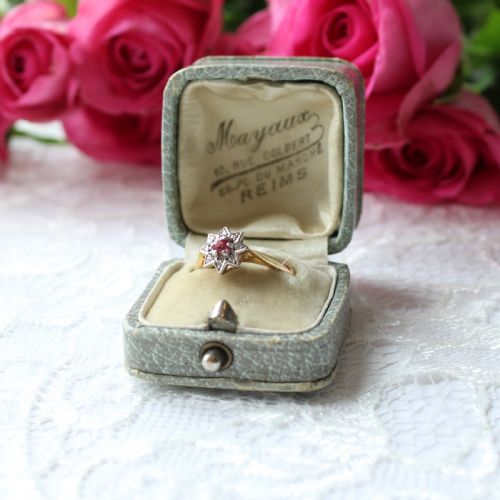
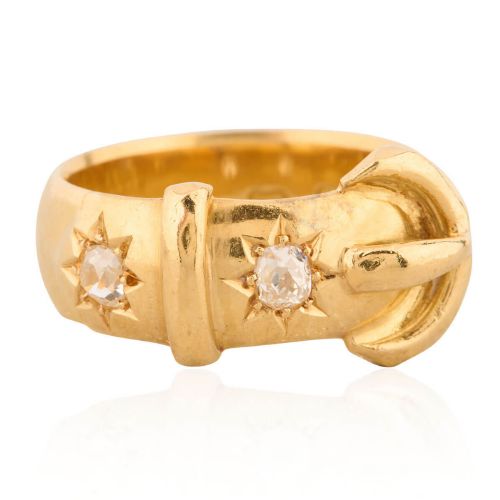


Victorian Star Ring
When you choose a victorian star ring, you hold a celestial motif captured in gold, diamond, and enamel.
Victorian Star Ring
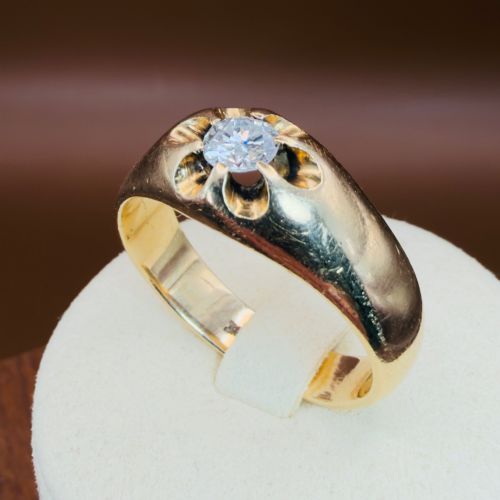
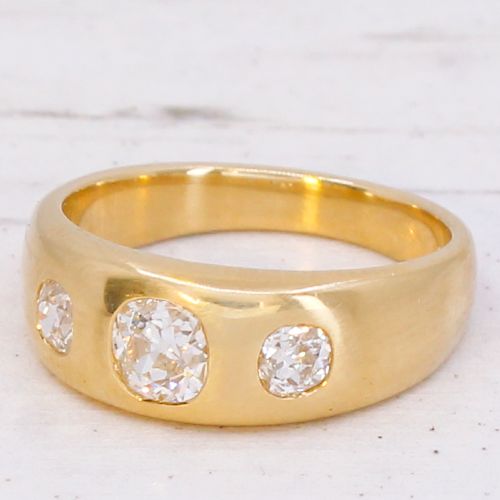
The versions most frequently found on this page span the Victorian and Edwardian periods, appearing alongside later 20th-century revivals. They manifest primarily as gypsy bands, solitaire settings, and multi-stone arrangements flush with the metal surface.
How they were made
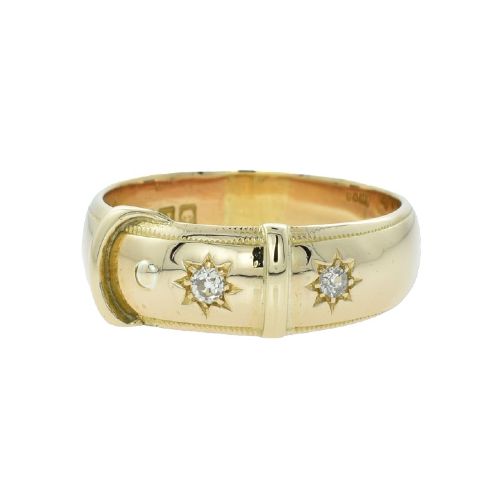
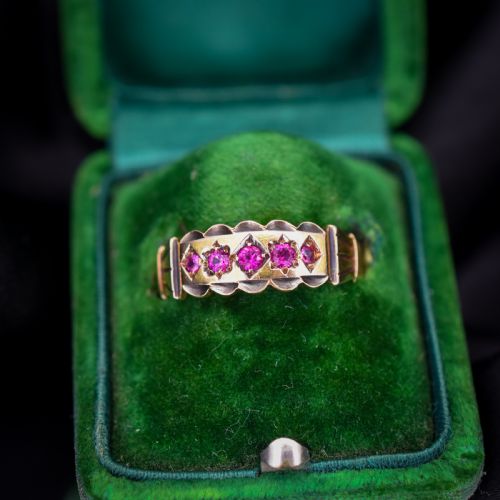
Goldsmiths utilised 9ct and 18ct yellow gold, casting or hammering bands to house stones safely within the metal body. Stones such as old-cut diamonds, rubies, sapphires, and garnets were secured via star engraving or flush gypsy settings.
Makers incorporated supplementary materials like blue enamel, seed pearls, and black onyx to heighten contrast against the gold. Techniques included hand-chasing, starburst engraving, and foil-backing to catch light within closed settings.
Listings span the Victorian and Edwardian eras, incorporating materials such as 18ct yellow gold, old-cut diamonds, rubies, sapphires, enamel, and pearls.
What varies in quality
Quality rests upon the crispness of the starburst engraving and the structural integrity of the flush-set stones. Superior examples display sharp, deep graver lines that radiate cleanly from the diamond or gemstone centre without wearing thin against the band.
The choice of materials also dictates the tier of the piece, distinguishing heavy 18ct gold bands set with old-cut diamonds from lighter 9ct or simpler stamped variations. Gemstone selection plays a role, with clean rubies, sapphires, and lively old-cut diamonds elevating the overall execution.
The Victorian Star Ring Glossary
- Gypsy ring
- A ring style where stones are flush-set directly into the thick, tapered band of metal rather than held by prominent claws. This technique protected the girdle of the stone during daily wear.
- Old-cut diamond
- A hand-faceted diamond cut before modern machinery standardised proportions, typically featuring a smaller table, higher crown, and open culet. These stones catch candlelight with broad, soft flashes.
- Star engraving
- A geometric motif of incised lines radiating outward from a central stone to mimic a twinkling star. Artisans utilised gravers to cut these sharp rays directly into the gold surface.
- Illusion set
- A mounting technique where a faceted stone is framed by a reflective metal plate designed to magnify its apparent size. This method creates the visual impact of a larger diamond.
- Trilogy ring
- A ring featuring three main stones set in a row across the finger, often interpreted to represent the past, present, and future. In these listings, they frequently combine diamonds with rubies or sapphires.
Victorian Star Ring: Frequently Asked Questions
How do I care for a victorian star ring?
Clean these rings gently using warm water and a soft brush, avoiding harsh chemical dips that damage enamel or pearls. Store them separately to prevent harder gemstones from scratching the gold star engravings.
Because many examples feature flush-set stones or delicate enamel work, professional periodic checks ensure the metal surrounding the stars remains secure.
Are these rings suitable for daily wear?
Gypsy and star-set designs were originally built for durability, keeping stones protected low within the metal band. Solid gold weights and flush mountings make many of them robust companions for everyday use.
Pieces incorporating soft materials like pearls, turquoise, or delicate enamel require greater mindfulness to preserve their surface integrity over time.
How can I tell a Victorian star ring from a later reproduction?
Examine the hallmarks, metal colour, and hand-cut facets of the diamonds to gauge the period of manufacture. Nineteenth-century pieces often display Chester or Birmingham assay marks alongside distinct hand-engraved starburst patterns.
Old-cut diamonds with asymmetrical facets and closed-back settings point firmly to the Victorian era, whereas uniform modern cuts suggest later revival work.
What do gemstones other than diamonds signify in these rings?
Rubies, sapphires, and garnets were frequently paired with diamonds to add rich colour and symbolic meaning to celestial motifs. Blue enamel and turquoise echoed the heavenly theme by representing the night sky.
These coloured stones were hand-selected to contrast against warm yellow gold, often following Victorian sentiments regarding love, fidelity, and memory.