


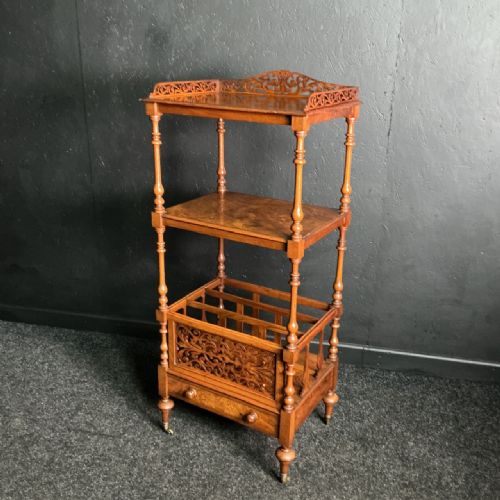
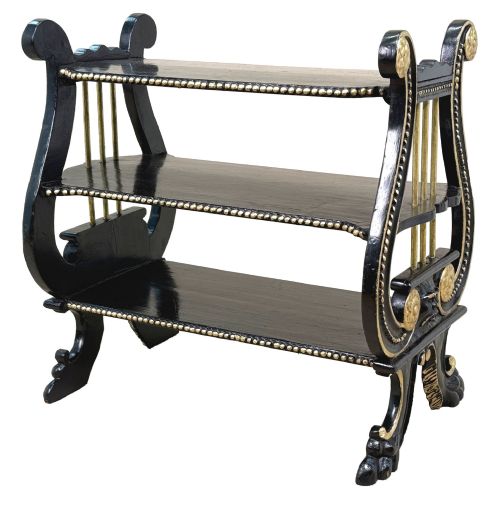
Victorian Standing Shelves
Victorian standing shelves combine open display with sturdy utility, offering a practical architectural form for organising books and objects in any room.
Victorian Standing Shelves
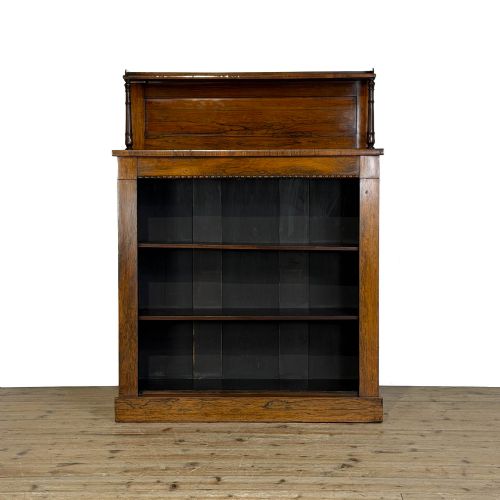
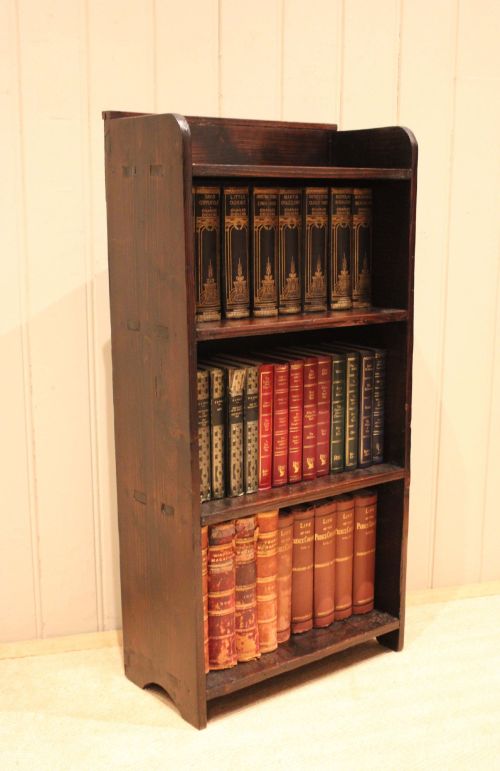
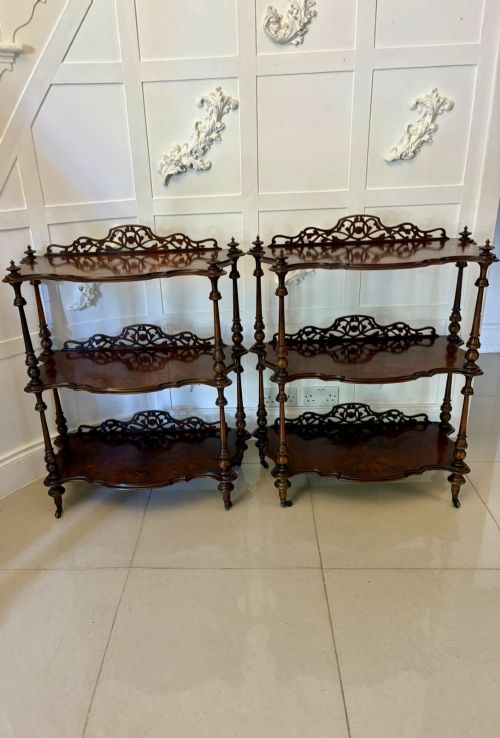
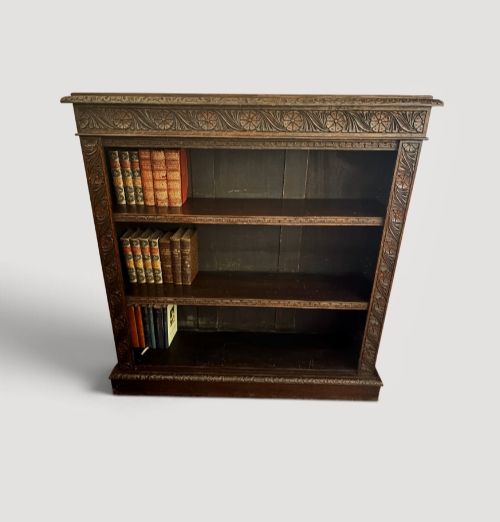
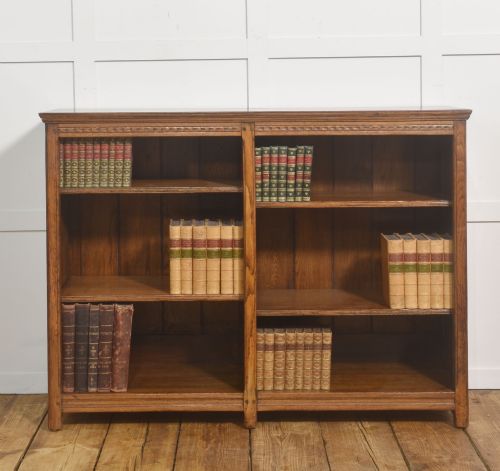
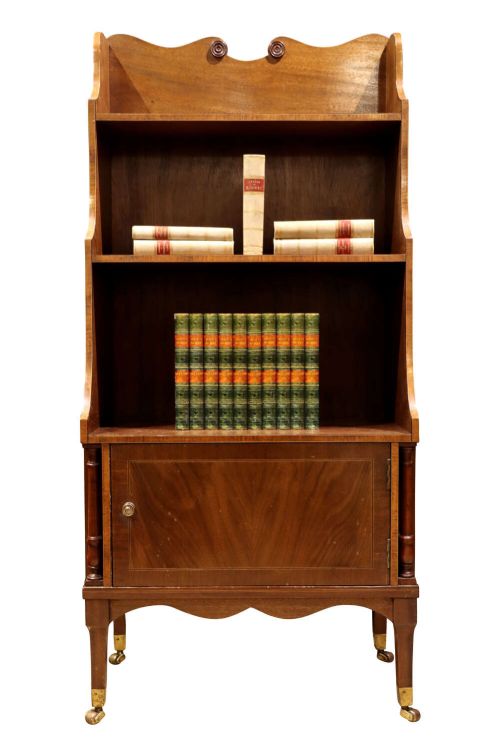
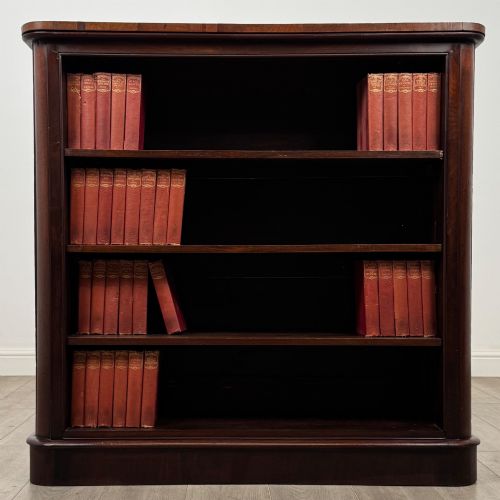
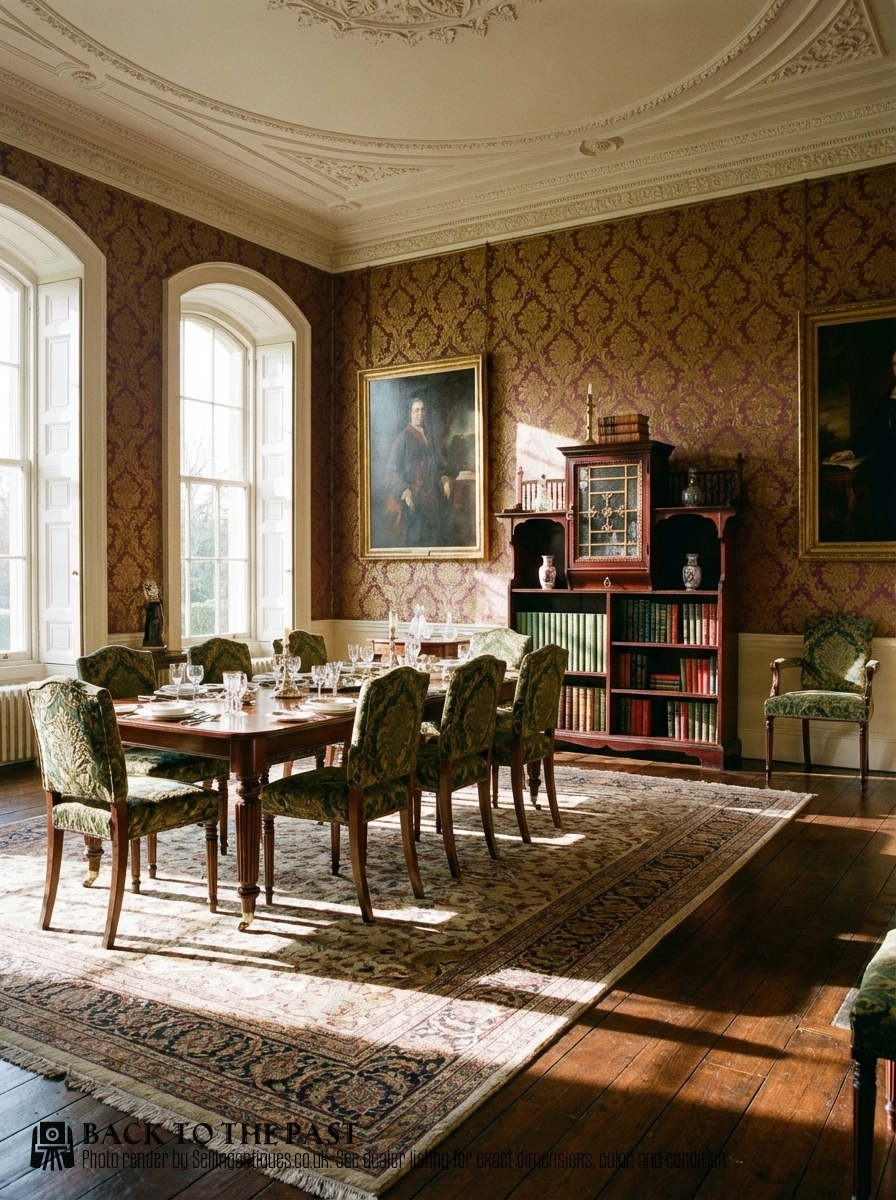
Victorian standing shelves encompass a diverse group of multi-tiered furniture built for display and storage, ranging from open bookcases and low dwarf units to tiered etageres and corner whatnots. These pieces serve primarily to hold books and decorative objects off the floor, utilising vertical space efficiently within domestic interiors.
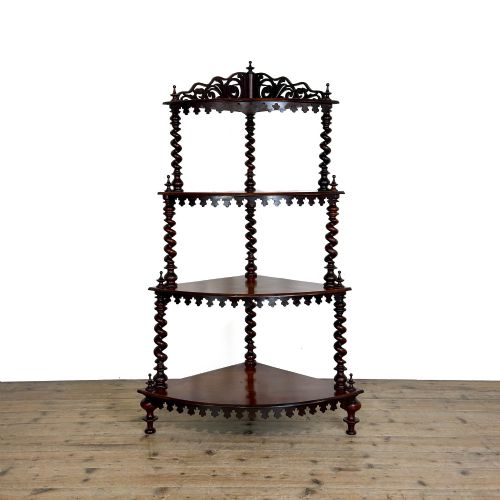
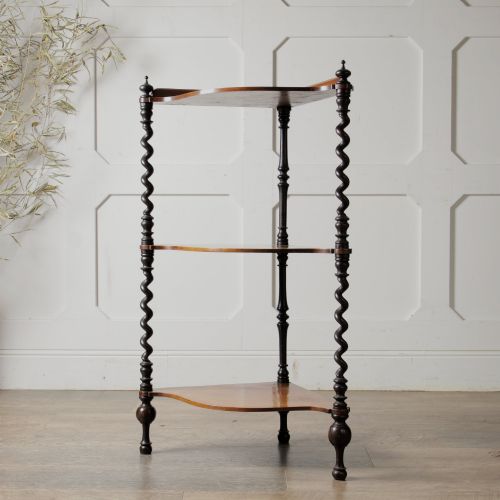
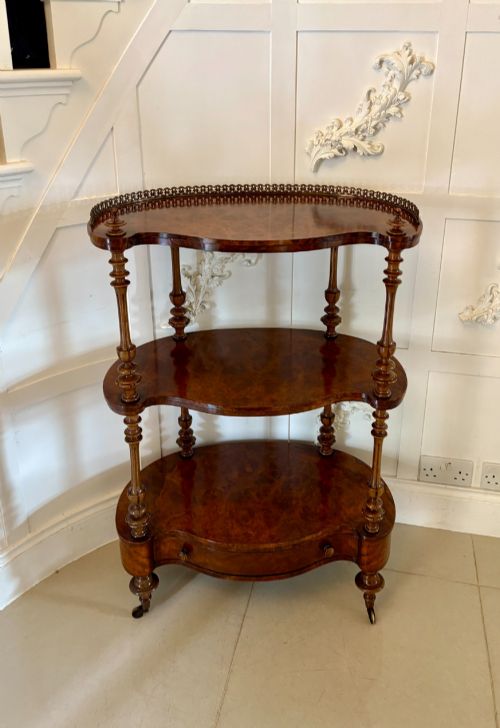
The version most commonly encountered on this page is the freestanding mahogany or burr walnut whatnot, often structured with three or more open tiers supported by turned or twist columns. Alongside these, buyers will frequently find open bookcases with adjustable shelving and specialised corner cabinets designed to fit snugly into architectural recesses.
How they were made
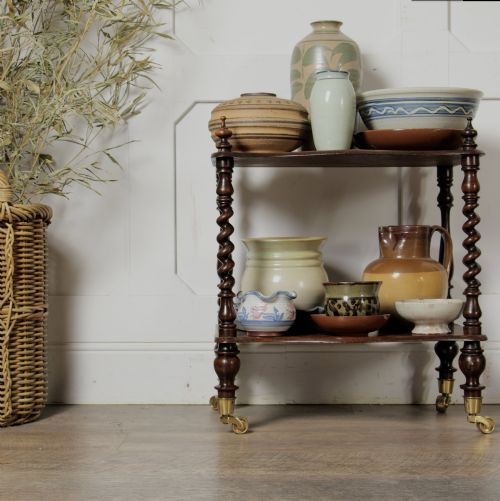
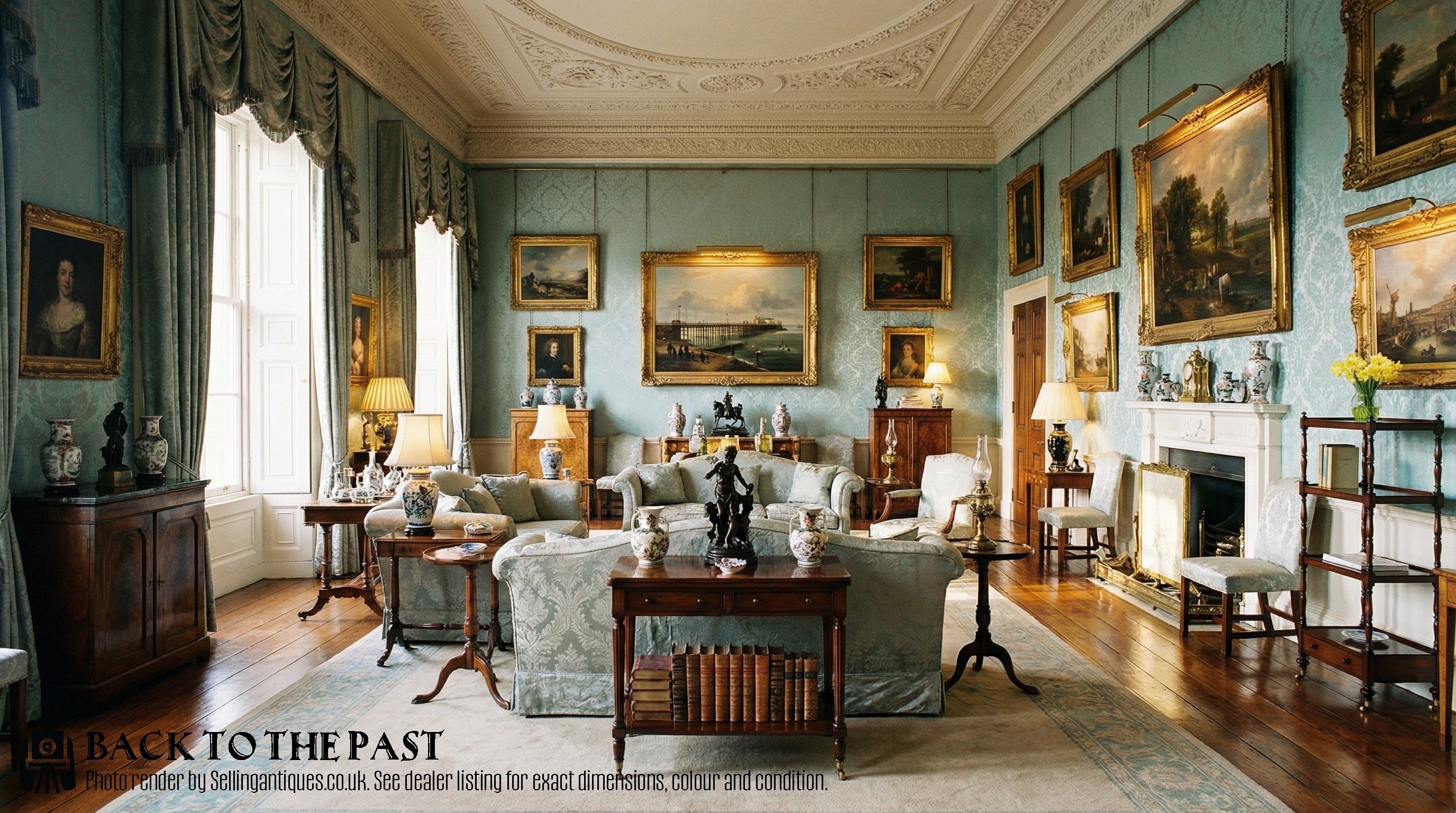
Cabinetmakers constructed these standing units predominantly from dense cabinet timbers such as mahogany, walnut, burr walnut, and rosewood, frequently incorporating contrasting brass castors or mounts for mobility and decorative accent. Lighter woods like bamboo, oak, and teak also appear alongside ebonised finishes and parcel gilding to reflect varied stylistic tastes.
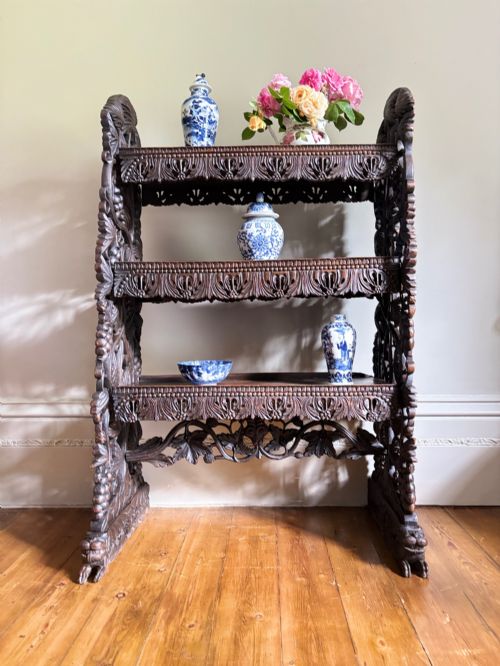
Structural joinery relied heavily on sturdy vertical supports, whether through barley twist columns, shaped side panels, or tiered uprights secured with traditional cabinet fixings. Shelving was frequently engineered to be adjustable via internal supports, while decorative flourishes involved carved woodwork, inlaid veneers, and serpentine shaping.
What varies in quality
The distinction between standard production items and top-tier examples rests upon the selection of timber veneers, such as richly figured burr walnut or dense rosewood, and the refinement of the secondary details like brass castors and turned columns. Superior pieces display precise cabinetmaking in their serpentine contours, tight joints, and balanced proportions.
Makership and design ambition also divide the range, with workshop attribution to notable firms or distinct stylistic movements lifting a piece beyond straightforward utility. Simpler pine or oak units prioritize robust rural function, whereas meticulously inlaid or ebonised tiers demonstrate high Victorian craftsmanship.
Gabriel Viardot·Liberty & Co.·Leonard Wyburd·Edwards & Roberts
The Victorian Standing Shelves Glossary
- Whatnot
- A multi-tiered piece of freestanding furniture designed for displaying ornaments, books, or small objects on open shelves. These units typically feature three or more levels supported by slender uprights or columns.
- Etagere
- A French term for a set of open shelves or standing display tiers used to hold decorative items. They frequently appear in refined woods with delicate upright supports.
- Canterbury
- A low piece of furniture featuring partitioned vertical sections designed for holding music sheets, books, or periodicals. They often incorporate lower drawer storage or stand upon small castors.
- Barley twist
- A type of turned wooden column carved in a spiral or helical twist resembling barley sugar. This decorative woodworking technique appears frequently on the upright supports of Victorian stands and whatnots.
- Waterfall bookcase
- A tiered shelving unit where each successive shelf is shallower than the one below it, creating a stepped profile reminiscent of cascading water. These pieces are often wall-mounted or freestanding.
Victorian Standing Shelves: Frequently Asked Questions
What is the difference between a whatnot and a bookcase?
A whatnot is primarily designed for displaying ornaments and curiosities across open tiers, while a bookcase focuses specifically on storing volumes of books, often behind glass doors or within adjustable shelving frames.
In practice, many Victorian standing shelves overlap in function, allowing owners to house books on lower tiers while displaying decorative objects on the upper levels.
How do I know if the shelves are adjustable?
Adjustable shelves typically feature vertical rows of wooden slots, brass ratchets, or peg holes inside the cabinet walls that allow the shelf supports to be moved to different heights.
Fixed shelves are permanently secured into the vertical sides of the frame during initial construction and cannot be repositioned without altering the joinery.
Where should I place a corner whatnot?
Corner whatnots are specifically engineered with triangular or angled footprints to fit directly into the ninety-degree junction of two walls, making efficient use of overlooked spaces.
They work effectively in hallways, dining rooms, or living areas where standard rectangular furniture would block traffic flow or take up excessive floor space.
Are these shelves sturdy enough for heavy books?
Most mahogany, walnut, and oak standing bookcases and lower units are constructed from dense hardwoods capable of supporting substantial library volumes without warping.
Lighter bamboo, ebonised, or multi-tiered etagere stands are better suited for lighter decorative objects, ceramics, and occasional books rather than heavy reference sets.