







Victorian Standing Screen
A victorian standing screen blocks radiant hearth heat while adding colour and texture to a room.
Victorian Standing Screen
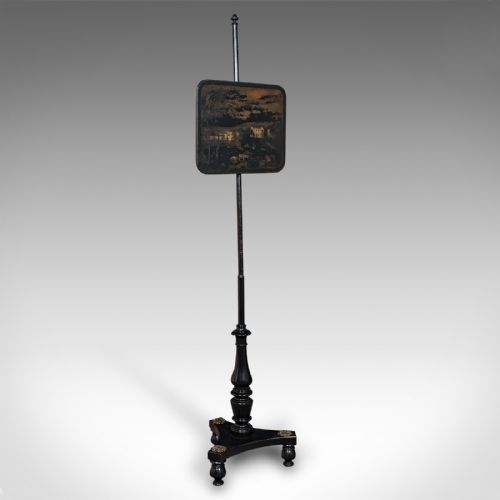
A victorian standing screen encompasses several distinct forms designed to manage fireplace warmth or redirect light. The pole screen, featuring an adjustable panel mounted on a central vertical shaft, appears frequently alongside rigid framed guards and folding screens.
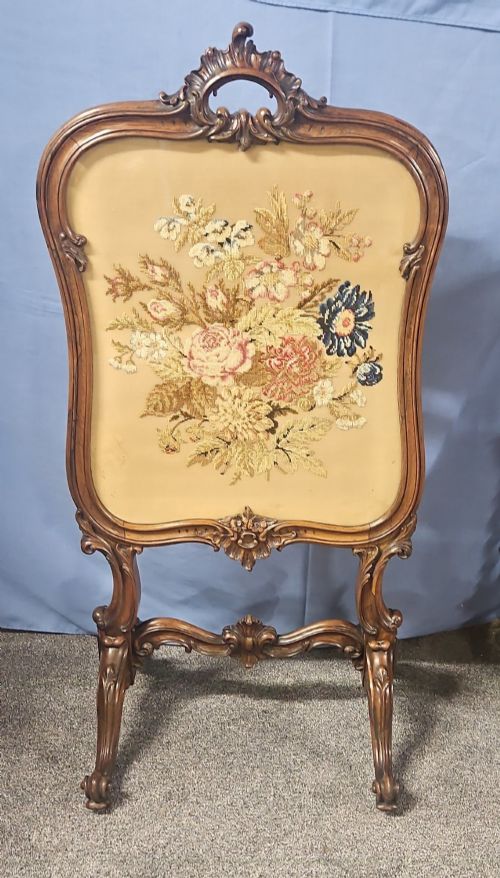
Makers utilised rich hardwoods such as mahogany, rosewood, walnut and satinwood for the structural supports, often pairing them with textile inserts. These objects served a practical domestic purpose in rooms heated by open coal fires before central heating altered household habits.
Materials and construction
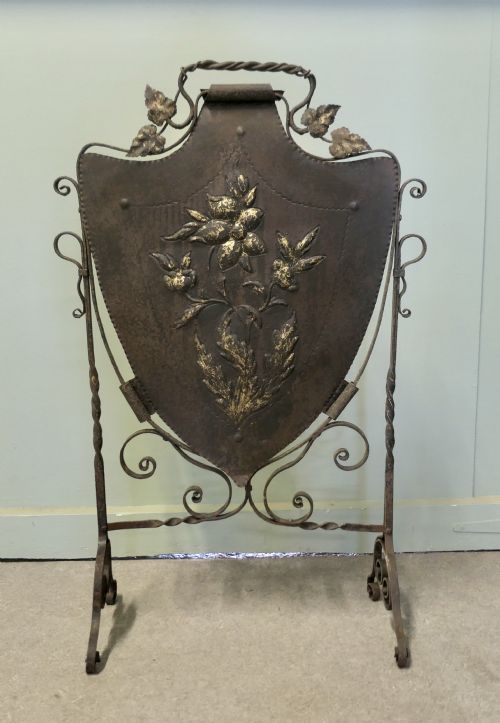
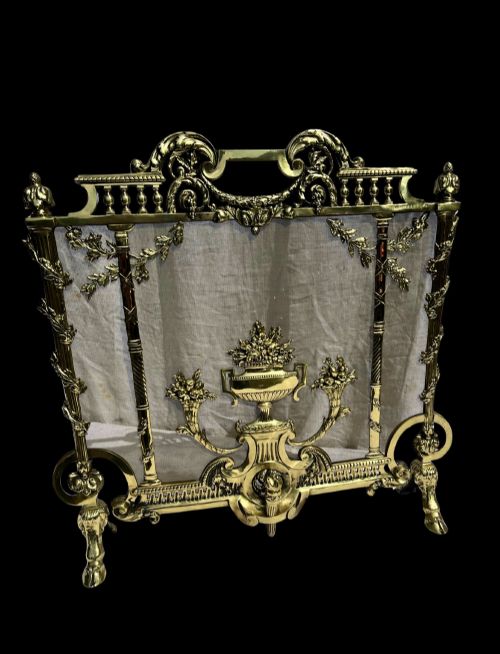
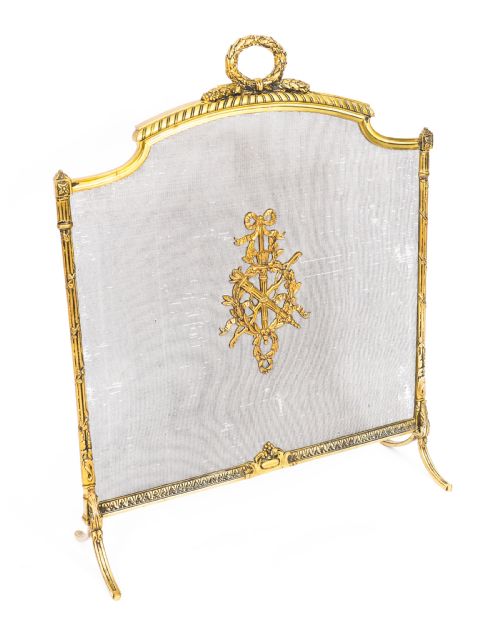
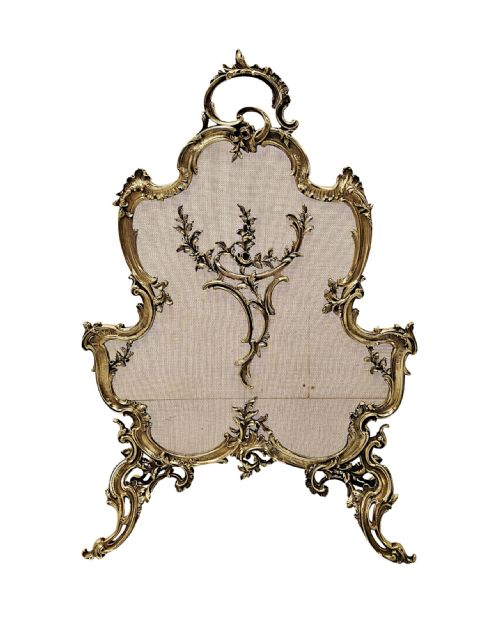
Frames rely on turned and carved timbers like rosewood, mahogany and walnut, or cast and spun brass and iron. Metal components include adjustable stems, tripod bases and heavy spark guards.
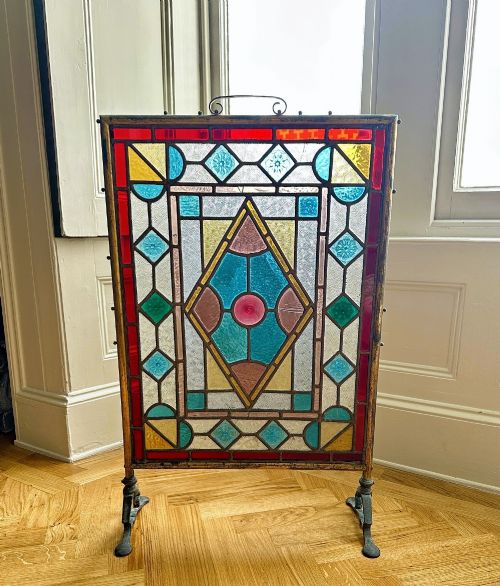
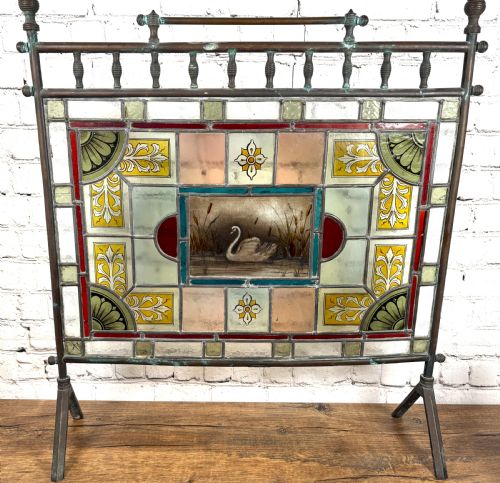
The decorative panels showcase handwork through needlework, wool tapestry, silk embroidery and stained glass inserts. Textile elements are stretched or mounted within wooden borders or suspended from pivoting brass arms.
Papier mache screens record Welsh interest with painted scenes of Haverfordwest.
Assessing quality
Quality rests on the crispness of the timber carving, the stability of the weighted or tripod base, and the intricacy of the mounted needlework panel. Fine examples display robust joinery in the pole mechanism and substantial gauge metal in brass frames.
The complexity of the textile work, whether gros point, petit point or silk embroidery, marks the distinction between standard domestic pieces and finer parlour furnishings.
AFC
The Victorian Standing Screen Glossary
- Pole screen
- A standing screen with an adjustable panel that slides up and down a vertical wooden shaft. This design allowed occupants to shield their faces from the sudden heat of an open coal fire.
- Needlework
- Stitched textile decoration executed in wool or silk upon canvas grounds. Panels often depict floral arrangements, landscapes or heraldic scenes.
- Spark guard
- A rigid metal mesh or screen placed directly before the hearth. It prevents hot embers from escaping onto carpets and floorboards.
- Gilt bronze
- Metal cast in bronze and treated with gold leaf or mercury gilding. This technique provides a durable metallic sheen on decorative frames.
- Aesthetic movement
- A late nineteenth century design style emphasising visual beauty over narrative meaning. Pieces from this period often incorporate simplified forms and Japanese influenced motifs.
Victorian Standing Screen: Frequently Asked Questions
What is a pole screen?
A pole screen is a vertical standing screen fitted with an adjustable panel on a central stem.
Occupants adjusted the height of the textile panel to block radiant heat from the fireplace while sitting nearby.
How do I use a standing screen today?
These screens function effectively as room dividers, decorative accents, or fireplace accessories in living spaces.
They sit easily beside modern hearths or within studies to add texture and period character to an interior.
How do I distinguish Regency from Victorian examples?
Regency pieces often display classical revival motifs, sabre legs, and leaner proportions in rosewood or mahogany.
Victorian iterations tend towards heavier carving, more ornate needlework, and wider adoption of brass and iron frames.
What are candle screens?
Candle screens are miniature standing screens equipped with adjustable shades to protect viewers from glare.
They were placed on tables near candle holders to diffuse harsh light and shield the face.