



Victorian Staffordshire Group Figure
When you handle a victorian staffordshire group figure, you hold a piece of nineteenth-century domestic pottery designed to tell a story on the mantelpiece.
Victorian Staffordshire Group Figure
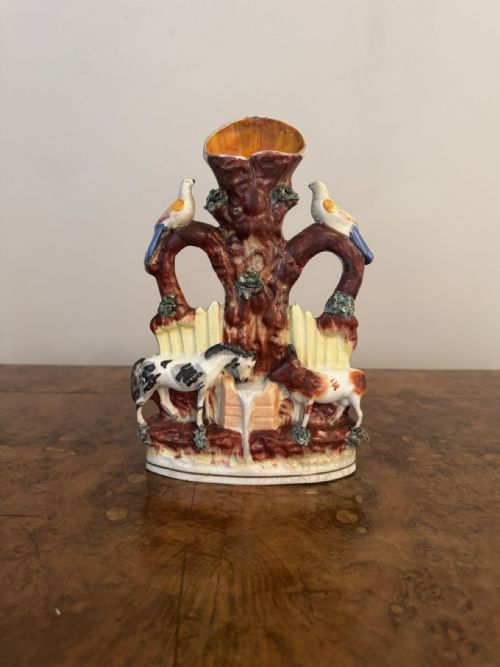
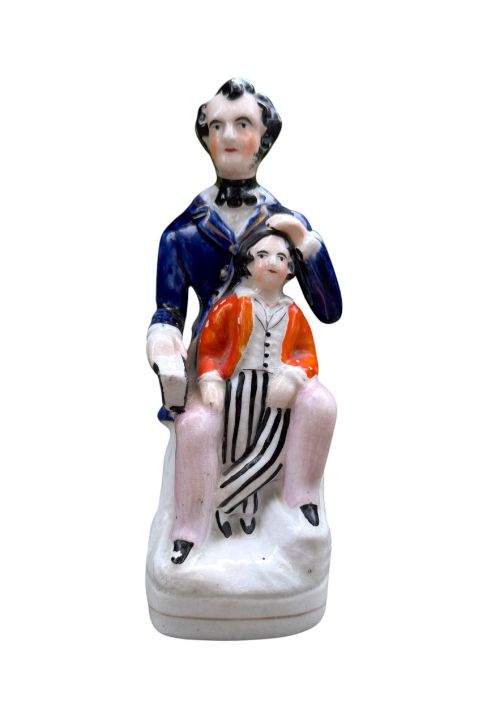
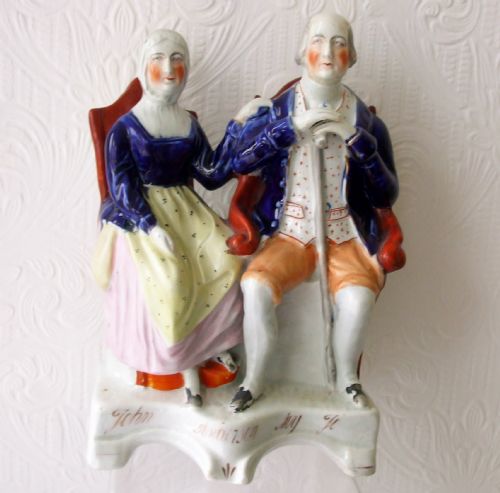
A victorian staffordshire group figure brings together nineteenth-century earthenware figurines, portrait subjects, and spill vases produced in English potteries. These pieces take the form of royal portraits, literary pairs, animals, and historical alliances from the periods around eighteen-sixty and eighteen-eighty.
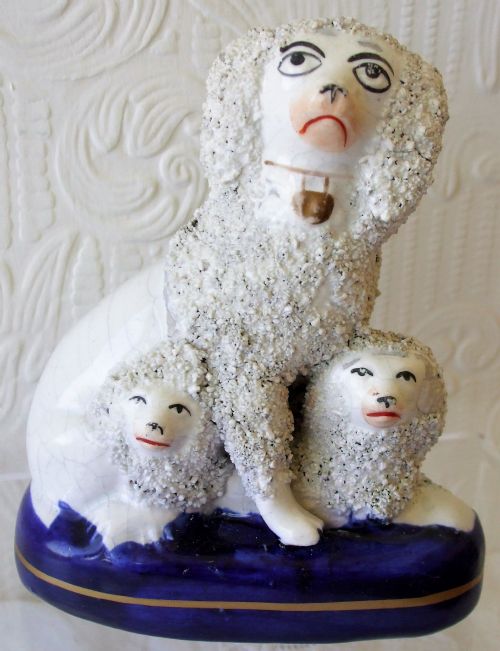
Buyers encounter flatback figures intended to be viewed from the front on a high shelf, alongside hollow spill vases that doubled as holders for tapers. The subjects range from domestic poodles and cows with milkmaids to political groupings such as the Crimean War Peace and Plenty.
Most examples date across the nineteenth century, carrying the characteristic Victorian folk art charm of provincial Staffordshire production. They capture popular culture, royalty, and sentimental poetry in ceramic form for nineteenth-century homes.
How they were made
Potters shaped these figures from earthenware clay, often using press moulds to form the hollow bodies and flat backs typical of the period. The damp clay forms were then fired before receiving hand-applied decoration.
Listings feature earthenware materials finished with lead glaze and enamel paint across nineteenth-century styles.
What varies in quality
The preservation of the original glaze and the brightness of the enamel paint also determine the quality of a piece. Finer items retain their rich surface lustre and colour without heavy wear to the painted decoration.
The Victorian Staffordshire Group Figure Glossary
- Flatback
- A figure moulded with a finished front and a plain, unpainted flat rear designed to sit flush against a wall or mantelpiece. This method saved time and materials during production.
- Spill vase
- A hollow ceramic vessel incorporating a holder for wooden spills or matches alongside the main figural group. These practical objects served a daily function in nineteenth-century rooms.
- Lead glaze
- A glossy coating applied to earthenware before firing to seal the porous clay and provide a smooth surface. It gives these ceramics their characteristic reflective sheen.
- Enamel paint
- Coloured pigment applied over the fired glaze to add details to clothing, faces, and bases. These paints were often fixed with a second, lower-temperature firing.
Victorian Staffordshire Group Figure: Frequently Asked Questions
What is a flatback figure?
A flatback figure is a ceramic piece moulded with a decorated front and a plain, unpainted back. This design allowed the object to sit flat against a wall on a mantelpiece.
Potters produced them in large numbers during the nineteenth century because they used less clay and were easier to display in domestic interiors.
How were spill vases used?
Spill vases combined a decorative figural group with a hollow cylindrical tube designed to hold wooden tapers. Households used these tapers to transfer flames from the hearth to candles and lamps.
They sat on mantelpieces as both ornaments and practical items for daily nineteenth-century life.
What subjects do these figures show?
These figures depict a wide range of subjects including royal portraits, literary characters, military alliances, and domestic animals. Common themes feature political figures, historical events, and pastoral scenes with cows or poodles.
They reflect the popular culture and interests of the Victorian public.
How do you date a Staffordshire figure?
Dating relies on the style of the modelling, the subject matter, and the specific type of glaze and enamel paint used. Historical events and royal portraits provide clear chronological anchors for when a subject was popular.
Most pieces date from the nineteenth century, spanning the Victorian era.