

Victorian Staffordshire Dog Figurine
These Victorian Staffordshire dog figurine examples bring character to a mantelpiece, with spaniels and greyhounds appearing most often.
Victorian Staffordshire Dog Figurine
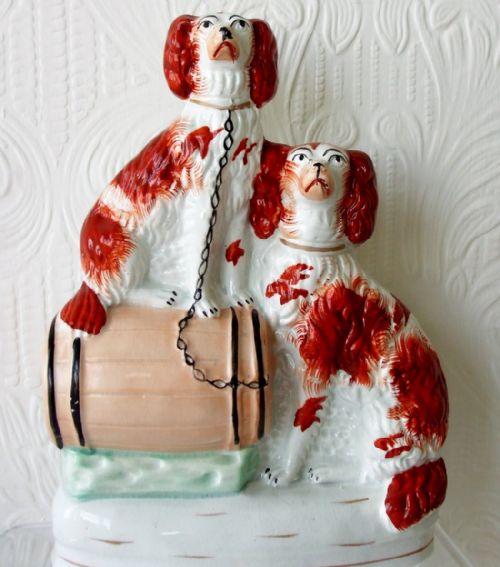
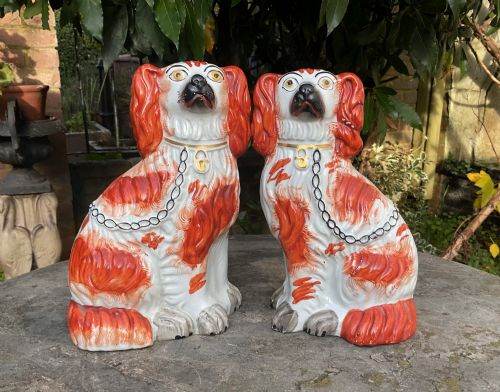
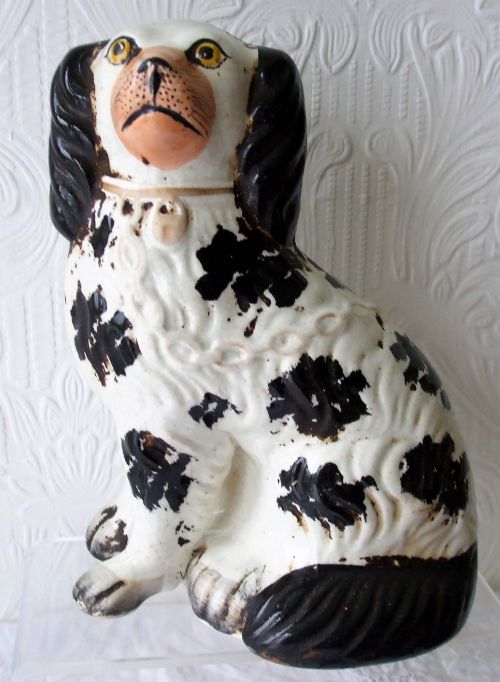
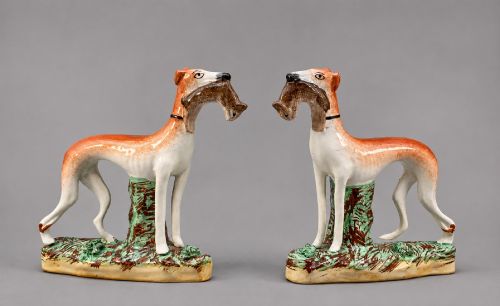
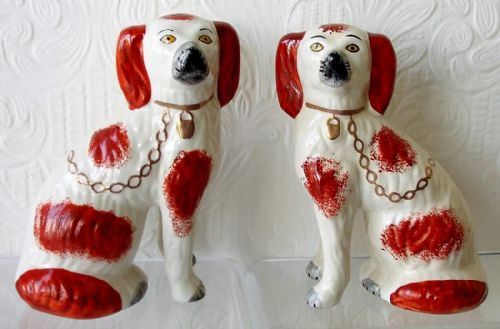
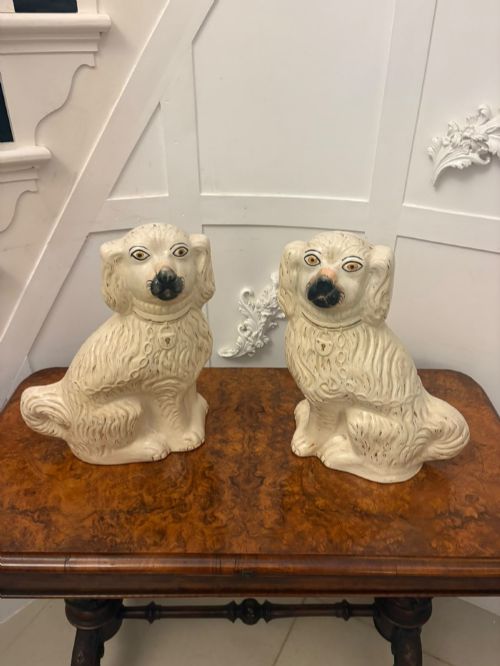
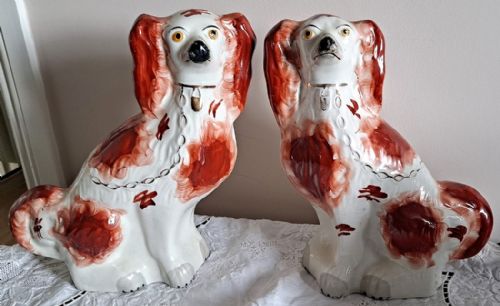
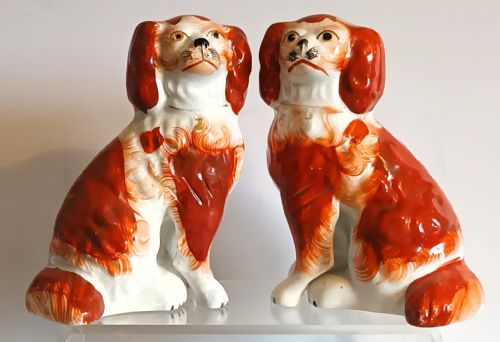
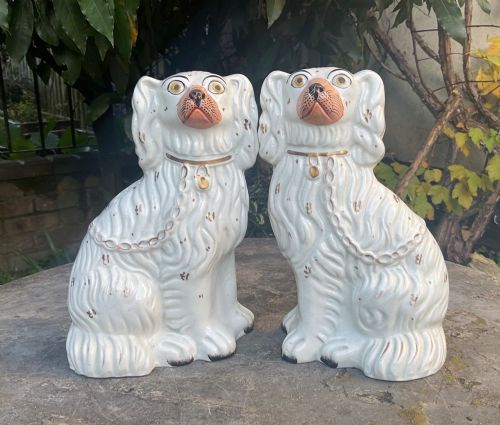
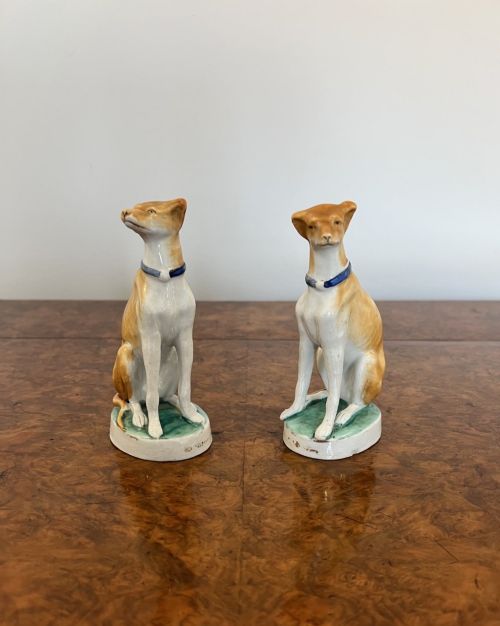
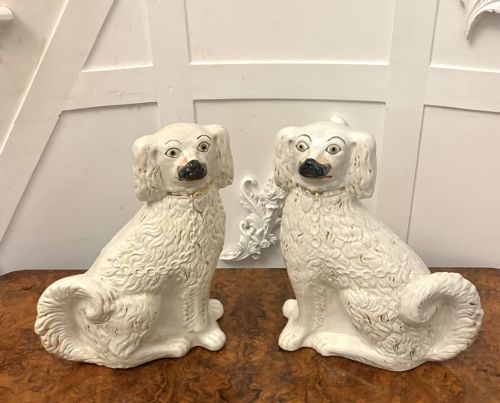
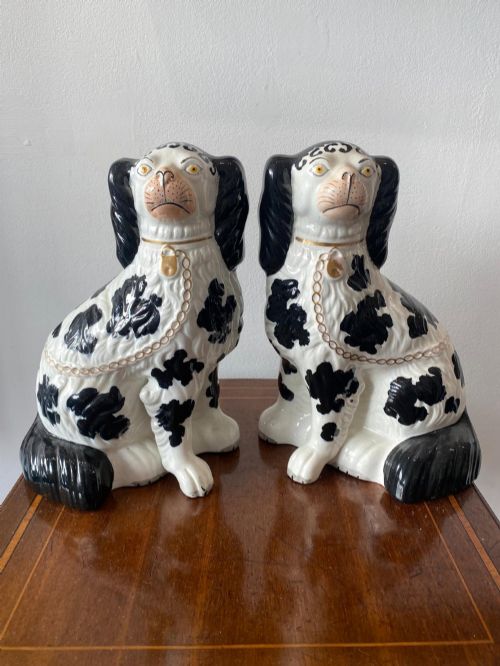
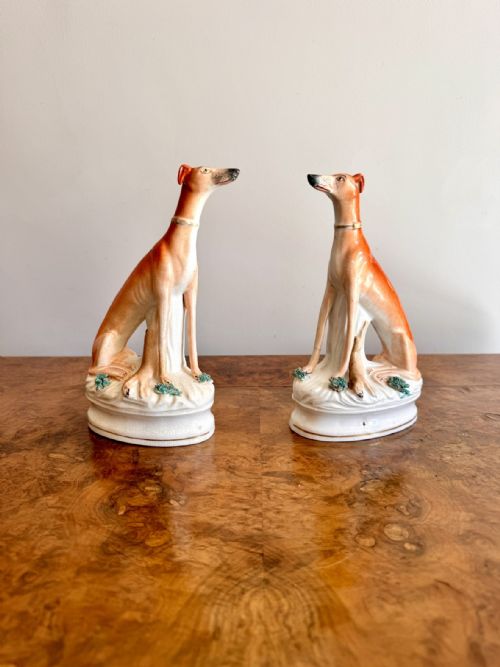
A victorian staffordshire dog figurine represents the ceramic spaniels, greyhounds, pugs, poodles, and terriers produced across the nineteenth century. Buyers typically encounter pairs of seated spaniels, often called comforter spaniels, designed to sit on either side of a fireplace.
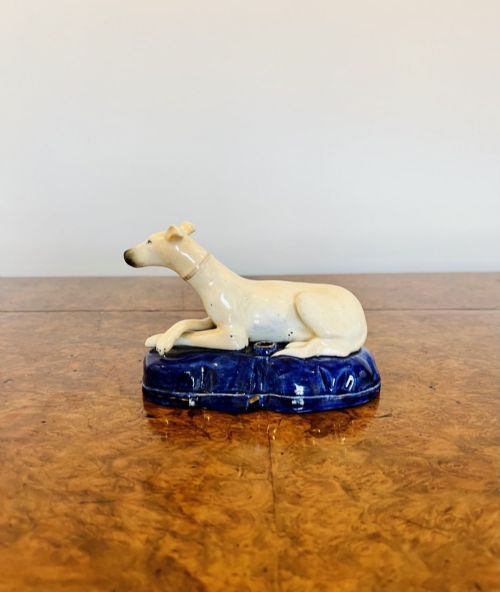
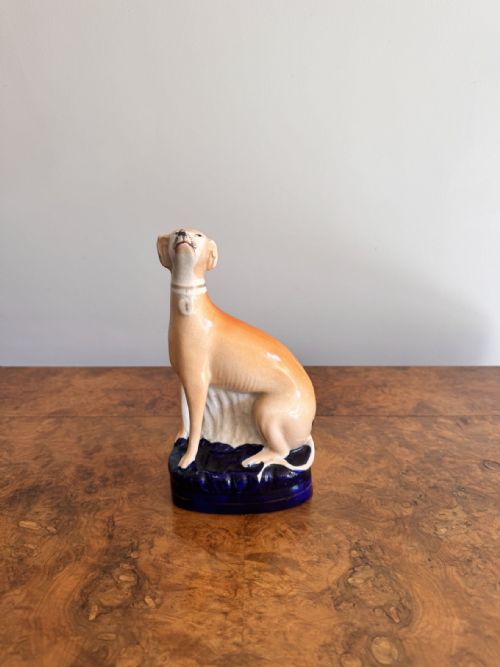
The selections include utilitarian forms such as inkwells and spill vases alongside pure decorative figures. Greyhound and whippet figures frequently appear alongside hares or game, reflecting hunting themes popular in the period.
Pieces span from Georgian roots through late Victorian production, reflecting changes in regional pottery output. The assortment ranges from miniature poodles to large greyhound figures.
Materials and construction
Potters shaped these earthenware bodies using press moulds, joining halves together before firing the ceramic clay. Artisans applied lead glaze to seal the surface and provide a smooth sheen.
Victorian Staffordshire Dog Figurine Retail Price Guide 2026
Typical asking prices for victorian staffordshire dog figurine among the pieces listed under this phrase on Sellingantiques today, from the lower quarter to the upper quarter. They describe what is for sale here now, not the wider market.
Listings feature earthenware materials finished with lead glaze and hand-painted enamel, spanning the Georgian period through the late Victorian era.
Qualities of manufacture
Care in enamel painting and gilding distinguishes finer pieces, showing steady brushwork and thoughtful application of colour. Consistent glaze coverage without heavy pooling indicates better kiln control.
Thomas Parr factory
The Victorian Staffordshire Dog Figurine Glossary
- Comforter spaniel
- A ceramic dog figure modelled after the King Charles Spaniel, traditionally placed on mantelpieces in pairs. These figures gained immense popularity during the Victorian era.
- Spill vase
- A hollow cylindrical holder attached to a figure, designed to hold wooden spills for lighting fires or pipes. They combine practical household utility with decorative sculpture.
- Earthenware
- A porous pottery body fired at lower temperatures, standard for nineteenth-century Staffordshire production. It requires a protective glaze to hold liquids and maintain durability.
- Enamel
- Vitreous coloured pigments applied over the glaze and fixed in a secondary muffle kiln. This technique allows for detailed facial expressions and coat patterns.
- Lead glaze
- A glossy silica coating containing lead oxide, used to create a bright, reflective surface on pottery. It enhances the underlying earthenware and protects the painted decoration.
Victorian Staffordshire Dog Figurine: Frequently Asked Questions
What are comforter spaniels?
Comforter spaniels are ceramic dog figures modelled on King Charles Spaniels that typically sat on cottage and parlour mantelpieces. People kept them in pairs facing each other across the fireplace.
Makers produced these in various sizes from miniature to large, usually decorated with red and white patches or plain white with gilt highlights.
How were these dogs displayed?
Victorian households placed pairs of spaniels, greyhounds, or poodles on mantelpieces, sideboards, and shelf tops. They served as domestic ornaments that displayed respectability and a fondness for animals.
Some specialised variants like inkwells and spill vases also functioned as practical desk or hearth accessories.
Are these figures painted by hand?
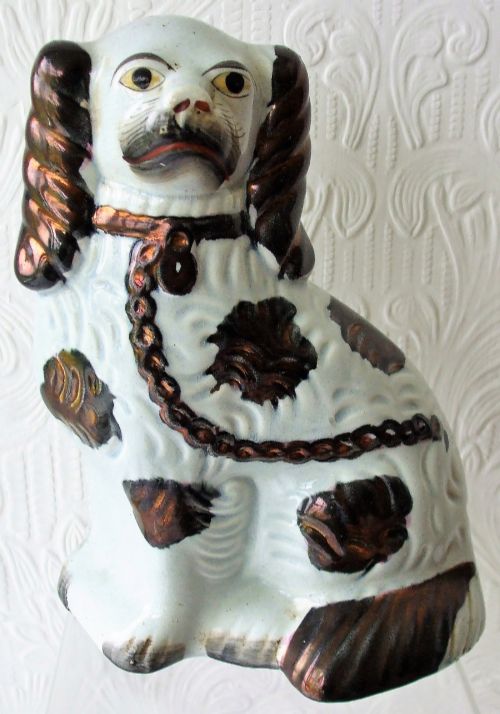
Artisans applied enamel colours and gilding by hand onto the glazed earthenware bodies. This brushwork creates individual variations in facial expressions and coat markings across different figures.
Careful hand-painting results in distinct eyes, noses, and collars that separate better examples from mass-produced wares.