



Antique Dog Mantle Ornament
These antique dog mantle ornament pieces bring unmistakable character to a hearth, pairing Victorian pottery favourites with sleek Art Deco bronzes.
Antique Dog Mantle Ornament
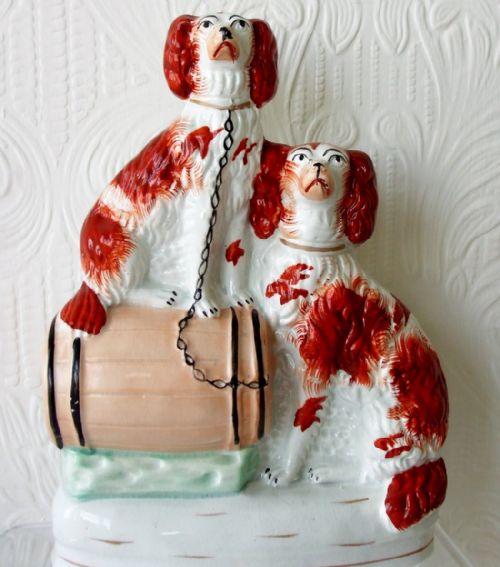
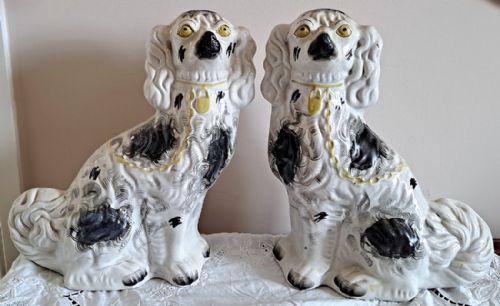
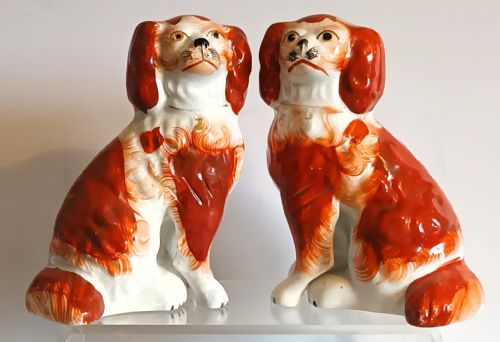
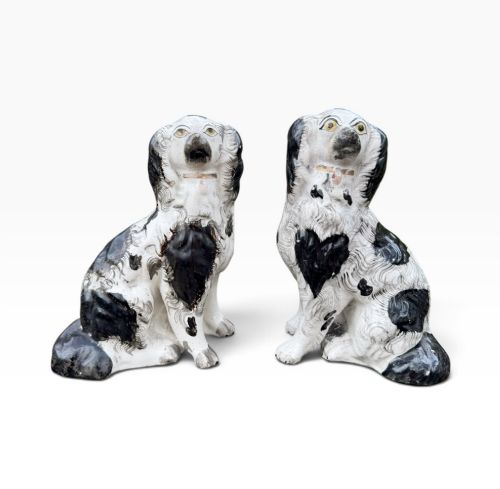
An antique dog mantle ornament fills a fireplace with the distinctive presence of ceramic spaniels, pugs, poodles, or metal sculptures of hounds and borzois. These decorative figures serve primarily as mantelpiece decoration, traditionally displayed in pairs to anchor either end of a shelf.
The selection ranges widely across the nineteenth and twentieth centuries, uniting Victorian Staffordshire earthenware with later Art Deco bronze groups. Buyers encounter hand-painted pottery alongside mixed media pieces mounted upon marble and onyx bases.
How they were made
Pottery examples rely upon traditional earthenware bodies finished with lead glazes and enamel paint, often featuring hand-painted markings applied over the fired ceramic. Artisans ornamented these figures with surface textures, moulding clay to mimic curly fur and decorative collars.
Bronze sculptures utilise metal casting techniques to capture slender canine forms, frequently pairing the metallic hounds with polished marble or onyx plinths. These figures combine durable cast metal with stone bases, employing enamels and patination to define the surfaces.
Antique Dog Mantle Ornament Retail Price Guide 2026
Typical asking prices for dog mantle ornament among the pieces listed under this phrase on Sellingantiques today, from the lower quarter to the upper quarter. They describe what is for sale here now, not the wider market.
Some nineteenth-century spaniels stare out with actual glass eyes, giving the mantelpiece pottery an uncanny, watchful presence.
What varies in quality
Artistic ambition shapes the upper tier of bronze sculptures, where anatomical precision and dynamic posture separate masterwork animalier pieces from routine foundry output. The integration of quality secondary materials, such as heavy marble bases, elevates the presence of the finished ornament.
L. Bureau
The Antique Dog Mantle Ornament Glossary
- Staffordshire pottery
- Ceramic figures produced in the English pottery districts, widely known for mantelpiece spaniels and poodles. These earthenware pieces typically feature hand-painted decoration and lead glazes.
- Animalier
- A nineteenth-century artistic style focused on the realistic depiction of animals, particularly hounds and hunting dogs. Sculptures in this style are frequently cast in bronze.
- Lead glaze
- A glossy coating applied to earthenware pottery before firing, providing a smooth finish. It creates the characteristic sheen seen on nineteenth-century ceramic figures.
Antique Dog Mantle Ornament: Frequently Asked Questions
Where should I place these mantle ornaments?
These ornaments find their traditional home on a fireplace mantel, where pairs of ceramic spaniels sit balanced at either end. They also suit narrow bookshelves, sideboards, or console tables.
The scale of these pieces allows them to anchor a room without dominating the furniture. Placing them where light catches the glaze or bronze enhances their sculptural details.
How do I care for antique ceramic dogs?
Ceramic and earthenware figures require gentle dusting with a dry, soft brush to protect the enamel paint and glaze. Avoid using liquids or chemical cleaners that might damage the surface.
Keeping them away from direct sunlight preserves the hand-painted colours. Handle them carefully by the base rather than protruding ears or tails.
What is the difference between Victorian and Art Deco dogs?
Victorian pieces typically consist of earthenware Staffordshire pottery featuring painted details, glass eyes, and domestic breeds like spaniels and pugs. They offer a traditional, symmetrical appearance designed for cottage or parlour mantels.
Art Deco examples lean towards bronze sculptures of hounds and borzois mounted on marble or onyx. These pieces emphasise sleek lines and naturalistic movement rather than domestic charm.
Why were Staffordshire spaniels made in pairs?
Staffordshire spaniels were produced as matching pairs to sit symmetrically on either side of a fireplace clock or centrepiece. This arrangement reflected Victorian domestic taste for order and balance in interior decoration.
Many of these dogs represent comforter spaniels, which owners kept by hearths. The matching figures often mirror each other in pose and decoration.