


Victorian Sporting Canine Art
Victorian sporting canine art captures working and hunting dogs in oils and watercolours, offering collectors a direct window into nineteenth-century field sports.
Victorian Sporting Canine Art
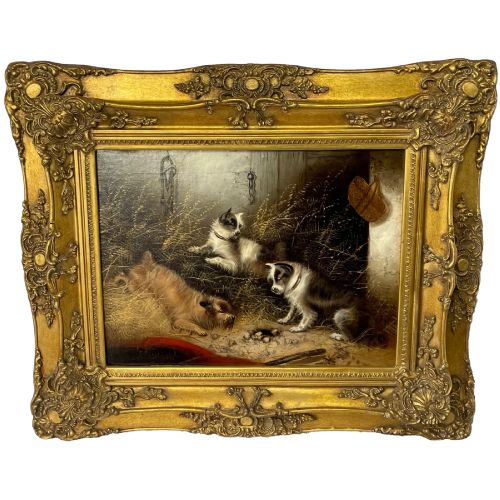
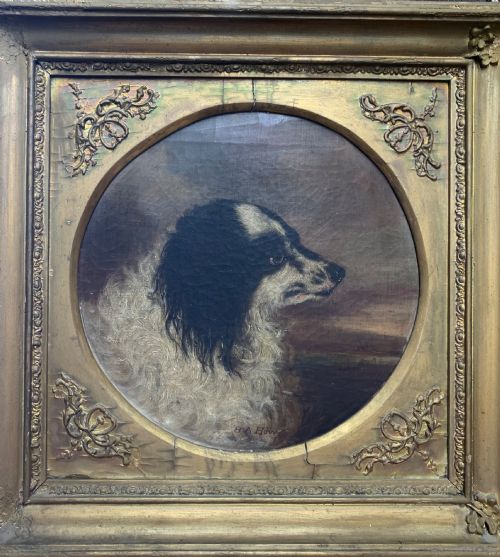
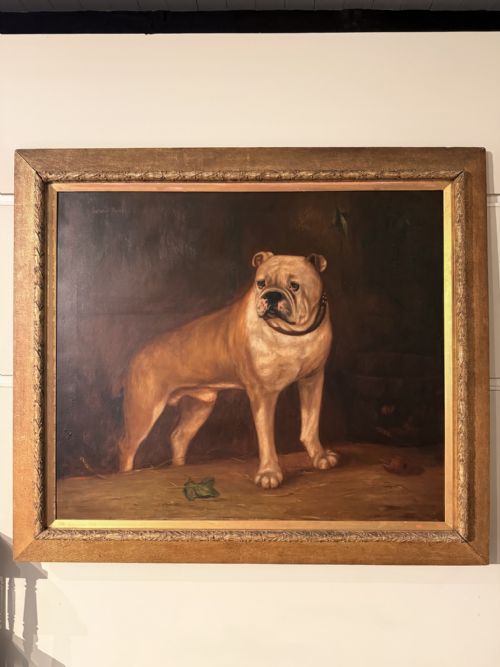
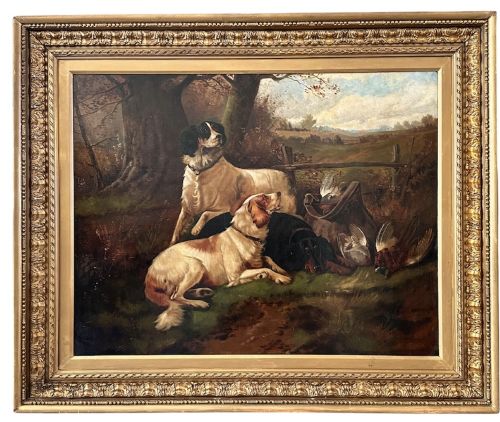
Victorian sporting canine art encompasses oil paintings and watercolours depicting hounds, terriers, spaniels, and gun dogs, often set within landscapes or country houses. These works document the deep connection between sportsmen, land, and working animals during the nineteenth century and into the early twentieth century.
The pieces appearing on this page range from intimate terrier studies and portraits of prized champions to wider depictions of hunt packs and gun dogs with the day's bag. Many works place the animal firmly in a natural or domestic setting, such as a walled garden or before a hearth.
Makers and followers represented across these listings include notable nineteenth-century painters who specialised in animal portraiture and sporting scenes. Collectors encounter both signed canvases by recognised hands and accomplished unsigned studies from the same period.
Materials and technique
The works rely primarily on oil on canvas or artist's board, utilising rich pigments to render the texture of dog coats and the light of landscape backgrounds. Some pieces employ watercolour on paper, particularly in works extending into the Edwardian period.
Frames play a substantial role in the physical structure of these pieces, utilising wood, gesso, and gold leaf or giltwood to create ornate surrounds. The application of gilt leaf enhances the depth of the oil paintings within.
Listings feature oil on canvas, wood, canvas, gold leaf, gilt, oil, giltwood, and gesso.
Evaluating quality
Quality rests upon the artist's ability to render the anatomy, expression, and individual character of the animal rather than a generic representation. Superior works capture the alert posture of a terrier on the scent or the patient stance of a gun dog with distinct realism.
The handling of the surrounding landscape and background detail distinguishes finer paintings from simpler studies. Stronger compositions integrate the dog harmoniously into a detailed rural environment, while lesser works relegate the subject to a flat or minimal backdrop.
John Emms·John Frederick Herring Senior·Arthur Wardle·Colin Graeme Roe·Edward Armfield
The Victorian Sporting Canine Art Glossary
- Gun dog
- A type of hunting dog trained to find and retrieve game for shooters. These animals appear frequently in sporting oils, often shown alongside the day's bag.
- Gesso
- A plaster-like mixture applied to wooden frames before gilding. It provides a smooth base for gold leaf and allows for intricate moulded decorative details.
- Provenance
- The documented history of ownership of an artwork. A strong provenance helps confirm attribution to specific nineteenth-century painters.
- Canvas
- A heavy woven fabric stretched across a wooden frame to serve as a support for oil paint. Most nineteenth-century paintings utilise this material.
Victorian Sporting Canine Art: Frequently Asked Questions
What are sporting dog paintings?
Sporting dog paintings are nineteenth-century artworks depicting hounds, terriers, and gun dogs, often engaged in field sports or posed in landscapes. These pieces celebrate the working relationship between humans and dogs.
Artists focused heavily on the specific breeds, capturing the distinct physical traits and alert expressions of working animals.
How do I identify the period?
Dating relies on stylistic markers, clothing in incidental figures, and framing materials typical of the nineteenth century. Oil on canvas and heavy giltwood frames are standard indicators of the era.
Signatures or inscriptions on the reverse often provide direct links to known Victorian animal painters.
Where should I hang these?
These works suit traditional studies, libraries, or living rooms with classic decor. Their rural and domestic themes complement wood panelling and neutral wall colours.
Direct sunlight should be avoided to protect oil pigments and delicate gilt frames from fading.
Who were the main artists?
Prominent painters of this genre include John Emms, John Frederick Herring Senior, and Arthur Wardle. Many specialised entirely in animal and sporting subjects.
Followers and contemporaries also produced accomplished works that closely mirror the style of these masters.