




Victorian Spoonback Chair
A victorian spoonback chair brings organic curves and deep buttoning to a room, offering the supportive posture characteristic of nineteenth-century seating.
Victorian Spoonback Chair
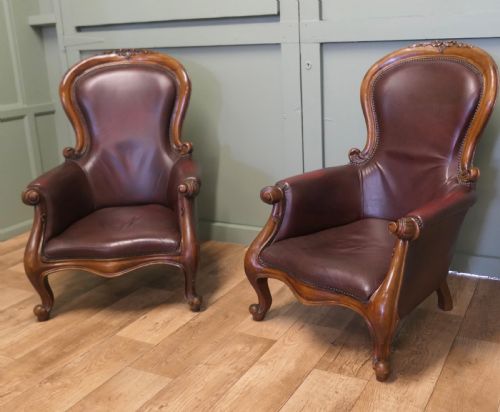
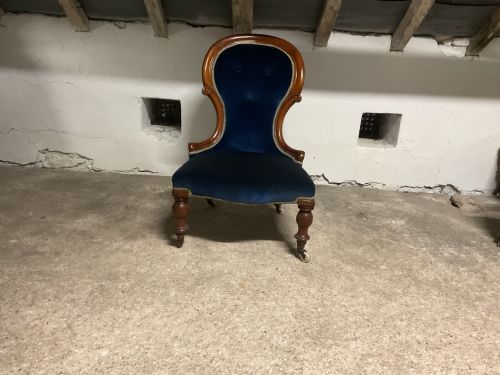
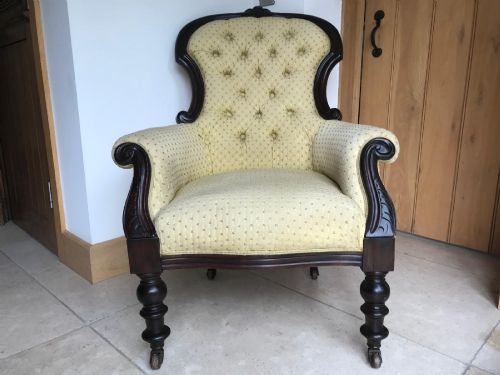
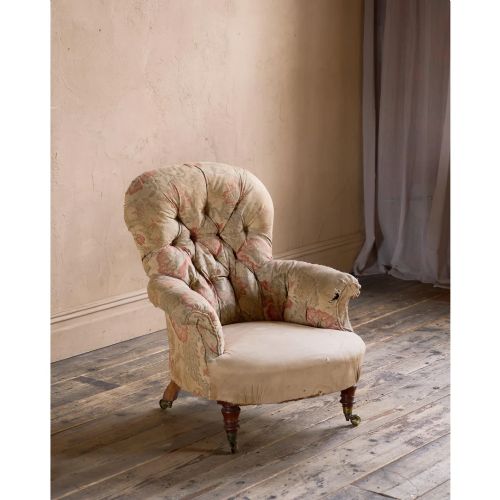
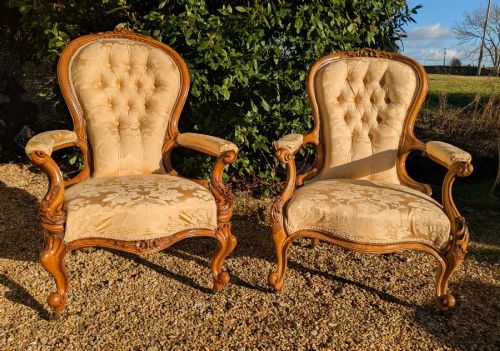
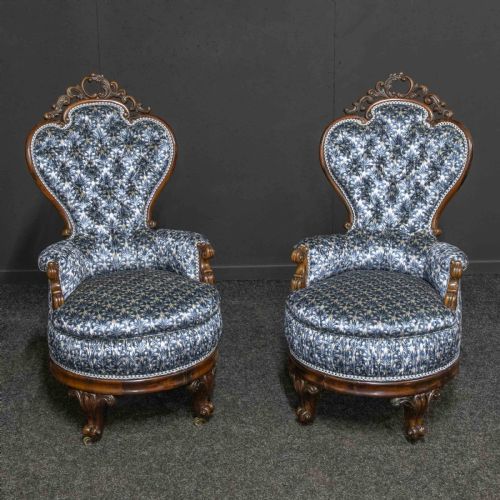
A victorian spoonback chair is a distinct nineteenth-century seating form defined by its concave, oval backrest that echoes the outline of a spoon. These pieces emerge in styles ranging from early Victorian through to Victorian Rococo Revival, spanning decades from the middle to the late nineteenth century.
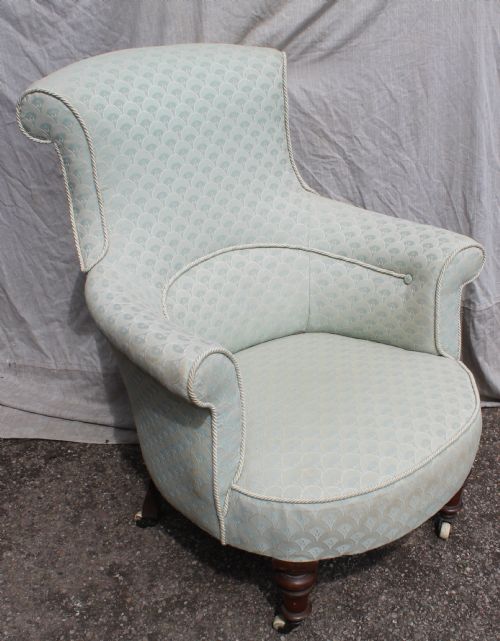
The selection here comprises various forms designed for different domestic spaces, including open armchairs, gentlemen's and ladies' chairs, fireside chairs, and compact nursing or bedroom chairs. Mahogany and walnut dominate the framing materials, often accompanied by showwood carving.
Buyers frequently encounter pairs or single pieces suited for parlours, salons, and bedrooms. The design accommodates upholstered surfaces in velvet, leather, and assorted textiles, sometimes supported on brass castors and cabriole legs.
How they were made
Cabinetmakers constructed the frames of a victorian spoonback chair using dense timbers such as mahogany, walnut, and rosewood, which allowed the wood to be bent and carved into the characteristic curved backrest without losing structural integrity. Timbers were selected for their grain and rich natural tones, often left exposed as showwood around the upholstered perimeters.
Upholstery techniques involved intricate webbing, stuffing, and spring deployment beneath layers of fabric, velvet, or leather, frequently finished with tight buttoning to secure the padding. Brass castors were fitted to the base of cabriole or turned legs to facilitate movement across carpeted and wooden floors.
Victorian Spoonback Chair Retail Price Guide 2026
Typical asking prices for victorian spoonback chair among the pieces listed under this phrase on Sellingantiques today, from the lower quarter to the upper quarter. They describe what is for sale here now, not the wider market.
Low seats allowed Victorian ladies to tend infants without tangling yards of heavy silk in chair arms.
What varies in quality
Quality in a victorian spoonback chair rests upon the crispness of the timber carving and the architectural harmony of the frame. Pieces featuring deeply sculpted walnut showwood or substantial mahogany demonstrate superior joinery and cabinet-making ambition compared to plain or heavily restrained examples.
The integrity of the internal upholstery foundation and the selection of secondary framing timbers further differentiate standard production from workshop pieces attributed to known makers. Proportions also vary, with superior examples offering balanced arm placement and comfortable rake to the backrest.
Holland and Sons·C. Hindley and Sons
The Victorian Spoonback Chair Glossary
- Showwood
- Timber framing left visible around the upholstered portions of a chair. This exposes the polished grain and carved details of the mahogany or walnut.
- Cabriole leg
- A furniture leg that curves outward and then tapers inward, finishing in a scroll or plain foot. It echoes animal limbs and appears frequently on mid-nineteenth-century seating.
- Nursing chair
- A low-seated armchair designed in the Victorian period for comfort and ease of tending to infants or dressing. They often feature shortened legs and generous upholstered backrests.
- Buttoning
- An upholstery technique where twine is pulled through padding and secured with fabric-covered buttons to create a diamond pattern. This method holds the internal stuffing firmly in place.
Victorian Spoonback Chair: Frequently Asked Questions
How do I identify a nursing chair?
A nursing chair sits lower to the ground than a standard armchair, designed historically for seated tasks in bedrooms and nurseries. They often lack arms to accommodate voluminous Victorian skirts.
Their proportions remain compact, making them practical for smaller rooms or tighter seating arrangements today.
Can I use these chairs daily?
These pieces function well in modern interiors provided the internal webbing and padding remain sound. Many survive with sturdy mahogany or walnut frames capable of supporting regular sitting.
Placing them out of direct sunlight helps protect nineteenth-century wood finishes and delicate upholstery fabrics.
How do I date a spoonback chair?
Dating relies on observing stylistic shifts from early Victorian mahogany models toward the more exuberant carved walnut Rococo Revival pieces of the mid-nineteenth century. The presence of specific leg forms like cabriole supports or turned timber helps narrow the decade.
Construction methods and timber choice also offer clues regarding whether a piece originates from the 1850s or later decades.