





Victorian Spiral Pedestals
Victorian spiral pedestals are sculptural nineteenth-century supports and tables offering rich timber grain and dynamic twisted turning for display.
Victorian Spiral Pedestals
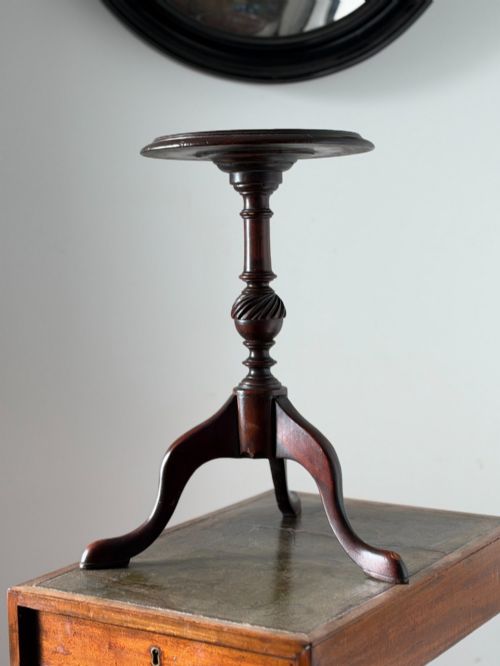
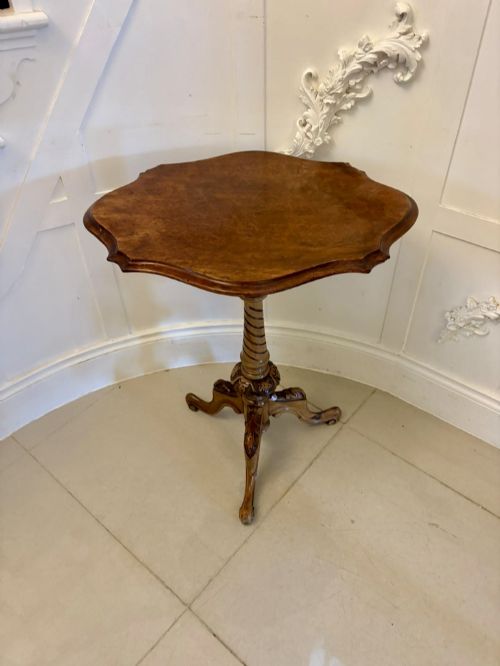
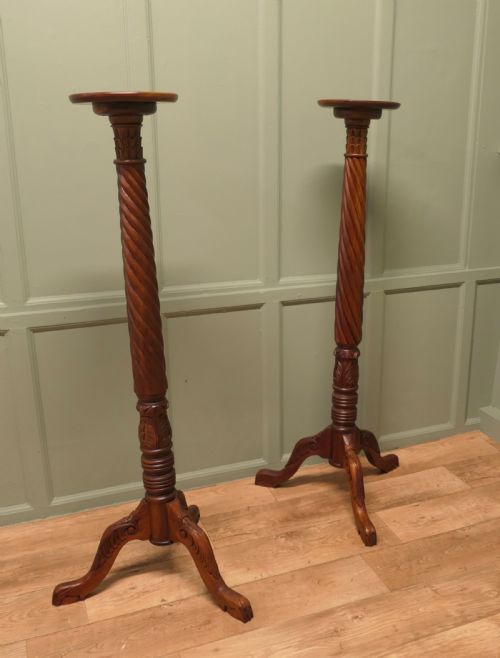
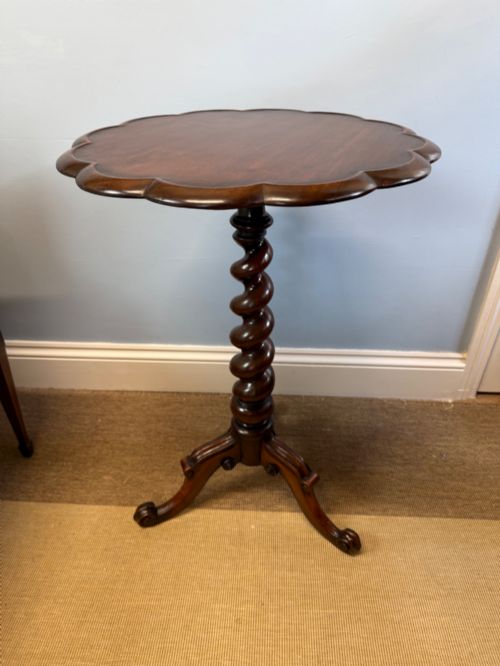
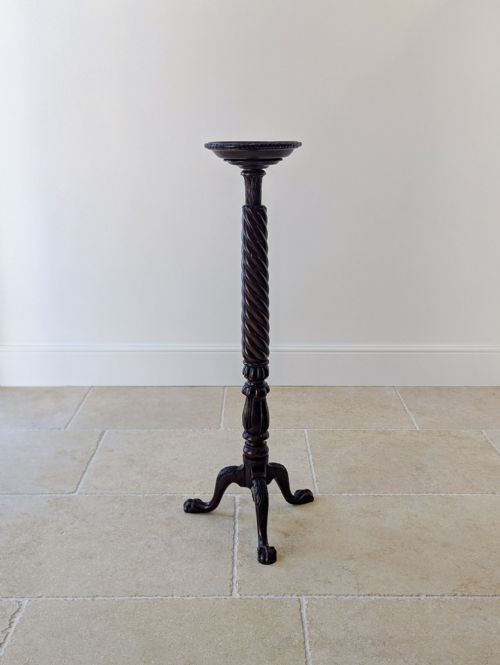
Victorian spiral pedestals encompass a variety of nineteenth-century occasional tables, plant stands, lamp tables, and tall architectural columns. When exploring victorian spiral pedestals, buyers encounter items designated as torchères, tripod tables, and side tables dating from the mid to late nineteenth century, including specific years like eighteen-eighty and eighteen-sixty.
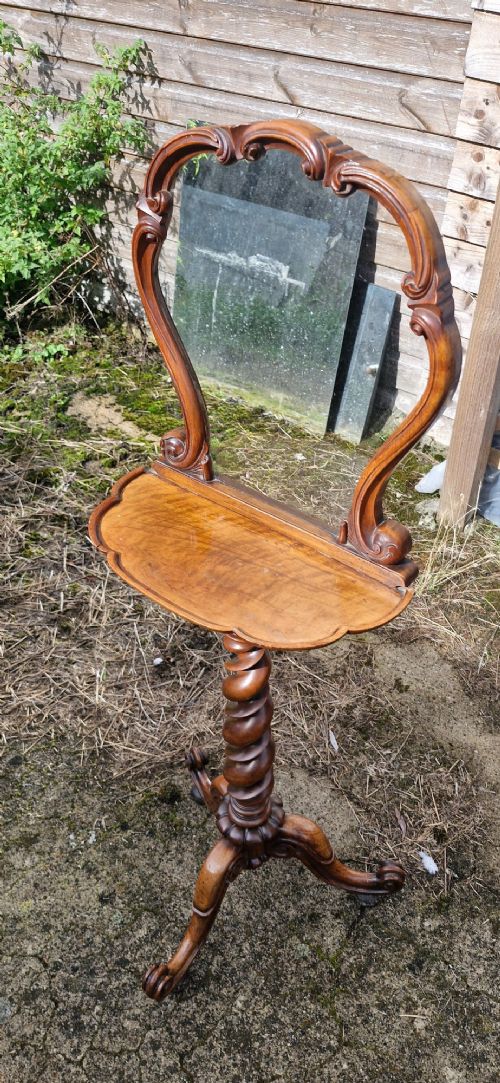
The forms range from compact wine tables with glass backs and drop-leaf occasional pieces to grand oak spiral column pedestals and decorative jardinière stands. Alongside traditional British Victorian items, the selection includes French nineteenth-century marble columns and Scandinavian burr elm tables.
Makers and manufacturers occasionally bridge traditional forms with revival movements, yielding Georgian Revival, Victorian Chippendale Revival, and nineteenth-century French styles. The predominant functions remain practical display surfaces and elevated plinths for lamps, plants, and decorative objects.
Materials and construction
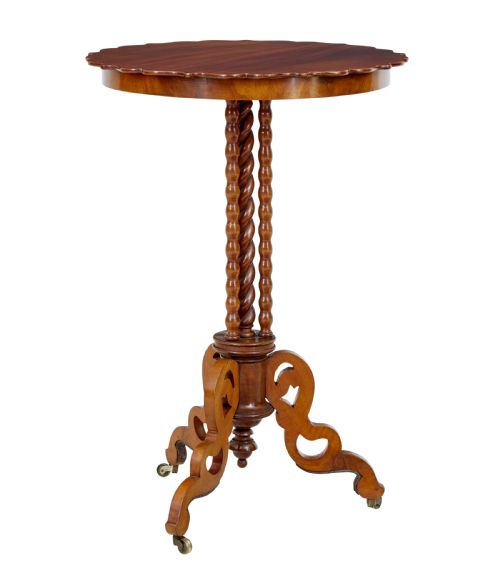
Makers utilised a range of dense hardwoods for these supports and tables, predominantly mahogany, walnut, rosewood, and oak, alongside occasional uses of beech, burr elm, and general wood. Turning techniques created the characteristic spiral, barley twist, and bobbin-turned pillars that define the aesthetic.
Surface ornamentation incorporates marquetry inlay, carved detailing, and scalloped edges on table tops. Other examples integrate contrasting materials such as verde antico marble columns and glass components to achieve varied visual textures.
Victorian Spiral Pedestals Retail Price Guide 2026
Typical asking prices for victorian spiral pedestals among the pieces listed under this phrase on Sellingantiques today, from the lower quarter to the upper quarter. They describe what is for sale here now, not the wider market.
One inquisitive walnut table arrives equipped with a secret glass back, ready to reflect the room while holding your evening wine.
Assessing quality
Quality rests in the precision of the turning and the selection of timber, where rich burr walnut, figured mahogany, and rosewood distinguish superior examples from standard utility pieces. The integration of decorative elements like marquetry and carved mahogany detailing elevates the craftsmanship.
Stability and proportion dictate the success of tall torchères and pedestals, requiring robust tripod bases or solid column foundations to support weight safely. The clarity of the spiral twist and the crispness of any applied carving separate standard production items from finer workshop pieces.
Woodlesford Art Pottery
The Victorian Spiral Pedestals Glossary
- Torchère
- A tall, slender stand designed to support a lamp or candleholder. These pieces often feature tripod bases and elevated platforms.
- Barley Twist
- A cylindrical turning shaped into a continuous helical spiral resembling a stalk of barley. This technique was popular across nineteenth-century table pillars and columns.
- Occasional Table
- A small, movable table intended for specific, minor uses such as holding drinks, books, or lamps. Forms include drop-leaf and tilt-top variants.
- Jardinière
- An ornamental pot or stand designed to hold plants or floral arrangements. They appear in ceramic pottery or timber framing.
- Verde Antico
- A dark green serpentine marble prized for classical columns and architectural decoration. It provides a smooth, polished contrast to timber furniture.
Victorian Spiral Pedestals: Frequently Asked Questions
What is the difference between a torchere and a plant stand?
Torchères are traditionally slender, tall stands designed specifically to elevate lighting or small display items in a room. Plant stands and pedestals often feature broader tops to accommodate heavy pots, urns, or jardinières securely.
Both forms utilise nineteenth-century turned pillars and wooden columns, but their historical functions dictated their upper platform dimensions and overall load-bearing design.
How do I use a spiral pedestal in a modern room?
These pieces function effectively as sculptural accents in corners, serving as independent plinths for sculpture, ceramics, or table lamps. Smaller occasional tables fit easily beside seating areas to hold drinks and books.
The dynamic movement of the spiral or barley twist turning adds vertical architectural interest and rich timber texture to contemporary interiors.
Are these tables sturdy enough for daily use?
Tripod bases and heavy column pedestals provide substantial weight and balance for normal household items like lamps and decorative objects. Heavier grand pairs and fixed-base tables offer solid foundations for daily placement.
Tilt-top mechanisms and drop-leaf varieties require careful handling when adjusted, but remain functional as occasional furniture.
What woods were commonly used for these stands?
Cabinet makers relied heavily on rich hardwoods such as mahogany, walnut, rosewood, and oak for nineteenth-century turned supports. Selected pieces also incorporate burr elm, beech, and specialised inlays like marquetry.
Non-timber materials occasionally appear alongside the wood, notably verde antico marble in French columns and glass components in specific wine tables.