


Victorian Oak Plant Stands
Victorian oak plant stands bring practical timber architecture to corners and window spaces, holding ceramic pots and jardinieres on sturdy wooden columns.
Victorian Oak Plant Stands
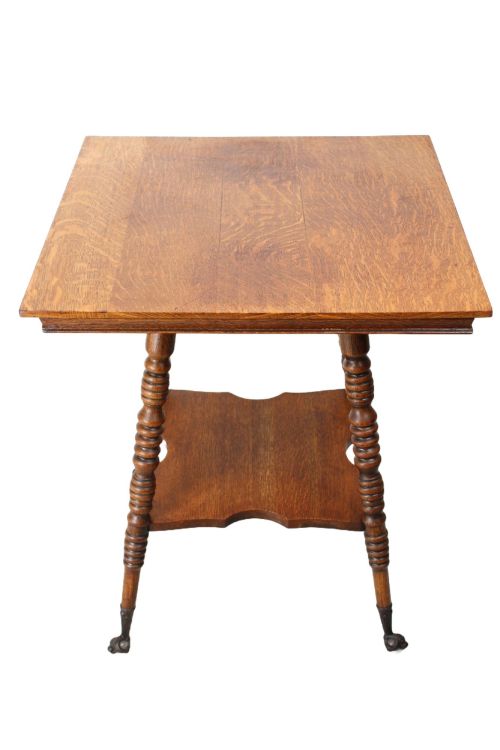
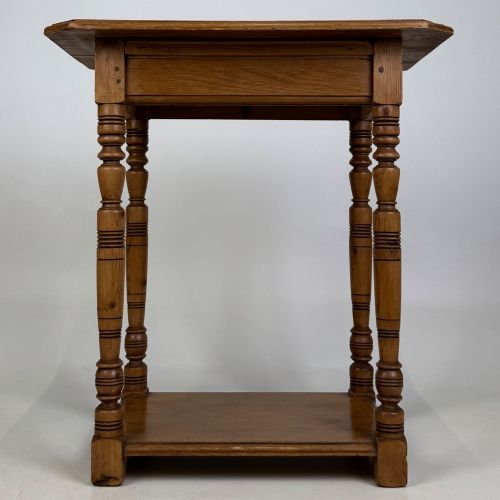
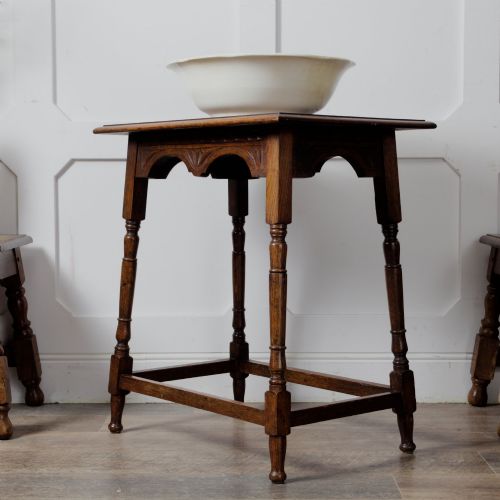
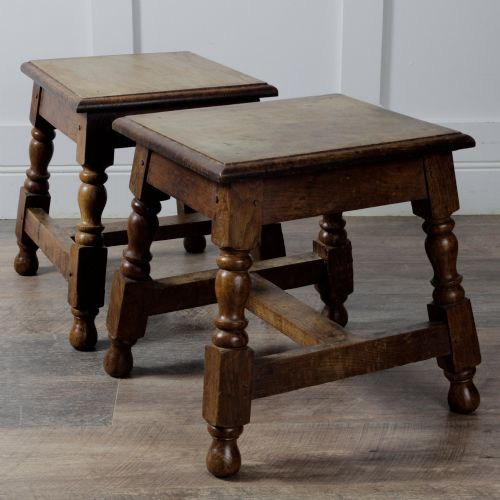
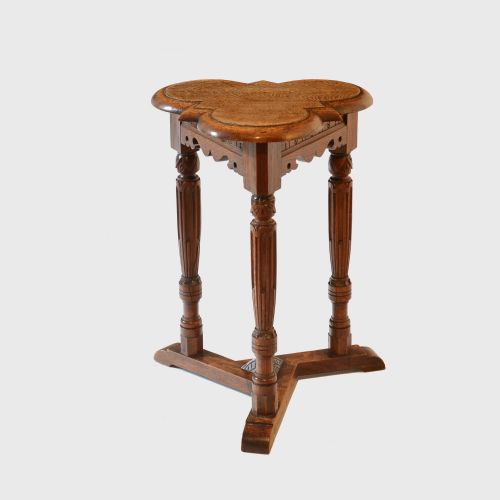
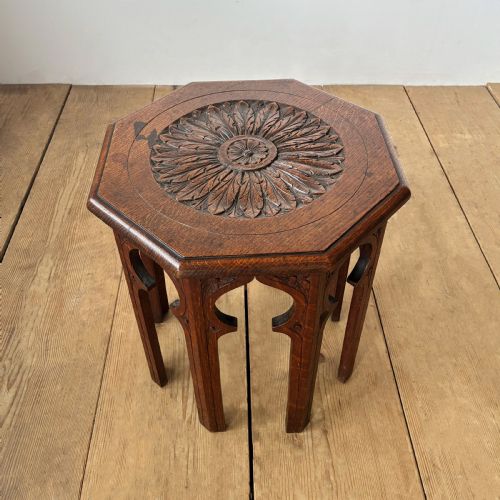
Victorian oak plant stands encompass a variety of elevated supports designed to hold greenery, ranging from tall pedestals and torcheres to small side tables and stools.
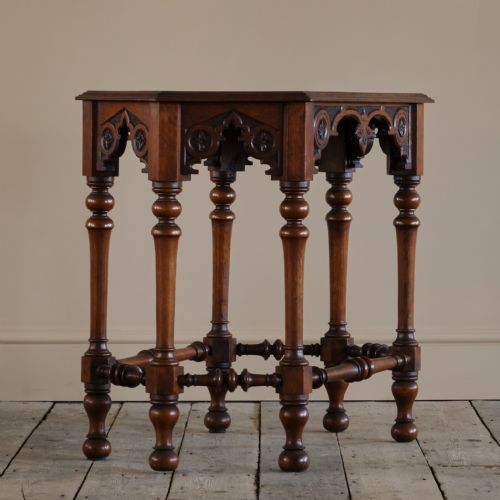
Most examples originate from the nineteenth century, displaying styles such as Gothic Revival, Arts and Crafts, and Jacobean Revival across solid oak, dark oak, and stained hardwood.
Buyers will encounter single columns, tripod bases, and tiered structures that serve equally well as lamp tables or occasional display surfaces in a room.
Materials and construction methods
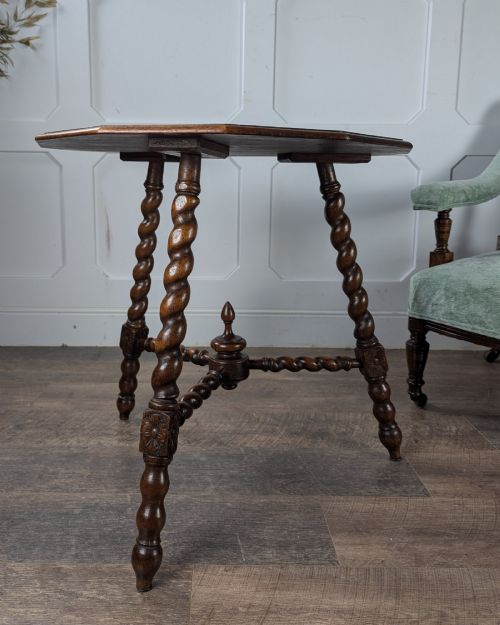
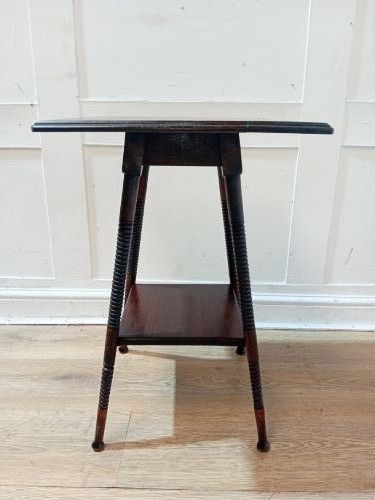
Makers utilised solid oak and hard timber, frequently employing dense turning methods like barley twist, bobbin turning, and spiral pillars to shape upright shafts.
One curious Victorian stand incorporates a twisting spiral pillar that appears to rotate upward like a wooden vine.
Judging the standard of workmanship
Quality rests in the crispness of the hand carving, the stability of the central column, and the structural integrity of the joints connecting the top to the base.
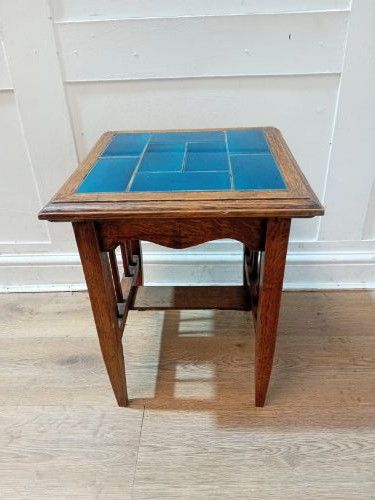
Pieces bearing specific maker attribution or incorporating decorative elements like glazed tiles and carved caryatids represent the upper tier of production.
Liberty of London·William Birch·Gillows
The Victorian Oak Plant Stands Glossary
- Torchere
- A tall stand designed originally to hold a candle or light, adapted later for plants and lamps. These slender supports occupy minimal floor space.
- Barley twist
- A helical turning technique resembling a twisted rope, carved into the wooden stems of tables and plant stands.
- Jardiniere
- An ornamental pot or stand intended for holding flowers and plants indoors. They often feature decorative ceramic or metal inserts.
- Tripod base
- A three-legged support system providing stability on uneven floor surfaces. This configuration appears frequently on nineteenth-century lamp and plant tables.
Victorian Oak Plant Stands: Frequently Asked Questions
How do I use a plant stand in a small room?
Place a tall torchere or pedestal in an unused corner to draw the eye upward without obstructing pathways. They hold trailing plants or heavy ceramic pots securely.
Combine lower side tables near seating areas to function as impromptu lamp surfaces when plants are rotated to outdoor spaces.
Can these stands support heavy pots?
Solid oak and hardwood construction provides inherent strength for substantial ceramic containers and damp soil. Check the width of the top surface to ensure the pot base sits evenly.
Tripod bases offer reliable weight distribution on solid flooring, though thicker pillar columns handle greater loads.
What maintenance does antique oak require?
Apply occasional beeswax or natural furniture polish to nourish the timber and maintain a soft sheen. Avoid silicone-based sprays that build up over time.
Protect the wood surface from water rings by using saucers beneath plant pots to catch moisture overflow.