


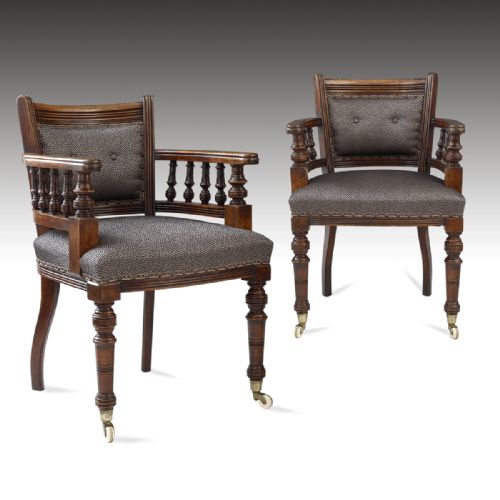
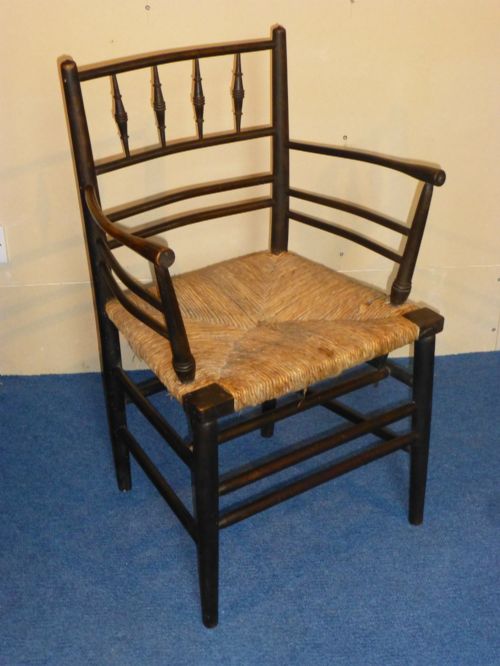
Victorian Spindle Armchair
A victorian spindle armchair brings sturdy nineteenth-century woodwork and upright comfort to a room.
Victorian Spindle Armchair
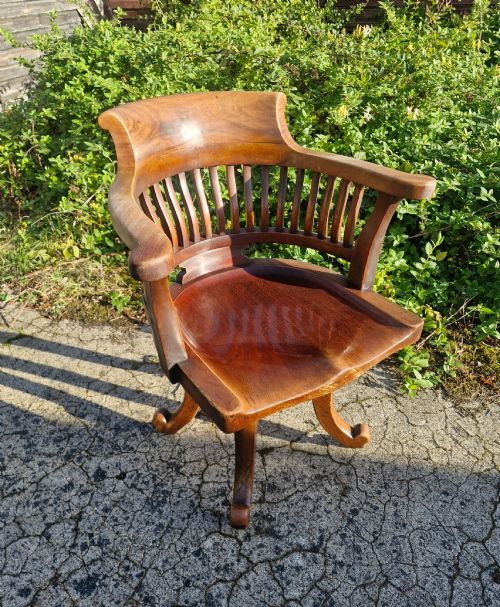
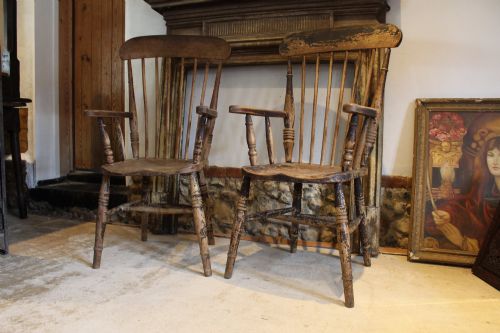
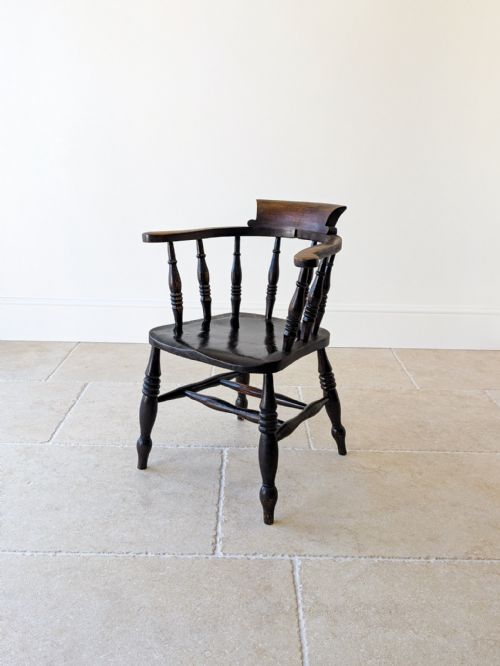
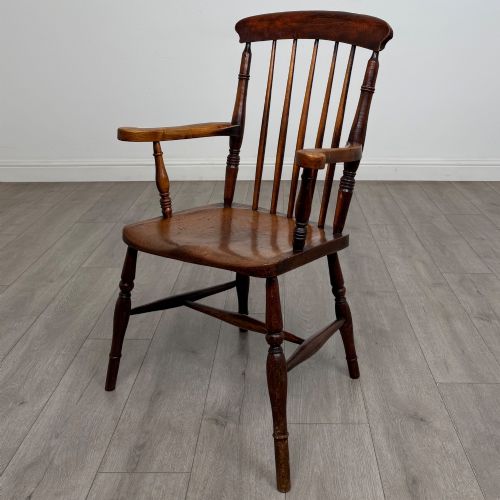
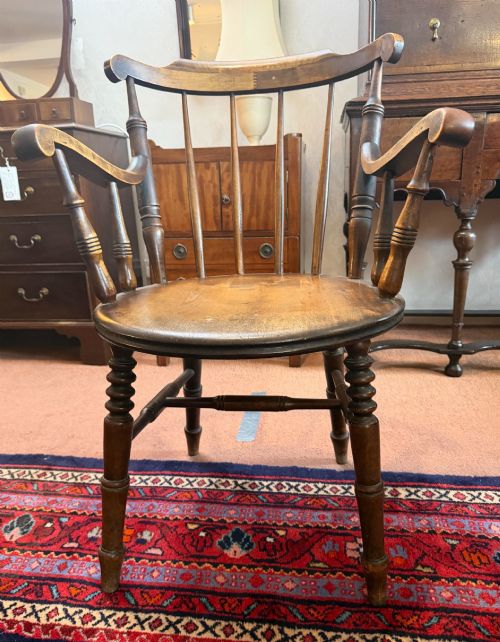
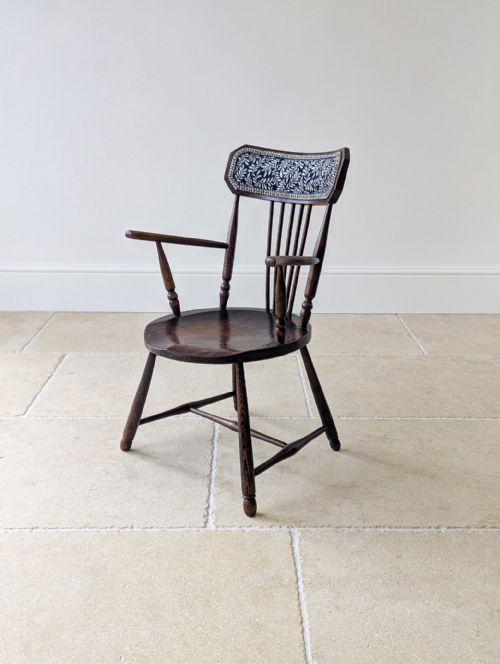
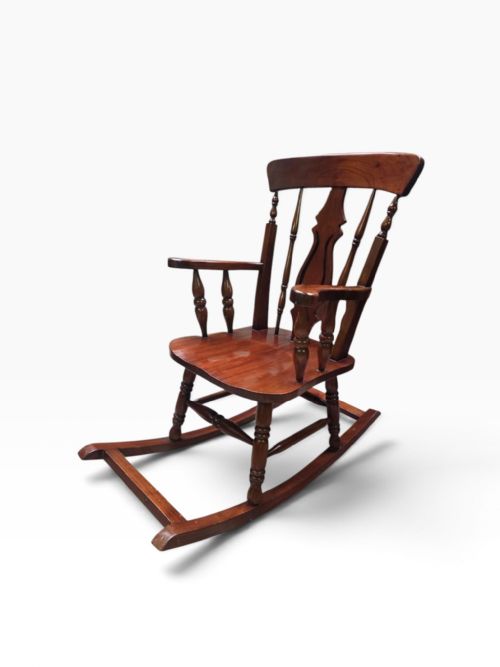
A victorian spindle armchair is a sturdy seating form defined by turned wooden uprights supporting the backrest and arms, originating in farmhouse kitchens, studies, and parlours across the nineteenth century. These chairs range from simple country vernacular Windsors to polished mahogany library seats and ebonised aesthetic movement models.
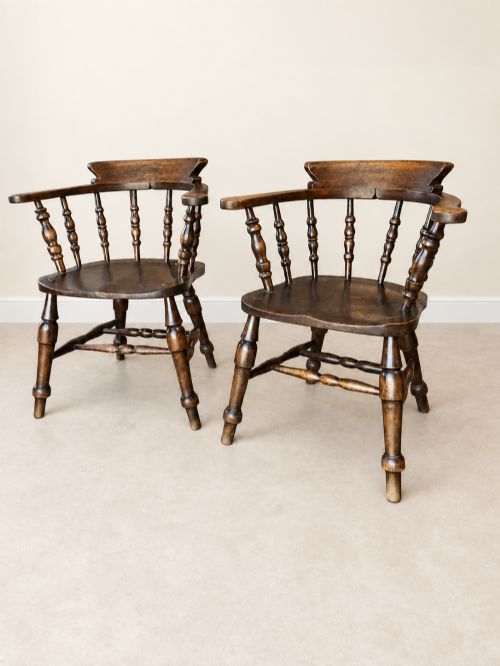
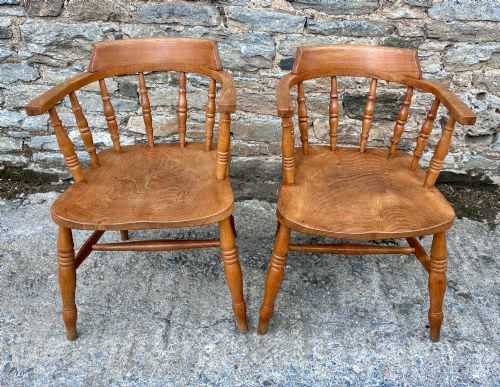
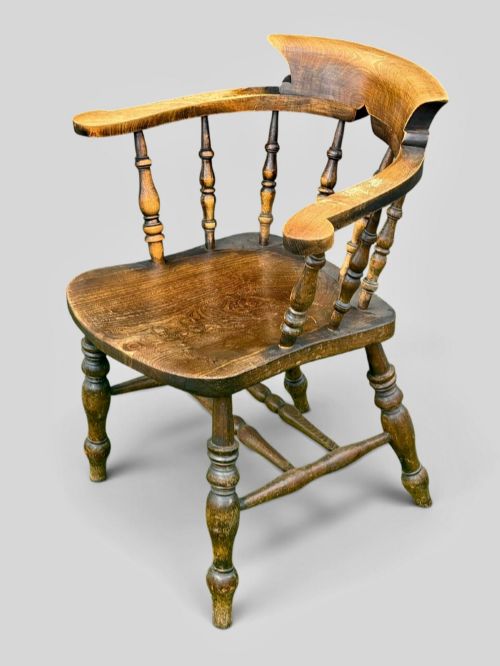
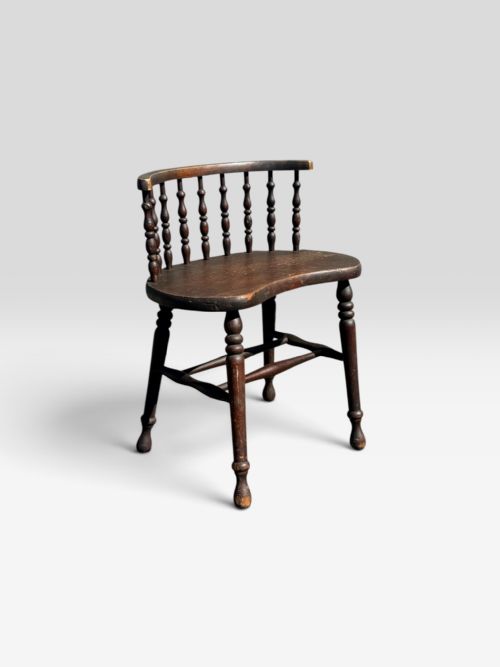
The version you are most likely to meet on this page is the country captain's chair or smoker's bow, typically built from a combination of elm, beech, and ash with a bowed crest rail and a shaped wooden seat. Spindle backs and bobbin turnings appear frequently, anchoring the search phrase in a tradition of robust domestic joinery.
Materials and Construction Methods
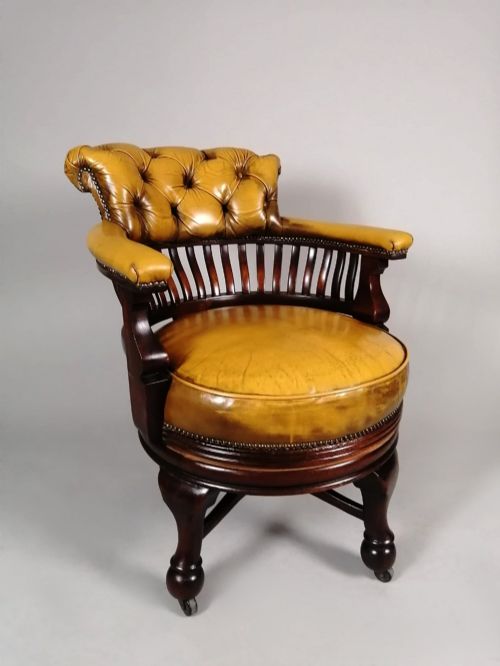
Makers utilised native hardwoods selected for specific structural roles, pairing tough elm for solid carved saddle seats with flexible ash and beech for steam-bent back bows and turned spindles. Mahogany and walnut appear on finer desk and library models, while rush and leather provide contrasting seat textures.
Joinery relied on traditional techniques like wedged tenons and mortise-and-tenon joints to withstand heavy daily use. Turning lathes shaped the spindles and legs, creating the characteristic bobbin, spindle, and baluster profiles found across these nineteenth-century pieces.
Several armchairs come equipped with swivel actions designed for nineteenth-century clerks who spun vigorously between ledgers.
Judging Quality in Turned Seating
Quality rests in the harmony of the timber selection and the crispness of the turning work on the spindles and legs. A superior chair shows deep, rich figuring in the elm seat and well-balanced proportions that maintain structural integrity without feeling heavy.
The distinction between a humble farmhouse seat and a commissioned library or aesthetic movement armchair lies in the refinement of the timber preparation and the subtlety of the spindle profiles. Workshop stamps and maker attributions elevate certain examples above standard utilitarian production.
Morris & Co·Philip Webb·J Spencer
The Victorian Spindle Armchair Glossary
- Smoker's bow
- A low-backed Windsor armchair with a continuous arm and crest rail, often associated with nineteenth-century public houses and farmhouses. This form provides sturdy side support.
- Windsor chair
- A chair built with a solid wooden seat into which the legs and back spindles are independently tenoned. They utilise multiple native timbers for structural strength.
- Turners chair
- A heavy armchair constructed entirely from turned wooden spindles and members, reviving a medieval or sixteenth-century structural style popular in the nineteenth century.
- Bobbin framing
- Furniture turned on a lathe to resemble a string of beads or bobbins, creating a decorative repeating profile along the uprights and stretchers.
- Rush seat
- A seating surface woven from dried marsh rushes, providing a resilient and textured platform common on arts and crafts movement chairs.
Victorian Spindle Armchair: Frequently Asked Questions
How do I identify a Victorian spindle armchair?
Look for turned upright wooden spindles supporting a curved backrest, combined with native hardwoods like elm, beech, and ash. The construction methods and timber patination generally point to nineteenth-century workshop origins.
Compare the seat shaping and turning details against standard regional forms to narrow down the period between early and late nineteenth-century production.
Were these chairs used at desks?
Many sturdy armchairs and smoker's bows served double duty as writing or captain's chairs in studies and offices. Swiveling mechanisms and mahogany frames also appear on dedicated nineteenth-century desk models.
Their robust construction and supportive arms made them suitable for long hours of administrative work.
How should I care for an elm and beech chair?
Keep the timber away from direct heat sources and sudden temperature shifts to prevent the wood from splitting or joints from loosening. An occasional application of traditional wax helps nourish the patina.
Avoid excessive moisture on rush or wooden surfaces during routine cleaning.
What is the difference between a smoker's bow and a Windsor?
A smoker's bow is a specific low-backed Windsor variant featuring a continuous curved rail forming both the arms and the top crest. Standard Windsor chairs often include taller spindle backs and distinct headrests.
Both types rely on a solid sculpted wooden seat base.