





Victorian Specimen Side Table
A victorian specimen side table brings together intricate geometric timbers and polished stone surfaces, offering a surface that functions as both furniture and a cabinet of curiosities.
Victorian Specimen Side Table
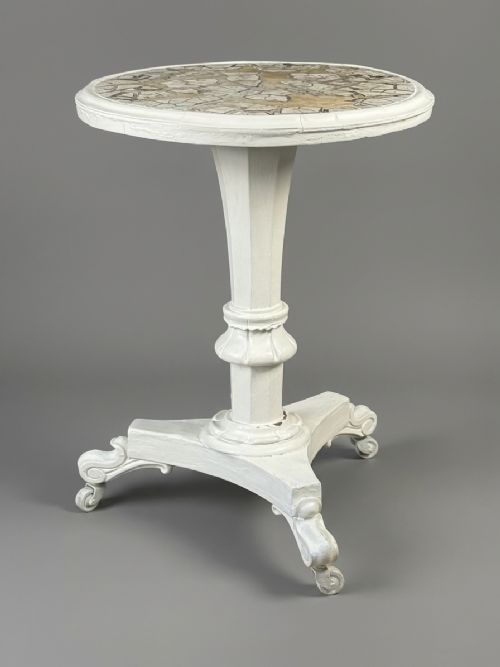
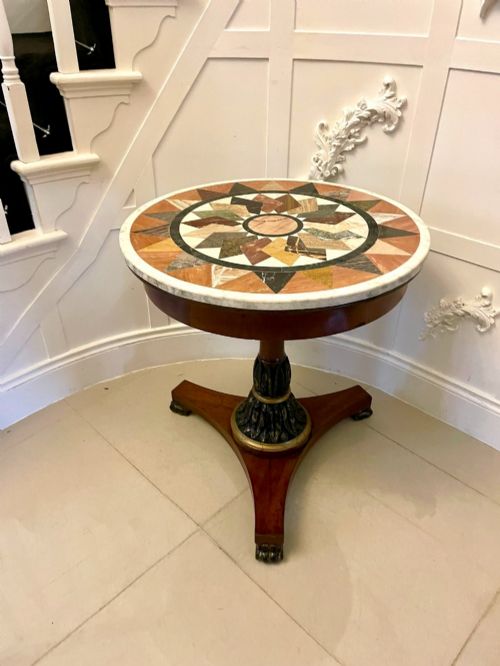
A victorian specimen side table sits on a central pedestal or four-legged base, supporting a circular, octagonal, or rectangular top. These tables served as display pieces in nineteenth-century drawing rooms, designed to showcase the skill of the cabinetmaker.
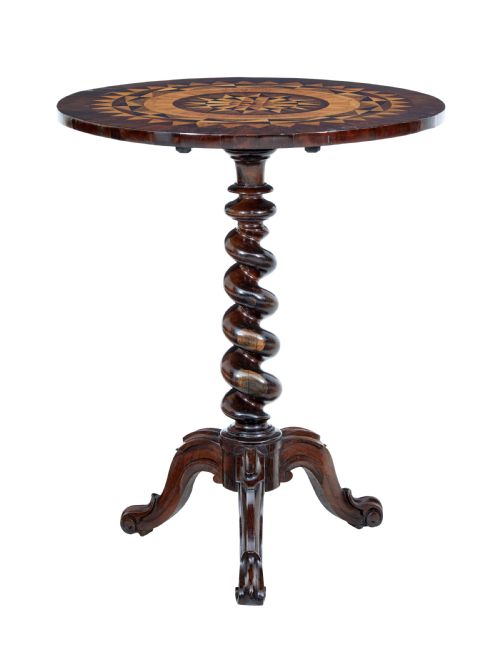
The form encompasses occasional tables, centre tables, and tilt-top examples produced across the nineteenth century, including William IV and Aesthetic Movement iterations. You will frequently encounter circular tops supported by mahogany, walnut, or rosewood pillars.
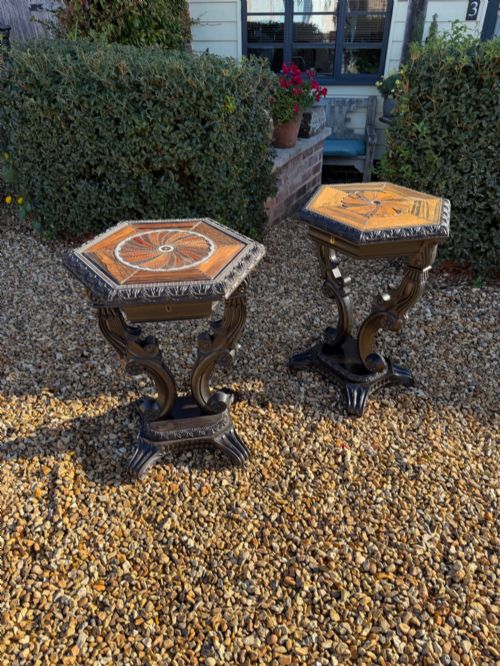
Origins stretch from English workshops to colonial centres such as New Zealand and Anglo-Indian regions, incorporating native timbers and exotic woods. Surviving examples demonstrate diverse regional interpretations of the multi-wood inlay technique.
How they were made
Cabinetmakers constructed the main carcase using dense hardwoods like mahogany, walnut, rosewood, and oak, often shaping pedestals with carved swans or tripod legs. These structural timbers provided a stable foundation for intricate decorative surfaces.
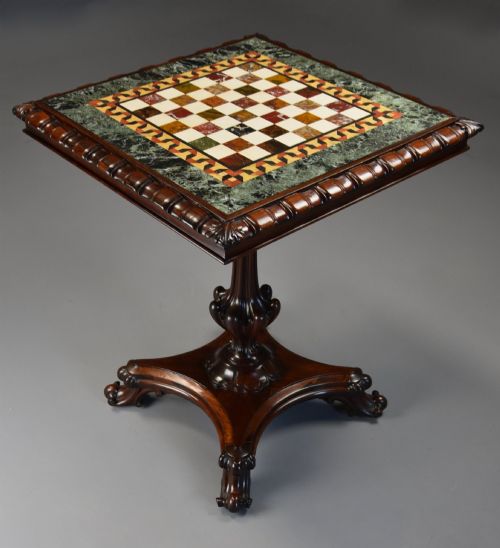
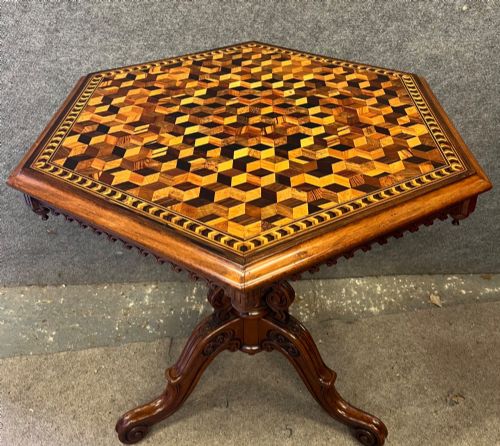
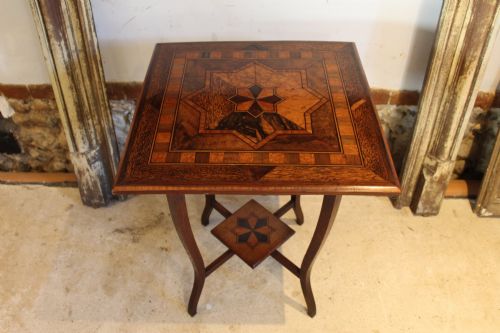
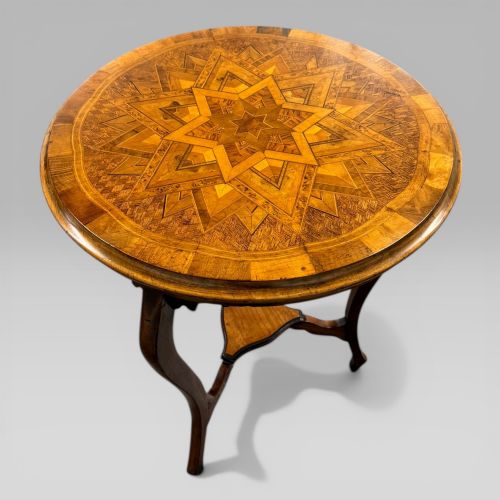
Tops display marquetry, parquetry, and sunburst patterns assembled from countless tiny segments of specimen wood veneers, burr-elm, and ebony. Alternatively, circular and octagonal surfaces feature polished specimen marble or pietra dura inlay.
Surface assembly relied on precise joinery and animal glues to secure myriad wood veneers and stone plaques into solid timber bases. Tilt-top mechanisms incorporated brass catches and hinges to allow the table to stand flat or upright.
Victorian Specimen Side Table Retail Price Guide 2026
Typical asking prices for victorian specimen side table among the pieces listed under this phrase on Sellingantiques today, from the lower quarter to the upper quarter. They describe what is for sale here now, not the wider market.
The inventory records regional variations including Anglo-Indian carved ebony, New Zealand native timbers, and Italian pietra dura work.
What varies in quality
Structural stability and the crispness of the base carving differentiate workshop output. Heavy mahogany or walnut pedestals with well-defined volutes or pillar supports demonstrate superior joinery compared to plain turned legs.
The precision of the veneer work and the preservation of the polished finish determine overall execution. Tight joints between individual specimen pieces without visible filler indicate the highest standard of nineteenth-century bench work.
James Shoolbred·Anton Seuffert·William Norrie
The Victorian Specimen Side Table Glossary
- Specimen wood
- Timber selected for its specific grain, colour, or origin rather than structural utility. Makers gathered various native and exotic species to create contrasting geometric patterns.
- Marquetry
- The art of applying small pieces of veneer to a structure to form decorative patterns or pictures. Craftsmen cut thin slices of differing timbers to fit together precisely like a puzzle.
- Pietra dura
- Inlay technique utilising cut and fitted polished coloured stones to create formal designs. Artisans shaped hard minerals such as marble and jasper to form pictorial or geometric tabletops.
- Tilt-top
- A hinged tabletop mechanism allowing the surface to rotate and lock vertically for storage. This functional element appears frequently on nineteenth-century occasional and pedestal tables.
- Parquetry
- Geometric mosaic woodwork used for covering floors or tabletops. Triangles, squares, and rhombuses of contrasting timbers repeat across the surface to produce an optical effect.
Victorian Specimen Side Table: Frequently Asked Questions
How do I care for a marble top?
Clean the stone surface using a soft cloth dampened with warm water and mild soap, avoiding acidic cleaning agents that etch polished marble. Dry the top thoroughly immediately after wiping.
Apply a neutral stone wax periodically to maintain the sheen and protect the porous surface from moisture rings. Keep the table away from direct heat sources to prevent thermal shock to the stone.
Were these tables meant for daily use?
Nineteenth-century drawing rooms utilised these tables primarily for displaying decorative objects, lighting, or books rather than heavy daily service. The delicate veneer work requires a gentle approach in modern settings.
Position the piece away from direct sunlight to prevent fading in the exotic wood veneers and burr-elm timbers. Use coasters beneath any drinking vessels placed upon the top.
What is the difference between occasional and centre tables?
Centre tables typically feature finished decoration on all sides and stood proudly in the middle of a Victorian parlour. Occasional tables were designed to be moved easily and placed against walls or beside seating.
Both forms utilise similar specimen wood and marble tops, though centre tables often incorporate heavier pedestals like carved swan supports to anchor their position in a room.
How do I identify New Zealand specimen work?
New Zealand tables utilise distinctive native timbers such as kauri, rewarewa, and honeysuckle, arranged in intricate geometric star or basketweave patterns. These pieces often bear the distinct influence of makers working in Auckland.
The inclusion of these specific southern hemisphere woods distinguishes colonial pieces from standard English or Italian production of the same decades.