

Victorian Solid Seat Chair
These Victorian solid seat chair examples combine robust timber construction with everyday functionality, offering authentic period character for contemporary interiors.
Materials and Construction
Cabinetmakers and country joiners utilised native and exotic hardwoods selected for strength and grain. Oak, mahogany, elm, beech, and ash appear frequently across the inventory.
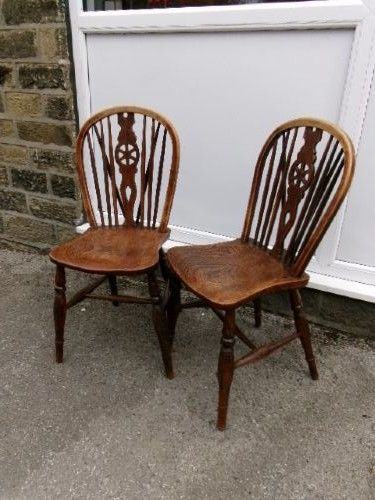
Joinery methods rely on traditional pegged mortise and tenon joints, steam-bent components for Windsor backs, and turned supports executed on the lathe.
Distinguishing Quality
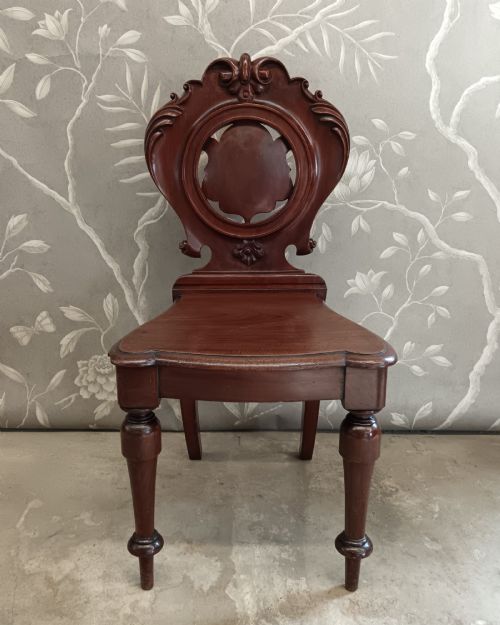
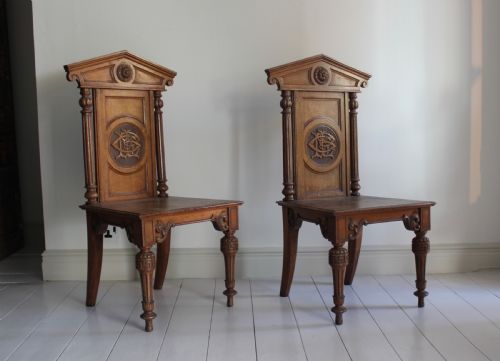
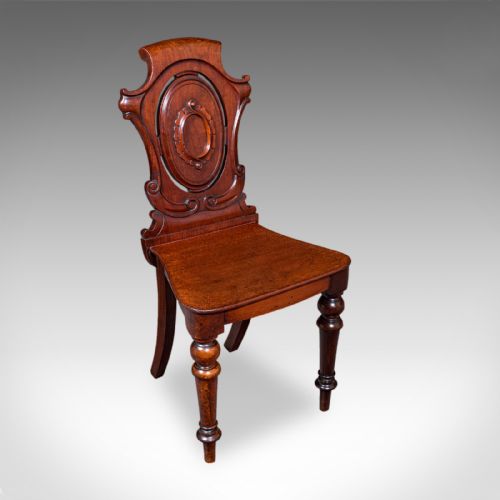
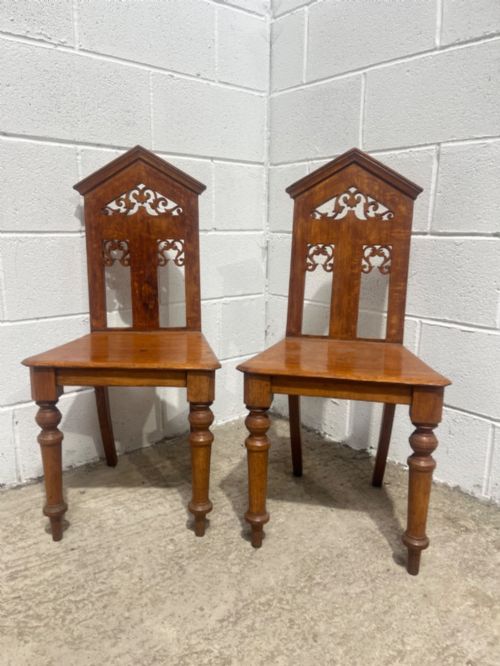
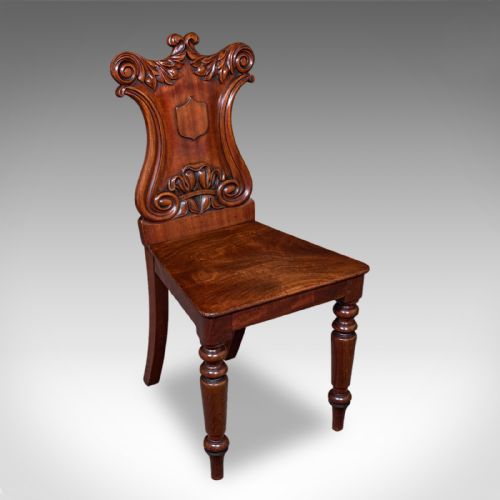
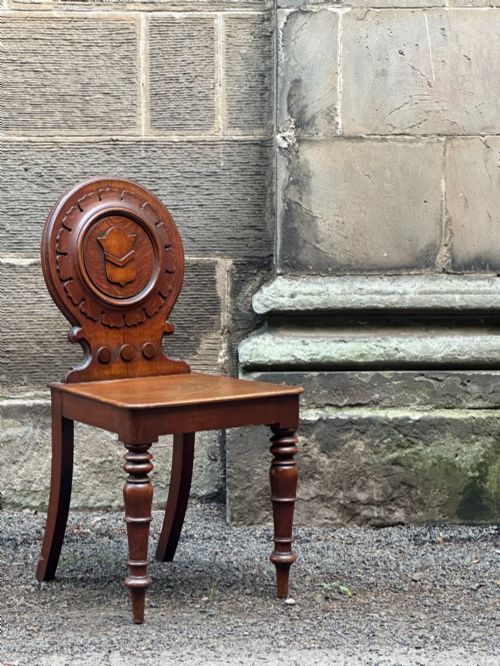
Quality rests in the selection of timber, the crispness of carved heraldic shields or architectural details, and the integrity of the original joints. Higher tier pieces exhibit superior joinery and carefully figured mahogany or oak.
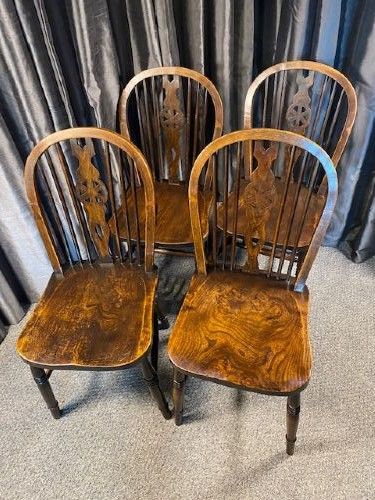
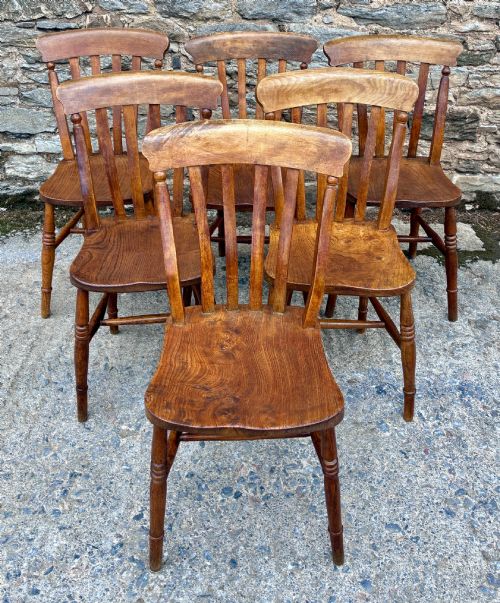
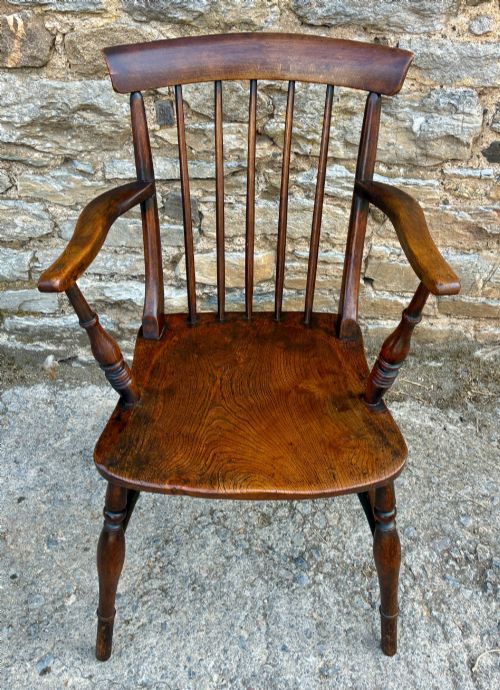
Simpler farmhouse seating relies on honest utility and balanced proportions rather than ornate carved decoration, where the pairing of contrasting timbers like ash and elm elevates the visual interest.
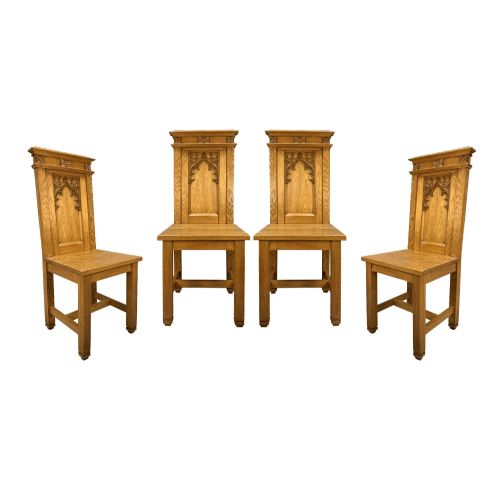
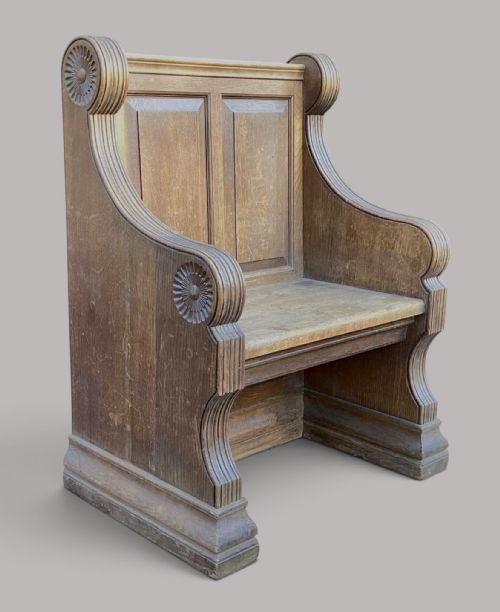
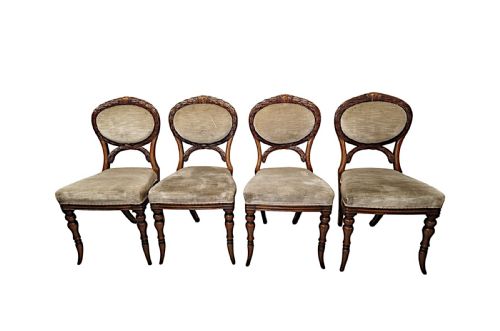
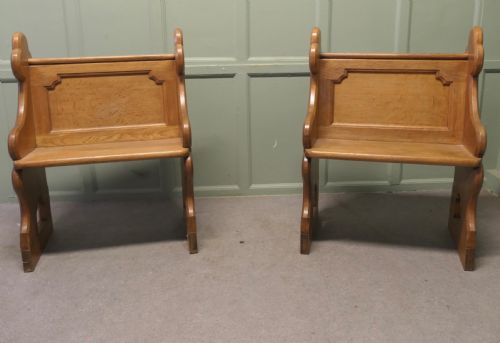
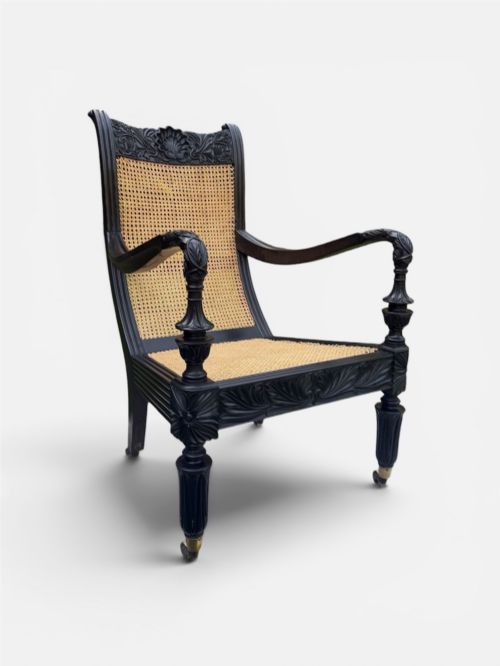
Object types range from formal mahogany reception seats and Gothic revival hall chairs to vernacular elm Windsor kitchen chairs.
Strahan·J Herbert McNair
The Victorian Solid Seat Chair Glossary
- Hall Chair
- A wooden seat intended for a hallway or entrance space, often featuring a solid timber panel back carved with a crest or shield.
- Windsor Chair
- A seating form constructed with a solid wooden seat into which the legs and back spindles are directly wedged and bored.
- Smokers Bow
- A sturdy armchair with a rounded low back and turned spindles, frequently constructed from elm and beech.
- Box Settle
- An enclosed wooden bench incorporating a hinged seat lid providing internal storage beneath.
Victorian Solid Seat Chair: Frequently Asked Questions
Where were hall chairs placed in a Victorian home?
These seats stood primarily in entrance halls, corridors, and reception rooms where visitors waited briefly.
They functioned mainly as decorative or transitional seating rather than for prolonged comfort.
What woods were used for kitchen chairs?
Elm provided a tough, non-splitting surface for the solid seats of kitchen and Windsor chairs.
Ash and beech supplied strong, flexible timber for the spindles and steam-bent bows.
Are hall chairs comfortable?
Formal hall chairs prioritised upright posture and heraldic display over cushioning or ergonomic support.
Their carved wooden backs and rigid seats suit brief seating rather than long periods at a desk.