


Victorian Sofa Suite
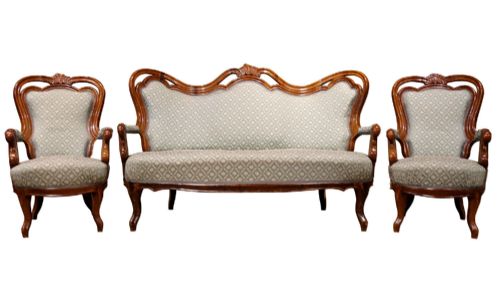
A victorian sofa suite brings together matching seating for the formal parlour, pairing a sofa with chairs in walnut, mahogany, or leather.
Victorian Sofa Suite
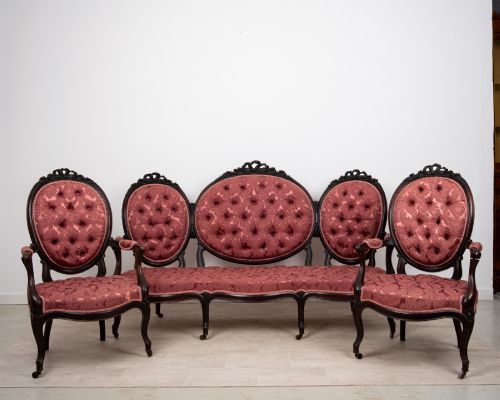
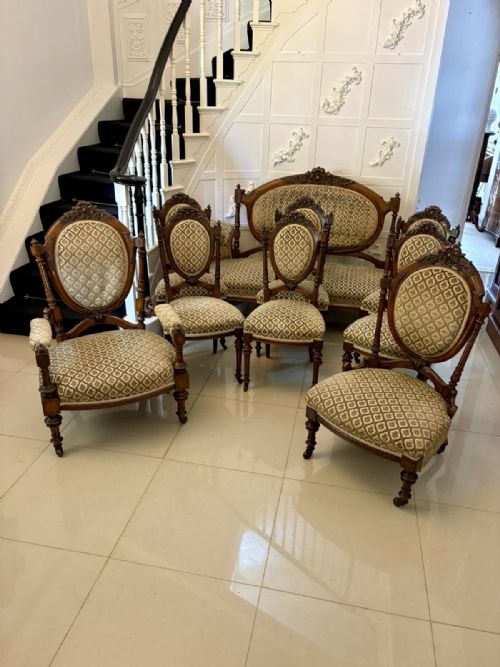
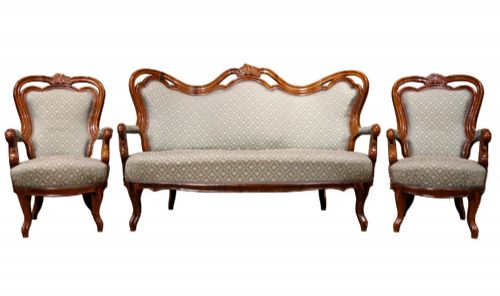
When you search for a victorian sofa suite, you encounter coordinated groupings of parlour and drawing-room seating designed for formal reception rooms. These arrangements typically include a settee or sofa accompanied by matching armchairs, drawing chairs, or occasional seating.
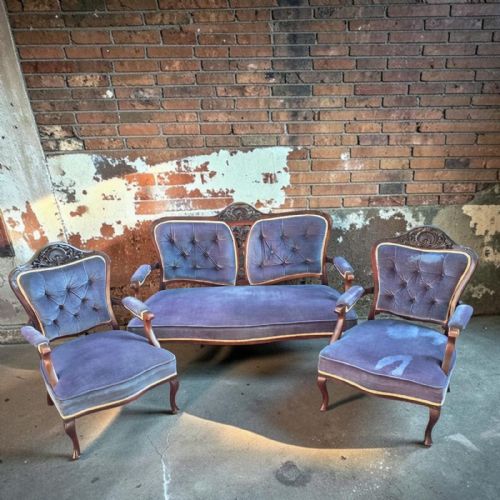
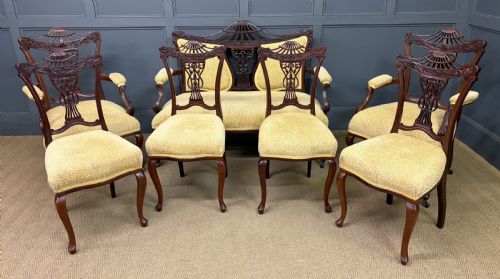
The pieces appear in configurations ranging from three-piece parlour sets to extensive eleven-piece drawing-room suites spanning the nineteenth century. Common forms encompass double spoon-back settees, cameo-back chairs, and large conversation seats.
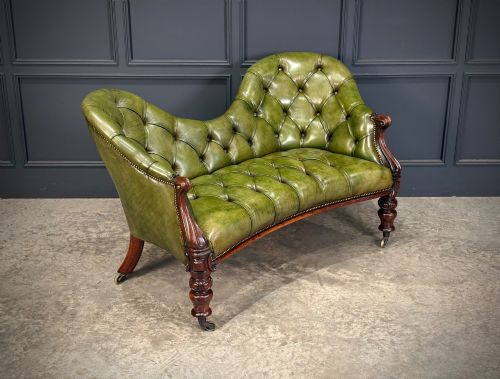
Most examples date from the Victorian era into the Edwardian period, incorporating revival influences such as Rococo, Chippendale, and French styles. Walnut and mahogany frames dominate the selection, often upholstered in velvet, damask, or buttoned leather.
How they were made
Makers shaped the structural frames from solid timbers including walnut, mahogany, and satinwood, frequently employing rich show-wood finishes. Carvers executed detailed floral motifs, lion paws, and scrollwork directly into the wood of the rails and cabriole legs.
Upholstery techniques involved deep buttoning, sprung foundations, and hand-stitched horsehair stuffing beneath outer layers of velvet, damask, or leather. Some pieces integrated marquetry inlay in satinwood or ebonised surfaces characteristic of the Aesthetic movement.
The documented forms range from compact two-piece parlour settings and conversation seats to extensive eleven-piece drawing-room suites.
What varies in quality
The calibre of a victorian sofa suite rests upon the crispness of the timber carving and the architectural proportion of the settee frames. Superior examples display deeply moulded show-wood, robust joinery, and matching grain patterns across every chair in the group.
Fabric choice and the execution of deep buttoning or hand-stitched upholstery define the finishing standard. Suites retaining their original matching show-wood and coordinated upholstery fabrics command greater recognition than assembled or mismatched groupings.
Jas James Shoolbred·Howard and Sons
The Victorian Sofa Suite Glossary
- Spoon-back
- A chair or sofa back carved with a concave wooden rim resembling the bowl of a spoon. This contour supports the sitter's spine.
- Show-wood
- Exposed polished timber frame visible around the upholstered portions of a chair or settee. Walnut and mahogany were frequently utilised for this purpose.
- Salon suite
- A matching set of drawing-room furniture comprising a settee and several armchairs or side chairs. These groupings furnished formal nineteenth-century reception rooms.
- Marquetry
- Decorative veneer work forming intricate patterns using various woods such as satinwood and mahogany. Craftsmen applied these designs to flat frame surfaces.
- Aesthetic movement
- A late nineteenth-century design style emphasising artistic expression, ebonised finishes, and simplicity. Pieces from this period often depart from heavy Victorian ornamentation.
Victorian Sofa Suite: Frequently Asked Questions
What pieces comprise a suite?
A suite consists of a central settee or sofa accompanied by matching armchairs, side chairs, or footstools designed as a unified set. Larger drawing-room groupings might include up to eleven matching items for formal entertaining.
These coordinated sets ensured visual harmony within nineteenth-century reception rooms, where uniform wood finishes and upholstery fabrics demonstrated the owner's taste.
Where were these suites placed?
Homeowners positioned these seating arrangements in formal drawing rooms, parlours, and salons intended for receiving guests. The main settee typically occupied a prominent wall, flanked by matching armchairs and occasional chairs.
Smaller three-piece suites suited intimate parlours, while expansive multi-piece sets filled spacious Victorian drawing rooms designed for larger gatherings.
How do I identify the period?
Early Victorian examples often feature mahogany frames with simpler curves, while mid-Victorian pieces embrace ornate walnut carving and Rococo revival scrolls. Late nineteenth-century suites frequently display Aesthetic movement ebonised finishes or geometric marquetry inlay.
Examining the construction methods, timber choice, and upholstery style helps date the suite alongside stylistic cues like cabriole legs or lion paw feet.
How do I care for leather upholstery?
Leather upholstery requires regular dusting with a soft, dry cloth and occasional treatment with appropriate leather conditioners to prevent drying. Direct sunlight and heat sources should be avoided to protect the hide from cracking.
Buttoned leather surfaces benefit from careful cleaning between the tufts to prevent dust accumulation in the folds of the deep buttoning.