

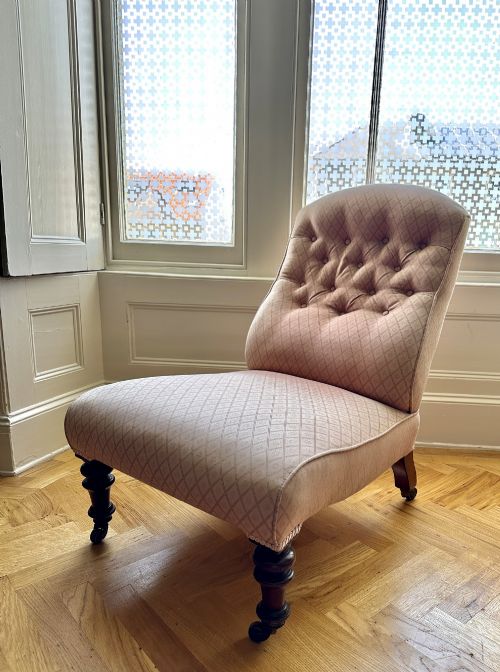


Victorian Slipper Chair Castors
Victorian slipper chair castors support low-slung seating designed for comfort near the fire.
Victorian Slipper Chair Castors
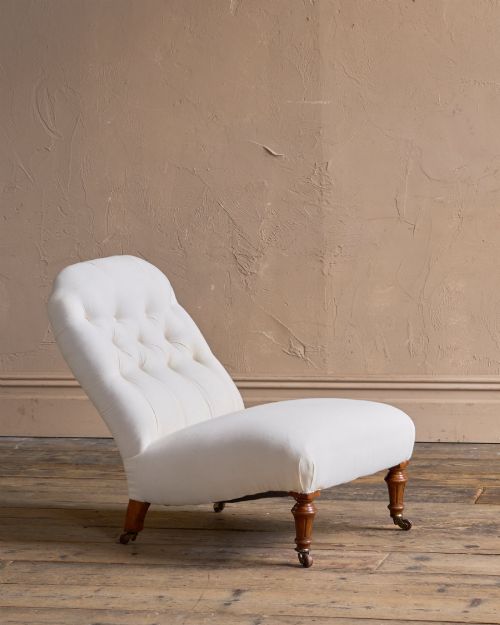
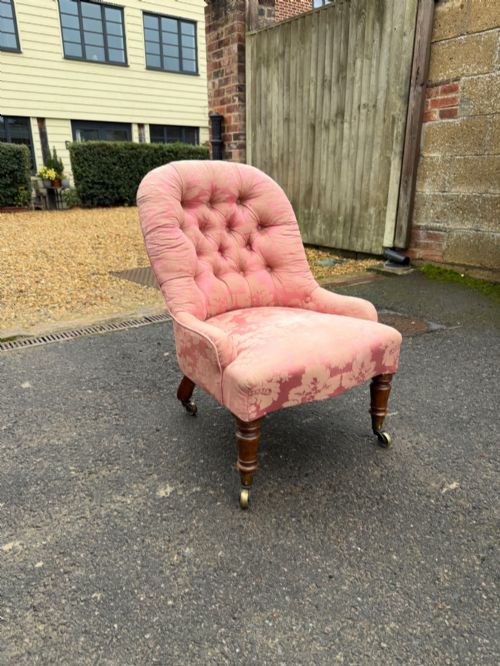
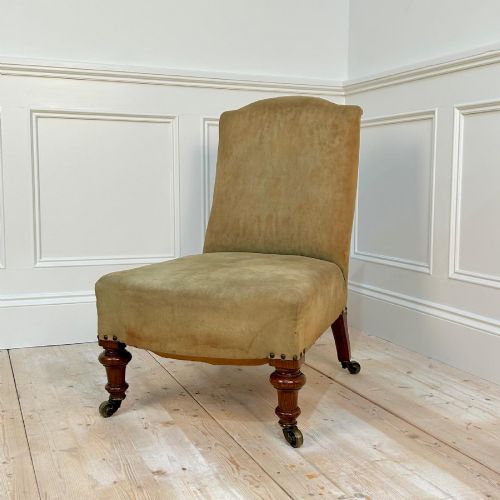
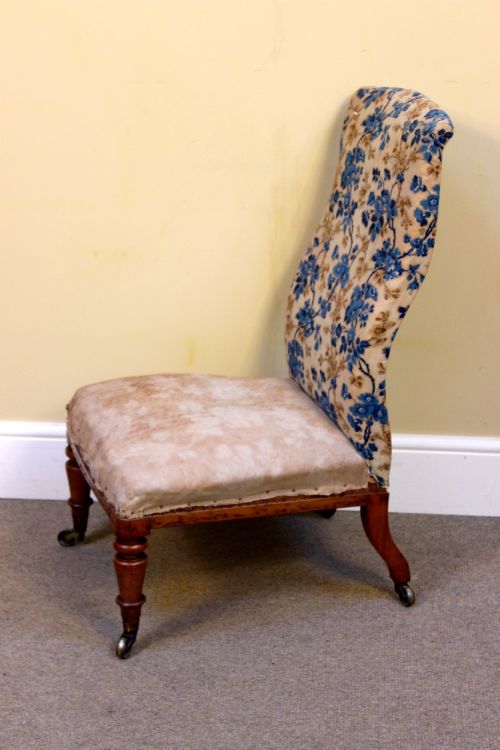
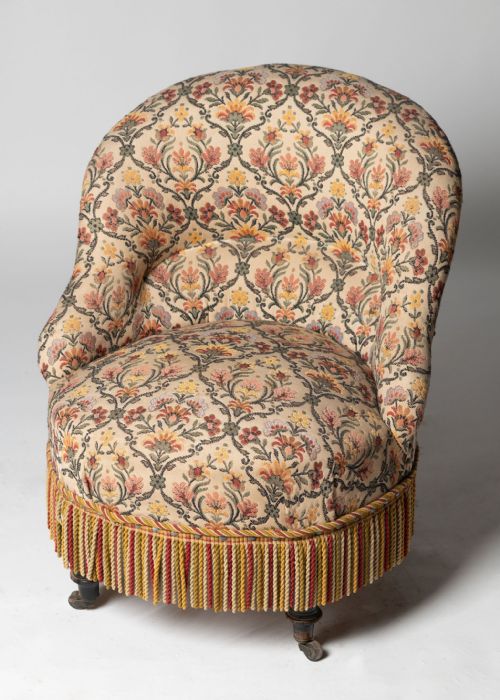
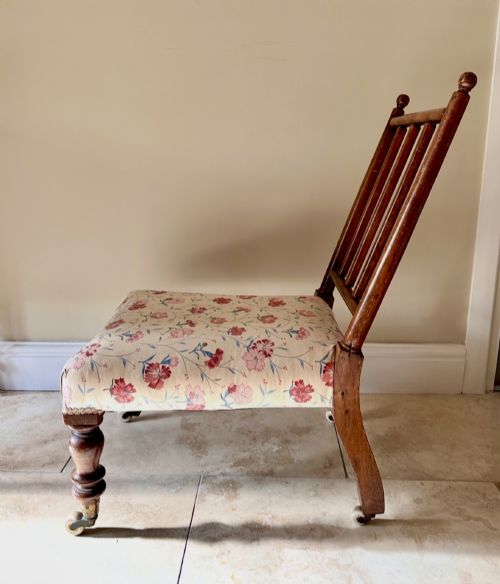
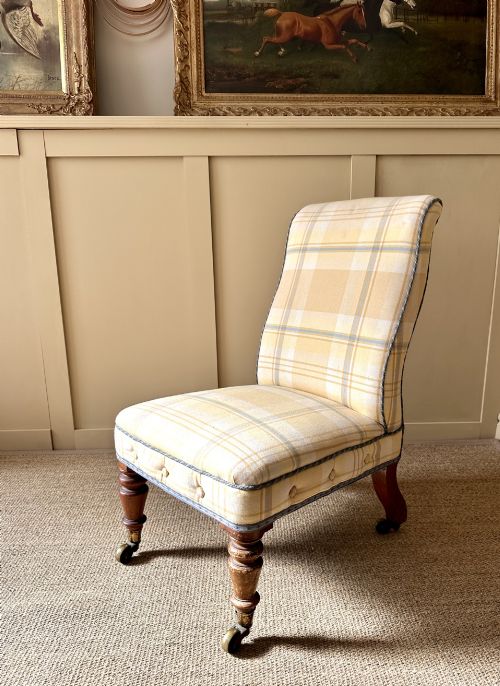
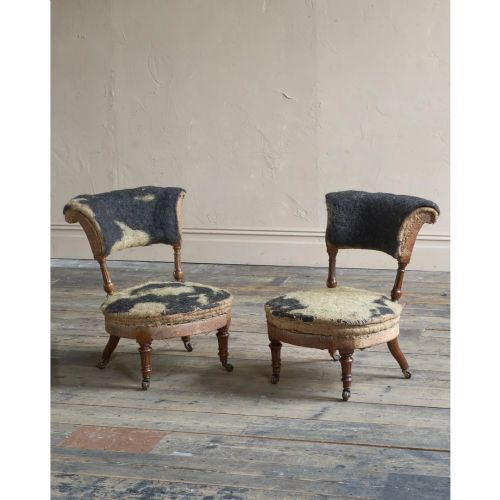
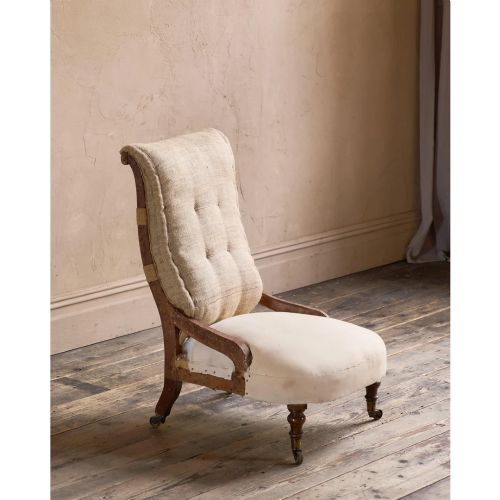
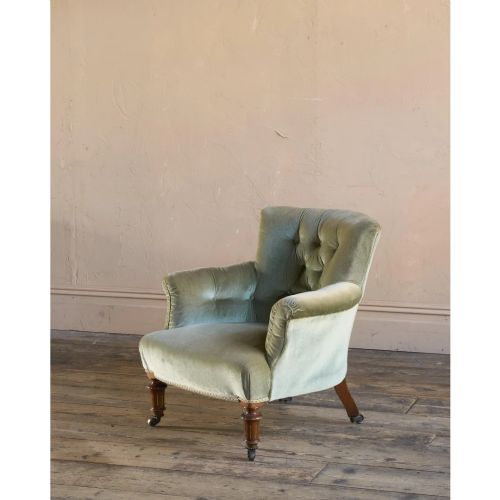
Victorian slipper chair castors are small, functional metal wheels fitted to the legs of low nineteenth-century bedroom and nursing seats. These low chairs emerge most frequently from the Victorian period alongside occasional and side chair forms.
Examples span the nineteenth century, encompassing Regency, William IV, Edwardian, and French Napoleon III influences. Buyers encounter various forms including armchair variants and spindle-back designs alongside low salon chairs.
Materials and construction
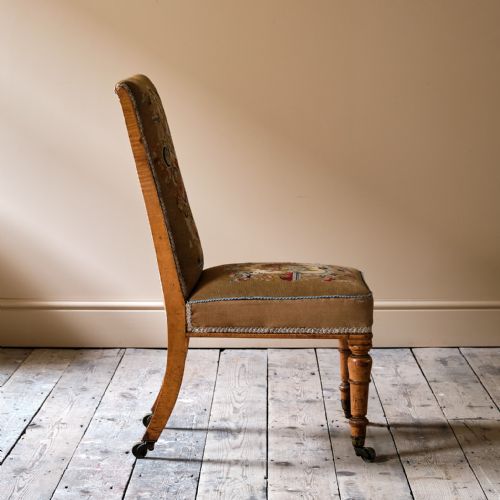
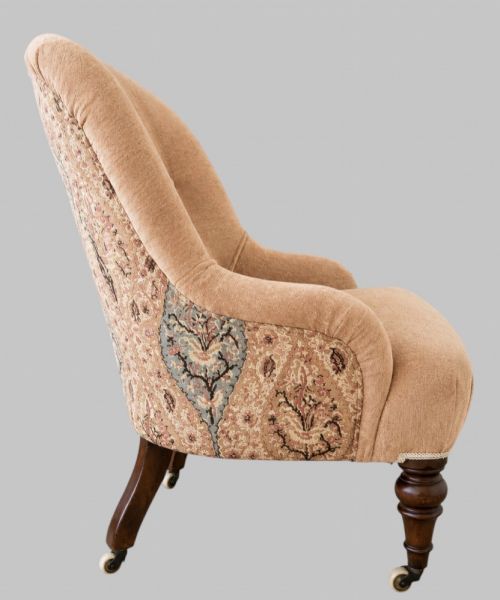
Frames rely on timbers such as mahogany, walnut, satinwood, birds-eye maple, and ebonised wood, often supported by exposed brass castors on the lower legs. Upholstery materials include velvet, tapestry fabric, silk, and modern textiles like Robert Kime Avebury fabric.
Traditional construction methods involve button-backed padding, iron-backed frames, and robust joinery designed to bear weight close to the floor. Bobbin legs, gilt legs, and carved mahogany details frequently finish the structural work beneath the upholstery.
Victorian Slipper Chair Castors Retail Price Guide 2026
Typical asking prices for victorian slipper chair castors among the pieces listed under this phrase on Sellingantiques today, from the lower quarter to the upper quarter. They describe what is for sale here now, not the wider market.
Listings feature mahogany, walnut, satinwood, and birds-eye maple frames paired with velvet, tapestry, and hessian.
Assessing quality in these chairs
Quality rests in the precision of the timber framing and the integrity of the underlying iron or wooden support structures. Master workshops ensured that joints remained rigid despite the low stance and constant movement on castors.
Refinement shows in the carving of the legs, the selection of dense hardwoods like satinwood or walnut, and the balance of the button-backed upholstery. The pedigree of notable makers elevates certain pieces above standard production.
Charles Hindley & Sons·Howard and Sons·Gillows
The Victorian Slipper Chair Castors Glossary
- Castor
- A small wheel fitted to the base of a furniture leg to allow smooth rolling. These metal fittings ensure low chairs move without dragging across floor surfaces.
- Slipper chair
- An upholstered low-slung chair traditionally used in bedrooms for changing shoes. They typically sit close to the floor without arms.
- Button back
- An upholstery style where depressions are formed in the padding by stitching buttons through to the frame. This technique secures the stuffing and creates a tufted surface.
- Nursing chair
- A low-seated armchair designed historically for mothers feeding infants. They frequently feature sprung seats and castors for mobility.
- Ebonised
- Wood treated with a dark finish to imitate expensive ebony. This process was popular on nineteenth-century bedroom chair frames.
Victorian Slipper Chair Castors: Frequently Asked Questions
What is a slipper chair?
A slipper chair is a low-seated, often armless chair designed for comfort during dressing or changing shoes in a bedroom.
These pieces sit close to the floor and frequently feature castors to allow easy repositioning near a fireplace.
How do I spot a Victorian chair?
Victorian chairs often display dense timber frames, button-backed upholstery, and turned or carved legs fitted with metal castors.
Examining the wood species and the stitching methods beneath the upholstery helps confirm the nineteenth-century origin.
Were all these chairs on castors?
Many low chairs from this era include castors to facilitate movement across heavy carpets and rugs.
Makers attached them to the base of the legs to protect the timber and ease daily use in sitting rooms and bedrooms.
How should I clean the fabric?
Cleaning depends entirely on the specific textile, whether it is historic tapestry, velvet, or modern replacement fabric.
Consulting a professional textile conservator is advisable for older or delicate upholstered surfaces to prevent permanent damage.