

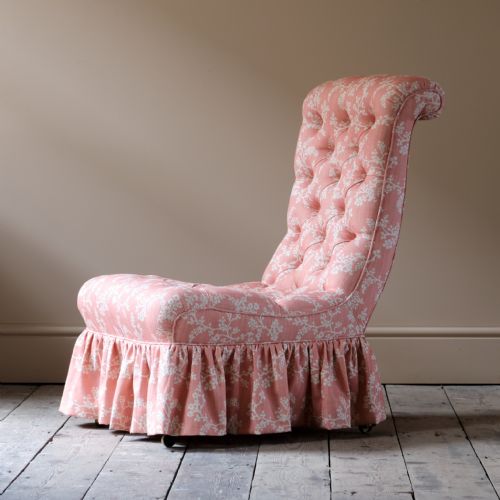


Floral Upholstered Slipper Chair
A floral upholstered slipper chair offers low-slung, comfortable seating designed originally for Victorian bedrooms and dressing rooms.
Floral Upholstered Slipper Chair
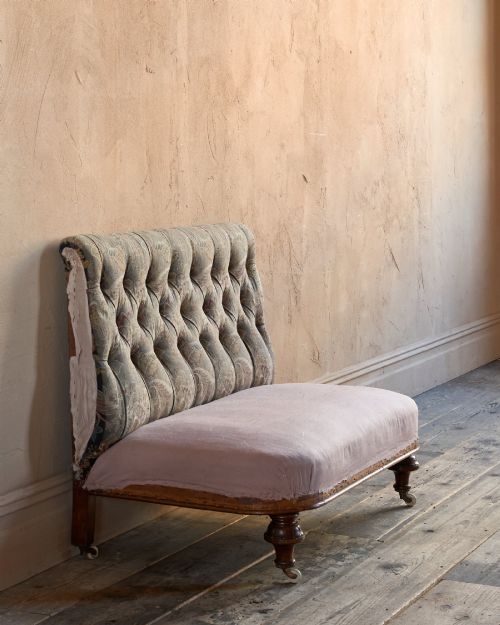
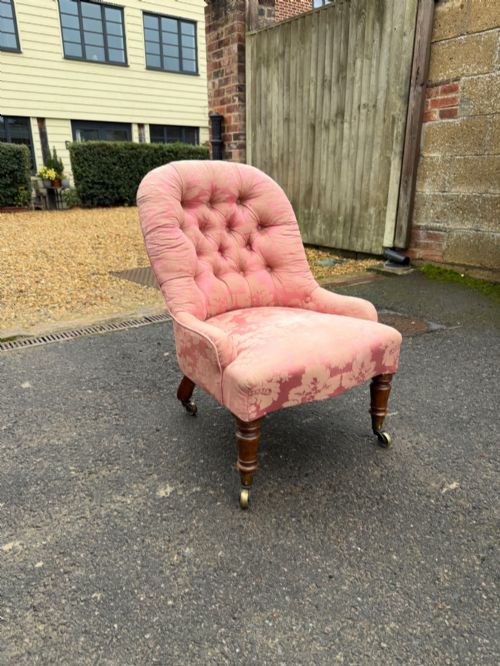
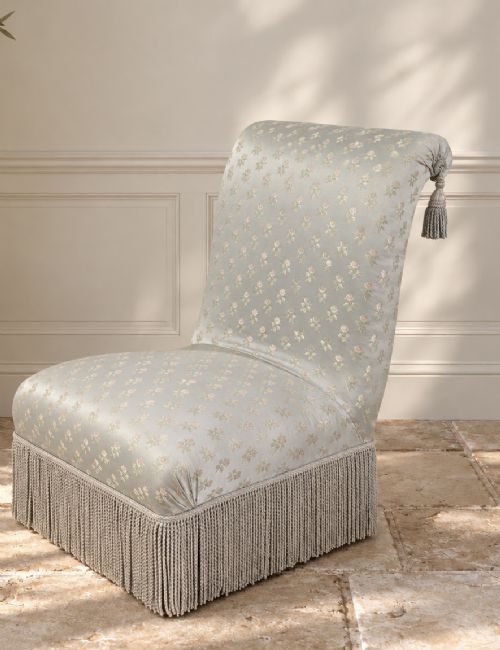
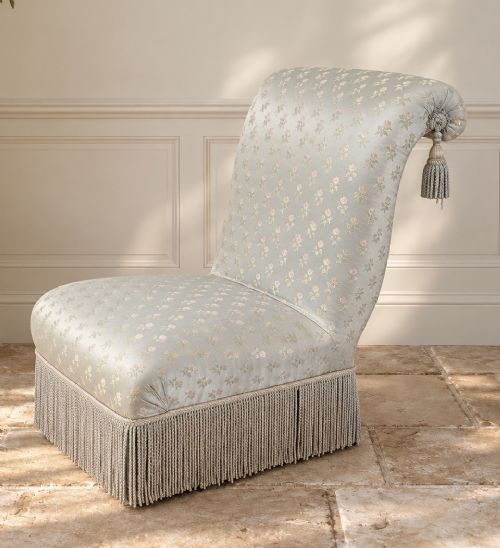
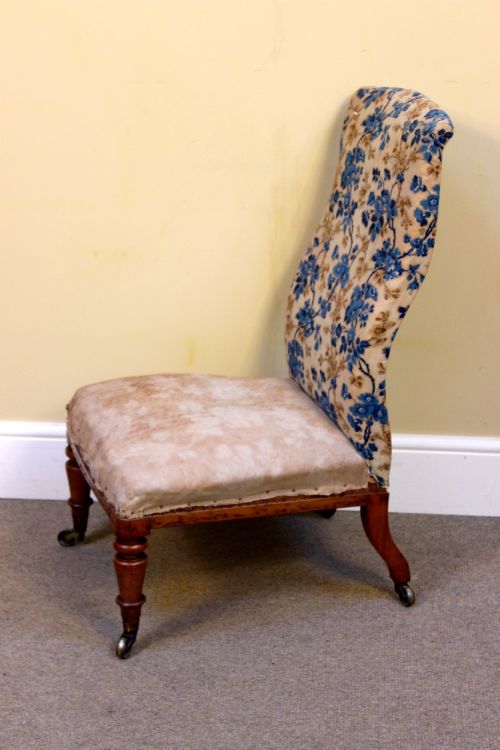
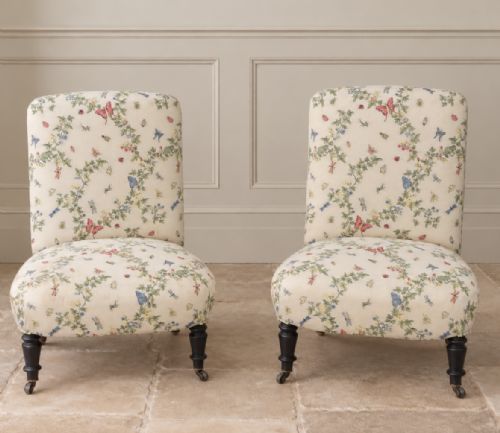
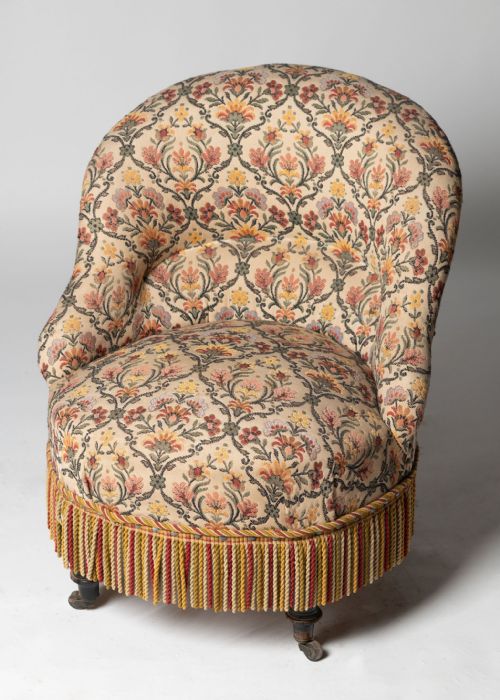
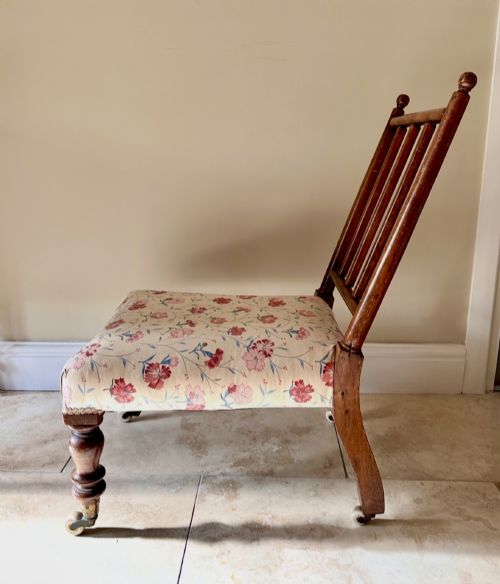
A floral upholstered slipper chair sits low to the ground with a compact, armless frame intended to make dressing easier in private chambers. The selections on this page span the nineteenth century through the Edwardian era, taking forms such as nursing chairs, salon chairs, and low bedroom chairs.
Makers fashioned these low seats from timbers including mahogany and walnut, supporting sprung or padded seats upholstered in textiles, cotton, tapestry, and vintage linen. Styles range across Regency, William IV, Victorian, and French Napoleon III designs, reflecting changing tastes in private domestic comfort.
The low profile distinguishes these seats from standard parlor armchairs, positioning them close to the floor for comfort near dressing tables and bedroom hearths. Surviving examples demonstrate how Victorian and later makers adapted the basic low form into elaborately carved ladies chairs and button-backed seats.
Materials and construction
Cabinetmakers constructed the frames using solid timbers such as mahogany and walnut, frequently shaping the wood into carved backs and slender legs. Brass castors occasionally appear on the feet to allow easy movement across bedroom carpets.
Upholstery techniques combined traditional stuffing with textiles, cotton, and tapestry fabrics to create padded seats and backs. Frames often feature exposed polished wood frames surrounding the upholstered panels, particularly on walnut nursing chairs and ladies chairs.
Floral Upholstered Slipper Chair Retail Price Guide 2026
Typical asking prices for floral upholstered slipper chair among the pieces listed under this phrase on Sellingantiques today, from the lower quarter to the upper quarter. They describe what is for sale here now, not the wider market.
Some nineteenth-century makers mounted these low bedroom seats on tiny brass castors so they could glide stealthily across the floor.
Factors of quality
The crispness of carved wooden detail on walnut and mahogany frames separates standard production from finer cabinet work. Heavier timber framing and sturdy joinery provide structural integrity to low-slung chairs that experience regular weight.
The quality of the upholstery textile and the retention of period fabrics, such as original floral tapestry or vintage linen, influence the character of each piece. Maker attribution, through stamps or known workshop design, distinguishes standard bedroom seating from high-end commissions.
Gillows·Howard and Sons·Hindley and Sons
The Floral Upholstered Slipper Chair Glossary
- Slipper chair
- An armless, low-seated chair traditionally used in bedrooms for putting on footwear. It lacks side restrictions to allow easy movement in voluminous garments.
- Nursing chair
- A low-seated Victorian armchair designed to provide comfort while nursing children. These pieces frequently feature high backs and padded seats.
- Prie-dieu chair
- A devotional chair with a low seat and a high, narrow top rail designed for kneeling during prayer. They share the compact dimensions seen in bedroom seating.
- Napoleon III
- A French eclectic design style popular during the mid-nineteenth century. It combines influences from earlier French periods with comfortable upholstered forms.
- Tapestry
- A heavy textile woven with pictorial or floral designs. It was frequently utilised for durable upholstery on Victorian salon and bedroom seating.
Floral Upholstered Slipper Chair: Frequently Asked Questions
What is a slipper chair used for?
A slipper chair provides low seating originally placed in bedrooms and dressing rooms for changing shoes and garments.
The compact, armless design allowed people to sit comfortably close to the floor without side obstructions.
Are these chairs comfortable for daily use?
These chairs offer supportive seating due to their padded frames and compact dimensions, though their low height differs from modern lounge chairs.
They function well as accent seating in living spaces or bedrooms.
How do I care for antique upholstery?
Antique upholstery requires gentle vacuuming with a soft attachment to remove dust without damaging fragile textiles or linen.
Professional textile conservation is recommended for fragile historical fabrics.