




Victorian Slate Carving
Victorian slate carving brings heavy stone to life as clocks, folk art models and architectural pieces that hold a room.
Victorian Slate Carving
When you search for victorian slate carving, you encounter heavy stone shaped into mantel clocks, miniature furniture, fireplace surrounds and wall plaques. These items reflect nineteenth century domestic life, often combining functional utility with decorative ambition.
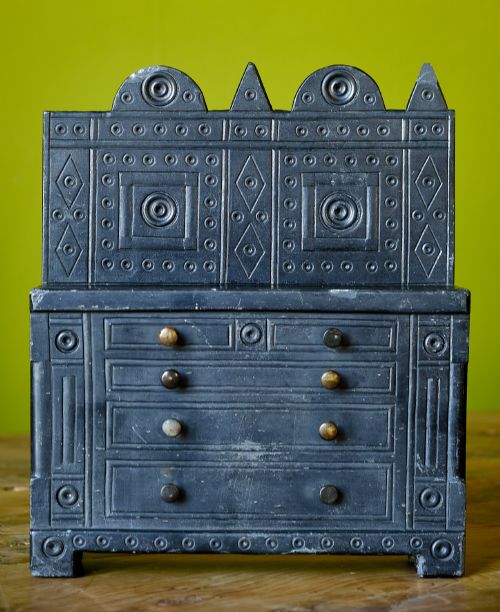
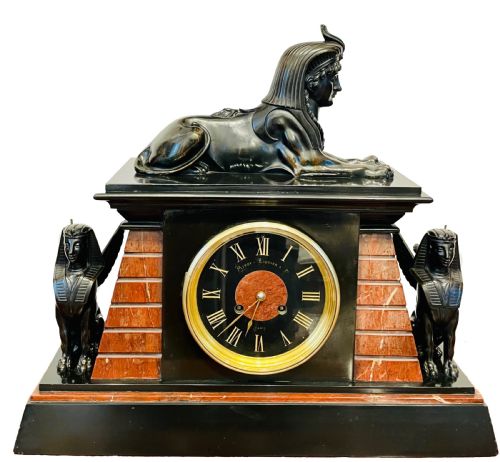
The pieces on this page lean heavily towards Welsh folk art models, such as miniature chests of drawers and architectural columns, alongside drumhead clocks and scoreboards. They demonstrate how makers used dense stone to mimic wood and marble with surprising fidelity.
Originating mostly from the Victorian era, spanning the decades from eighteen fifty to eighteen ninety, these works showcase regional British craftsmanship, particularly from Caernarfonshire. They suit collectors seeking tactile, weighty objects with a distinct industrial and domestic heritage.
How they were made
Makers shaped black slate and marble using hand tools to achieve crisp architectural lines and smooth surfaces. They frequently combined the primary stone with brass fittings, bone inlay and ebonised wood to create contrast and detail.
Some pieces incorporate enamel work and applied mahogany to enhance the visual texture of the stone. Craftsmen carved intricate columns, fire surrounds and miniature drawers directly from blocks of slate, relying on patience and precision.
One tiny carved chest of drawers serves no practical purpose other than to prove a Welsh mason could turn hard stone into working miniature furniture.
What varies in quality
The distinction between standard examples and finer works lies in the ambition of the carving and the complexity of the form. Miniature furniture with working drawers and crisp architectural detailing represents a higher standard of skill than plain surfaces.
Material combination also elevates a piece, such as integrating brass dials, marble trim and bone details into a mantel clock or scoreboard. The depth of the hand-carved relief work separates basic utilitarian items from accomplished folk art.
The Victorian Slate Carving Glossary
- Slate
- A fine-grained metamorphic rock that splits into thin plates, used extensively in the nineteenth century for carving clocks, plaques and architectural models. It offers a smooth, dark surface that takes fine detail.
- Drumhead clock
- A clock with a circular dial housing mounted on a base, often executed in slate and marble during the Victorian period. This form provides a solid architectural presence.
- Folk art model
- An object carved by self-taught or regional artisans, depicting everyday items such as chests of drawers or fireplace surrounds in miniature. These pieces reflect local traditions and resourcefulness.
- Architectural model
- A small-scale representation of a building element, such as a fireplace surround or column, carved from stone to demonstrate a mason's skill or serve as a sample.
- Ebonised wood
- Timber treated to resemble ebony, frequently used alongside black slate to provide dark, uniform framing for clocks and plaques.
Victorian Slate Carving: Frequently Asked Questions
What are victorian slate carving items made of?
These pieces use black slate and marble as the primary stone, often complemented by brass, mahogany, bone and ebonised wood.
Makers selected these materials for their density and ability to hold crisp, hand-carved details.
Where were these stone pieces made?
Many originate from Wales, particularly Caernarfonshire, where slate quarrying supported a thriving tradition of local folk art and masonry.
Other examples reflect broader British Victorian manufacturing centres producing architectural models and mantel clocks.
How do I date a slate carving?
Dating relies on stylistic clues such as Egyptian Revival motifs, structural forms like drumhead clock housings, and recorded dates on specific pieces.
The materials, including brass and bone elements, also point towards the nineteenth century.
How should I display a slate clock or model?
Given their substantial weight, these stone pieces require sturdy mantelpieces, tabletops or dedicated shelves that can support heavy loads.
Keep them away from moisture and handle them with care to protect sharp carved edges.