
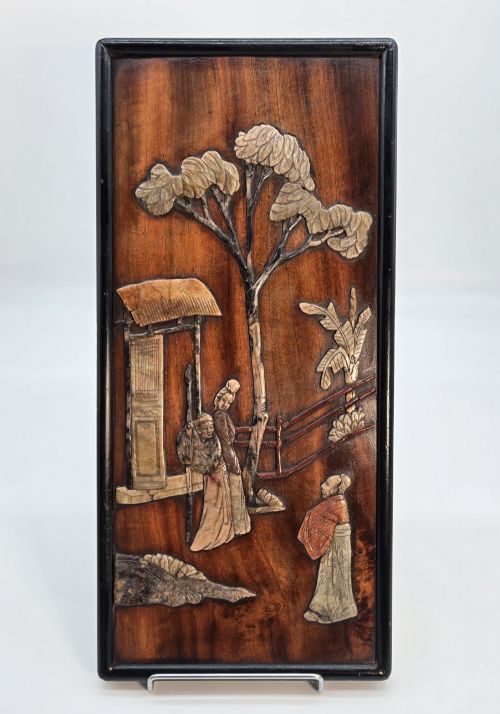


Stone Relief Panel
These stone relief panel examples bring sculpted depth to walls, offering tactile classical figures, medieval carvings and Asian stonework.
Stone Relief Panel
A stone relief panel provides sculptural wall art shaped from materials like white marble, soapstone, sandstone, and slate. When searching for a stone relief panel, buyers encounter wall plaques, framed pictures, and architectural fragments.
The selections range across centuries and origins, covering nineteenth century European revivals, sixteenth century Gothic carvings, and early northern Indian temple reliefs. Pieces frequently arrive mounted in frames or ready for wall hanging.
Victorian classical revivals sit alongside Chinese Qing dynasty ornamental stones and Welsh slate hand-carved plaques. This variety offers both figurative subjects and heraldic motifs suitable for domestic display.
Materials and carving techniques
Carvers shaped these works from dense stones including white marble, sienna marble, soapstone, sandstone, and slate, sometimes utilising hardwood frames or glass protection. Artisans employed hand-carving chisels to raise figures and motifs from the flat stone background.
Surfaces demonstrate the direct action of sculptor tools on stone, revealing detailed incisions in slate and smoothed contours on marble nudes and saints. Historic panels often integrate secondary materials like copper or gilt wood within the framing structures.
Evaluating sculptural depth and execution
Quality rests in the precision of the carving and the depth of the relief work, where finer examples display sharply articulated facial expressions and naturalistic drapery. The choice of stone impacts the final result, with select marbles and sandstones holding crisper detail than softer or more friable minerals.
The integrity of the panel surface and the harmony of any associated frame contribute to the overall standard of the piece. Signed works by documented sculptors carry distinct archival weight compared to anonymous workshop productions.
Kasper Hendrik Roskam
The Stone Relief Panel Glossary
- Relief sculpture
- A sculptural technique where figures or designs project from a flat background plane. This approach creates a sense of three-dimensional depth on a wall hanging.
- Marble
- A metamorphic rock prized by sculptors for its fine grain and smooth finish. White marble and sienna marble feature prominently in classical European carvings.
- Sandstone
- A sedimentary rock composed of mineral particles or rock fragments. Northern Indian examples utilise this durable material for figural temple carvings.
- Gothic
- A medieval art and architecture style spanning from the twelfth to the sixteenth century. Pieces from this era often depict religious narratives and solemn ecclesiastical figures.
- Neoclassical
- A revival style drawing inspiration from the classical art and culture of ancient Greece and Rome. This aesthetic guides many nineteenth century figurative marble panels.
Stone Relief Panel: Frequently Asked Questions
How do I hang a heavy stone panel?
Heavy stone panels require secure wall fixings suited to the specific weight of the marble, slate, or sandstone. Wall anchors and professional brackets distribute the load safely across masonry or stud walls.
Ensure the mounting hardware engages directly with structural supports rather than plaster alone. Framed pieces should rely on reinforced hanging wire or heavy-duty D-rings attached to the backing frame.
Can these panels be displayed outdoors?
Most antique stone panels are intended for interior display due to historical fragility and delicate framing. Weather exposure can erode carved details, particularly on softer soapstones and historic sandstones.
Indoor environments protect the stone from frost damage and moisture accumulation. Specialised architectural stone fragments occasionally tolerate exterior installation, provided they are sealed against the elements.
How do I clean an antique stone relief?
Dust accumulated in recessed carved areas should be removed gently using a soft, dry brush. Avoid harsh chemical cleaners or abrasive scouring pads that can damage the historic stone surface.
Stubborn grime on harder marbles requires only a damp cloth with mild, pH-neutral soap, followed by thorough drying. Porous stones like sandstone absorb liquids easily and demand particular caution.
What subjects appear on these panels?
Subjects range widely from classical nudes and saints to heraldic symbols like the St Mark's lion. Asian examples feature ornamental stones and traditional figurative scenes.
Religious narratives dominate earlier European pieces, while nineteenth century works favour classical revival figures and topographical mementos. Each subject reflects the artistic priorities of its specific period and region.