



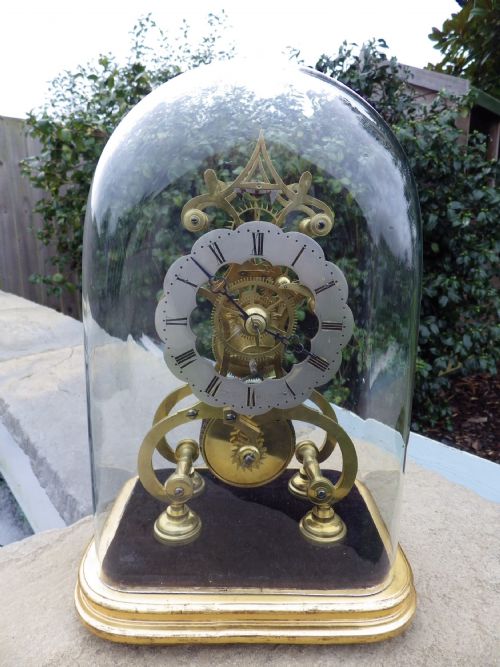


Victorian Skeleton Clock Dome
These Victorian skeleton clock dome pieces house intricate brass movements beneath blown glass covers, offering a clear view of mechanical timekeeping.
Victorian Skeleton Clock Dome
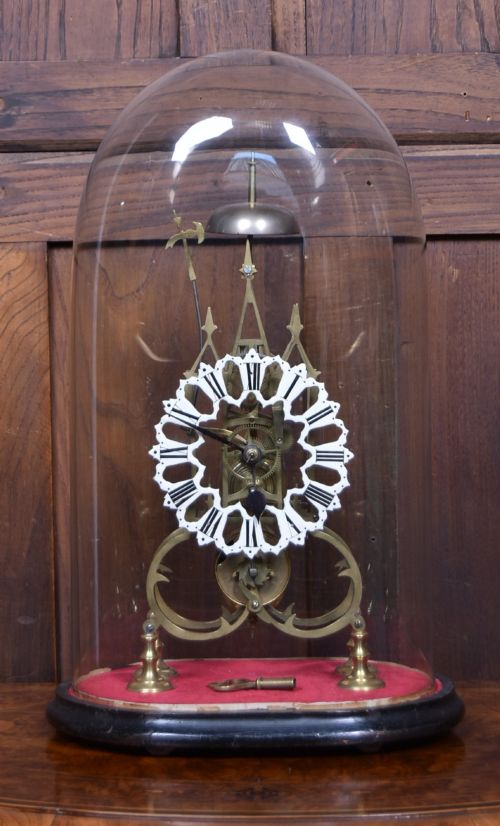
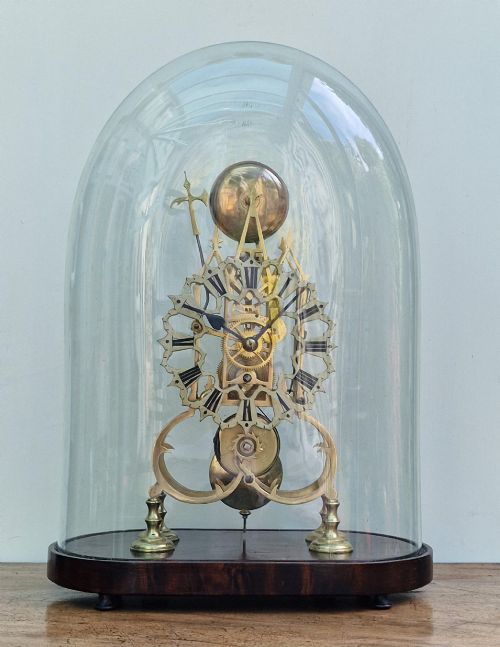
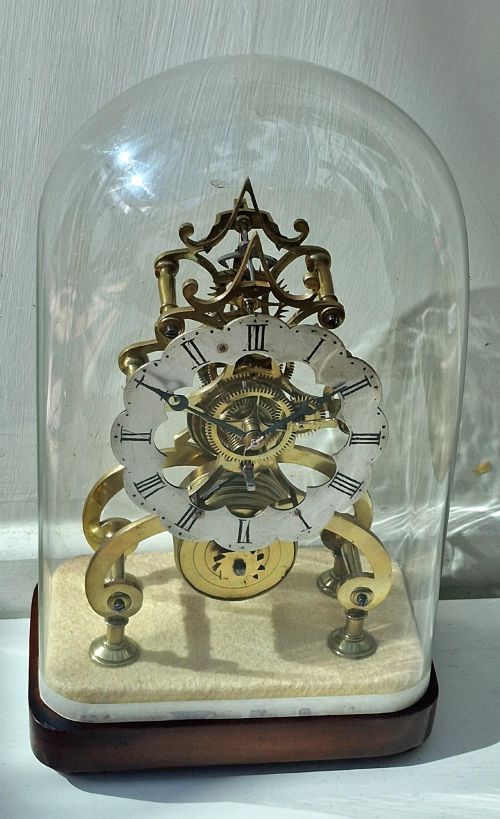
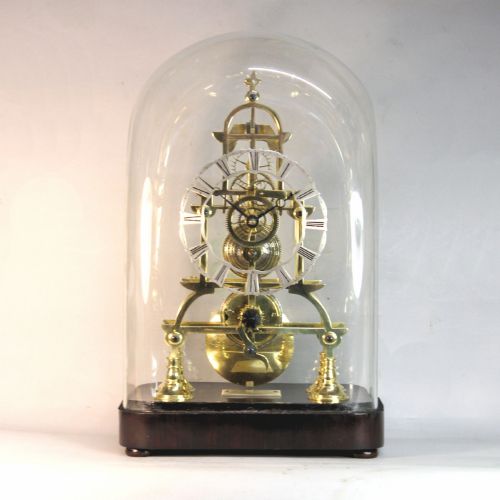
A victorian skeleton clock dome brings together an exposed brass or steel gear train and a protective glass cover, designed to sit on a mantel or library shelf. These pieces display open metal frameworks that reveal the mechanics within, often resting on a wooden or marble base.
The versions most commonly met on this page belong to the nineteenth century, spanning English and French origins in styles ranging from plain brass to Gothic Revival and cathedral architectural forms. Miniature examples also appear alongside larger fusee and passing strike models.
How They Were Made
Makers constructed the movements from brass and steel, cutting wheel work such as six spoke designs to reduce weight while maintaining structural strength. Plates and frames were pierced and shaped by hand to create architectural silhouettes like Gothic arches and cathedral facades.
Protective covers consist of blown glass domes that sit over the clock mechanism, paired with circular or rectangular bases formed from mahogany, ebonised wood, or marble, sometimes lined with velvet.
Victorian Skeleton Clock Dome Retail Price Guide 2026
Typical asking prices for victorian skeleton clock dome among the pieces listed under this phrase on Sellingantiques today, from the lower quarter to the upper quarter. They describe what is for sale here now, not the wider market.
Six spoke wheel work lets you watch every single tooth engage, turning a dusty parlor into a mechanical theatre.
What Varies in Quality
The standard of a movement rests on the crispness of the wheel cutting, the complexity of the train such as double fusee or passing strike mechanisms, and the precision of the engraving on the brass dial plates. Maker attribution also shapes the standing of a piece, with named London workshops commanding greater attention.
Enclosure quality depends on the clarity and age of the glass dome and the stability of the foundation base. Original glass combined with matching mahogany or marble plinths elevates the integrity of the ensemble.
Richard Winter of Chieveley·Thwaites of London·Allen Colyer·Ferdinand Barbedienne
The Victorian Skeleton Clock Dome Glossary
- Fusee
- A conical pulley used in clock movements to maintain even tension on the gear train as the mainspring unwinds. This mechanism improves timekeeping accuracy across the power reserve.
- Passing strike
- A clock mechanism that strikes a single blow on a bell or gong at each hour without counting the time. It provides an audible chime without a full striking train.
- Skeleton clock
- A timepiece designed with open plates and frames that expose the entire gear train and escapement to view. They were often displayed under glass domes to keep dust from the exposed mechanics.
- Ebonised wood
- Timber treated with a finish that darkens the surface to resemble ebony. It was frequently utilised for clock bases during the Victorian period.
- Gothic Revival
- An architectural and decorative style drawing on medieval forms, featuring pointed arches and tracery. This aesthetic appears frequently in cathedral style clock frames.
Victorian Skeleton Clock Dome: Frequently Asked Questions
How do these clocks operate?
These timepieces rely on a spring driven or fusee movement where the brass wheels and escapement remain entirely visible between open frame plates.
Power travels through the gear train to drive the hands while the pendulum or balance wheel regulates the speed.
Are the glass domes original?
Many pieces retain their original blown glass covers, which often display slight bubbles and minor imperfections consistent with nineteenth century manufacture.
Replacement domes do occur and typically feature cleaner, more modern glass without historical distortion.
Where were they displayed?
Owners placed these timepieces on mantelpieces, library tables, and prominent display surfaces where visitors could admire the moving mechanics.
The protective cover kept ambient dust away from the delicate, open gear trains.
How do I identify a Gothic example?
Gothic Revival pieces incorporate architectural motifs such as pointed arches, miniature buttresses, and cathedral spires into the brass framework.
These designs mirror nineteenth century building revivals and often feature more elaborate pierced metalwork.