


Victorian Silver Plated Frame
These victorian silver plated frame pieces hold bottles, glass, and mirrors with heavy metal work that anchors a nineteenth-century dining room.
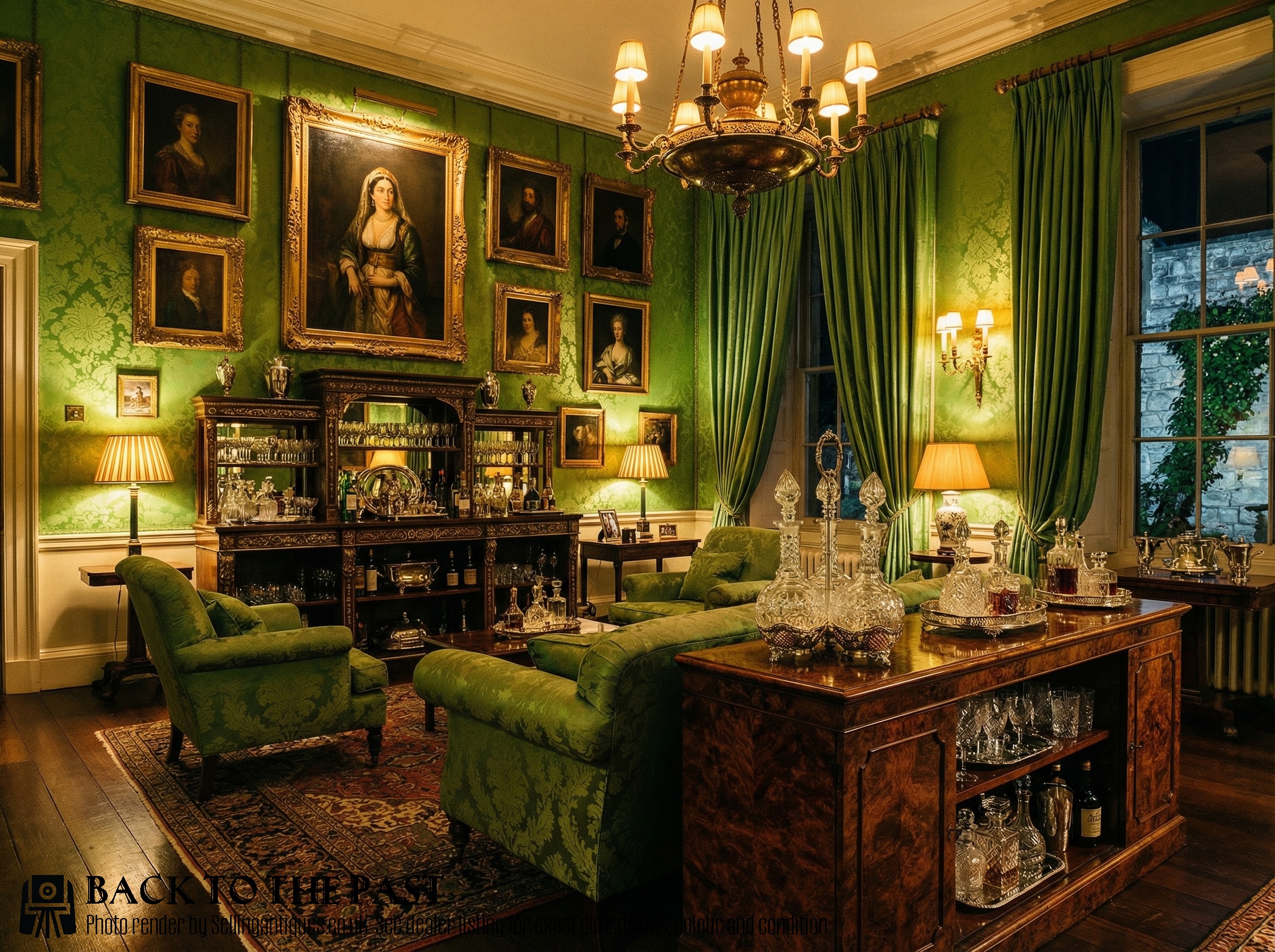
Victorian Silver Plated Frame
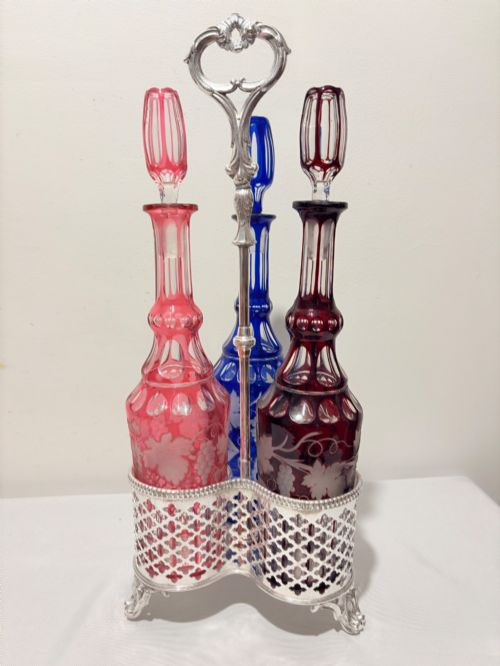
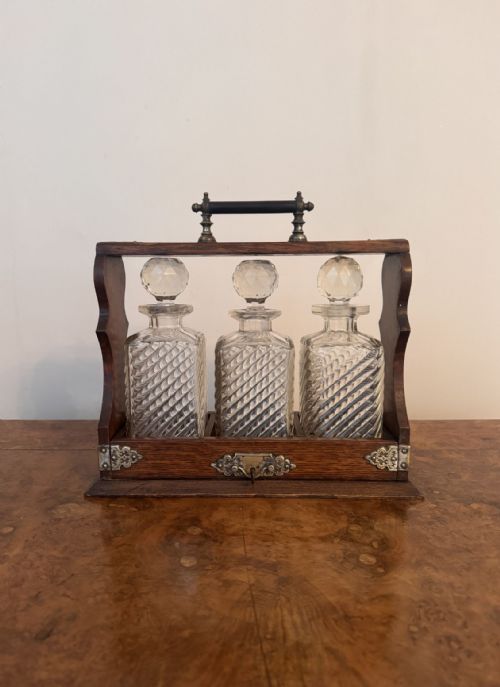
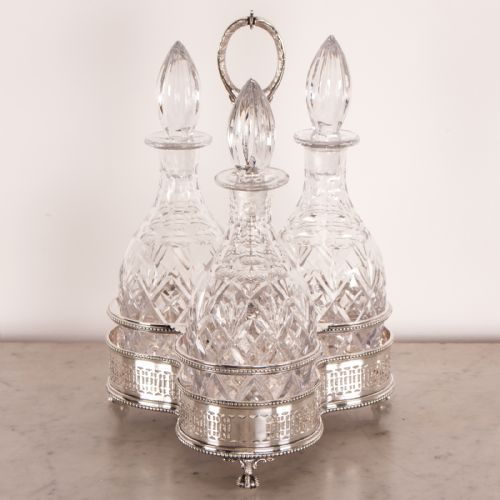
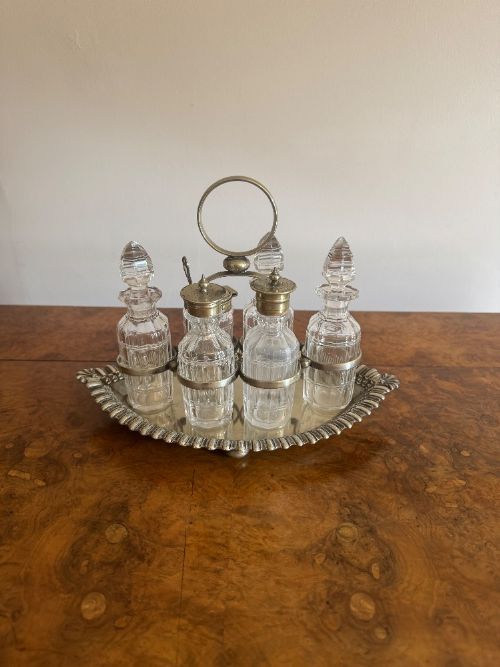
A victorian silver plated frame serves primarily to hold glass decanters, bottles, and cruet sets securely on the dining table or sideboard. These metal mountings take the form of tantalus stands, condiment frames, bottle holders, and occasionally photo or mirror surrounds.
The objects span periods from the mid nineteenth century through the Edwardian era, though the Victorian aesthetic dominates with ornate floral and gothic details. Common formats include multi-bottle frames fitted with cut glass or cut crystal inserts.
Makers produced these stands in configurations ranging from single bottle holders to large seven bottle cruet sets and locking spirit tantalus designs. Wooden elements such as oak, hardwood, and coromandel frequently accompany the metal framework.
Materials and construction
Silversmiths built these frames using a base metal foundation coated in a layer of silver plate, frequently pairing the metal with heavy cut glass, cut crystal, or coloured glass inserts. Timber elements like oak and coromandel appear in the construction of tantalus bases and bottle boxes.
Techniques relied on casting, stamping, and engraving to produce ornate scrollwork, rope borders, and figural motifs. Manufacturers integrated secure locking mechanisms and carrying handles into the framework for functional utility.
One surviving Victorian design incorporates a nautical theme with a cut glass boat hull resting inside a silver-plated rope frame.
Assessing quality in silver plate frames
Quality depends on the crispness of the cast or engraved decoration and the preservation of the underlying silver plate over the base metal. Heavier gauge metalwork and robust structural joints distinguish superior pieces from lighter utilitarian items.
The integrity and originality of the fitted glass bottles, decanters, or mirrors heavily influence the desirability of the piece. Matching original cut glass or crystal inserts complete the ensemble as intended by the maker.
Walker and Hall·Mappin Brothers·Hardy Brothers·Elkington·Hukin and Heath·The Goldsmith Co·Philip Ashberry
The Victorian Silver Plated Frame Glossary
- Tantalus
- A locking drink stand that secures decanters within a metal frame to prevent unauthorized access to the spirits inside. The locking mechanism typically bars the stoppers from being removed until the front bar drops.
- Cruet set
- A matched collection of glass bottles and jars for condiments held together in a shared metal frame. These sets sit on the dining table for vinegar, oil, mustard, and pepper.
- Silver plate
- A base metal coated with a thin layer of silver through electroplating or older immersion methods. This technique allowed makers to achieve the look of solid silver at a lower production cost.
- Coromandel
- A dense, dark exotic hardwood imported from Asia and used for the wooden bases of high-end tantalus and decanter stands. It provides a heavy, richly grained foundation for silver plated mounts.
- Cut glass
- Glassware shaped and patterned by grinding wheel cuts into the surface to refract light. These heavy inserts fill the compartments of frames and decanter stands.
Victorian Silver Plated Frame: Frequently Asked Questions
What fits inside a frame?
These frames house glass decanters, cruet bottles, condiment jars, and mirrors designed specifically for the dimensions of each stand.
Many pieces rely on original cut glass or crystal inserts that match the exact contours of the metal housing.
How do you clean silver plate?
Maintenance requires soft cloths and specialised silver cleaning products formulated to protect thin plated layers from abrasive wear.
Harsh chemical dips strip the plating and ruin the aged patina accumulated across the Victorian period.
Were tantalus frames locked?
Tantalus frames feature a locking top bar that engages the necks of the glass decanters to secure the contents.
Households used this mechanism to restrict access to expensive spirits during the nineteenth century.
How are periods identified?
Dating relies on registration marks, maker stamps, stylistic cues, and accompanying materials like oak or coromandel.
Victorian pieces often display heavier gothic or ornate floral casting compared to later Edwardian designs.