



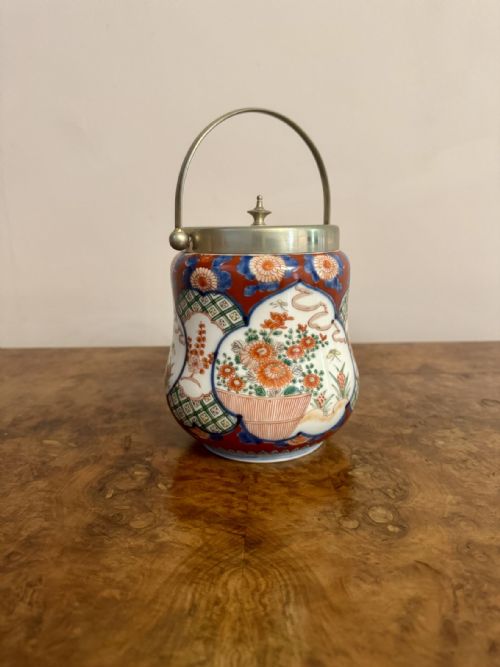


Victorian Silver Plate Cookie Barrel
These Victorian silver plate cookie barrel pieces are sturdy domestic vessels combining metal mounts with glass or ceramic bodies for the dining table.
Victorian Silver Plate Cookie Barrel
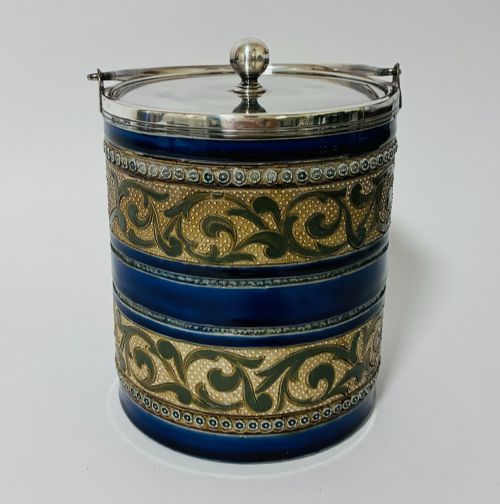
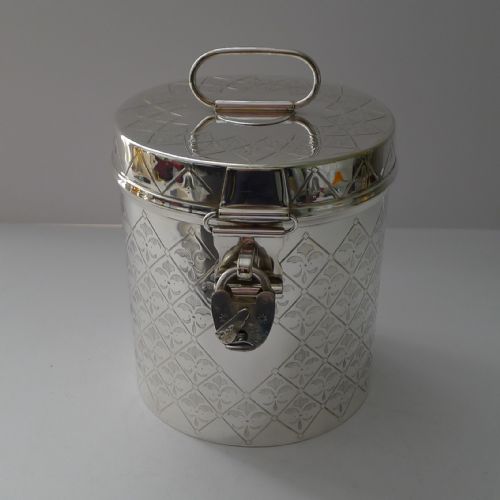
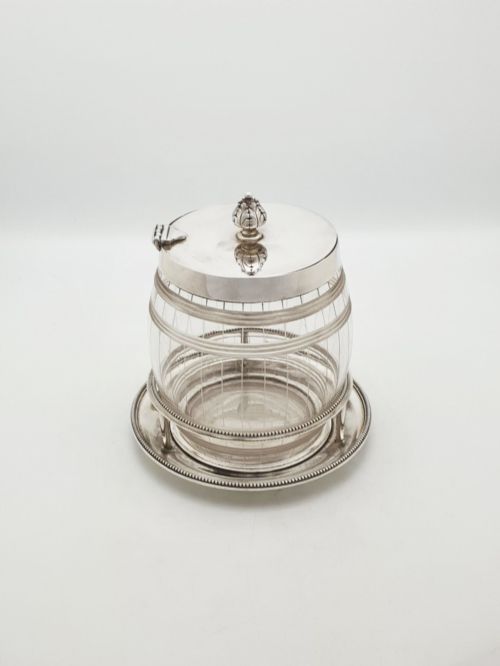
A Victorian silver plate cookie barrel serves as a covered container designed for storing biscuits and dry treats, originating primarily during the nineteenth and early twentieth centuries. The form typically stands upright with a fitted lid, often featuring a swing handle and decorative metal collars, rims, and finials.
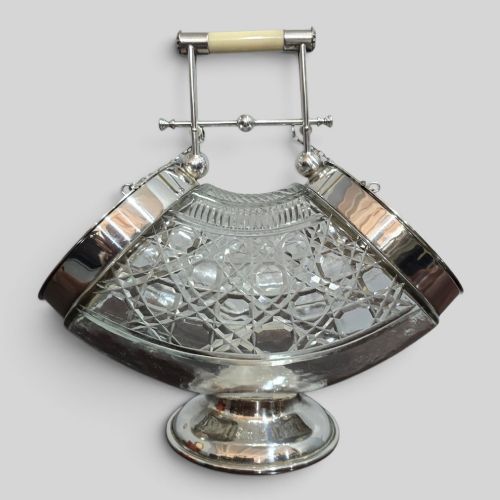
You will frequently encounter bodies fashioned from cut glass, cranberry glass, stoneware, or ceramic materials such as Jasperware and Carlton Ware, encased in silver plate. Examples range from conventional cylindrical drums to novelty shapes modelled after weights or barrels, reflecting the diverse output of nineteenth-century makers.
Materials and construction
Makers utilised electroplated nickel silver for the mounts, lids, and swing handles, applying a thin layer of silver over a base metal foundation. This technique allowed workshops to produce elaborate ornamental metalwork at a scale not previously possible with solid silver.
Bodies combine moulded or cut glass and ceramics, including stoneware and oak, secured within fitted metal frames. Handles and hinged lids are attached via collars that grip the central container, often complemented by cast finials depicting heraldic motifs or figural details.
Victorian Silver Plate Cookie Barrel Retail Price Guide 2026
Typical asking prices for victorian silver plate cookie barrel among the pieces listed under this phrase on Sellingantiques today, from the lower quarter to the upper quarter. They describe what is for sale here now, not the wider market.
One barrel takes the form of a twenty-eight pound iron weight, proving Victorians enjoyed heavy-handed dining room humour.
Standards of craftsmanship
The distinction between standard production and superior work rests on the crispness of the glass cutting, the depth of ceramic modelling, and the weight of the silver plate. Heavier gauge metalwork and finer hand-cut facets on glass bodies indicate higher production values.
Design complexity also separates pieces, with novelty forms, multi-coloured ceramics, and specialised locking mechanisms demonstrating greater ambition from makers like Elkington or Mappin and Webb.
Mappin and Webb·Elkington and Co·Robert and Belk·Walker and Hall·John Grinsell and Sons·Doulton Lambeth·Carlton Ware·Wedgwood
The Victorian Silver Plate Cookie Barrel Glossary
- Silver Plate
- A base metal, often nickel silver, coated with a thin layer of pure silver. This process provided the bright appearance of solid silver at a lower cost.
- Cranberry Glass
- A rich red glass coloured by the addition of gold chloride during manufacture. It appears frequently in late nineteenth-century tablewares.
- Jasperware
- A type of fine stoneware developed by Wedgwood, characterised by a unglazed matte surface and contrasting applied white relief decorations.
- Finial
- A decorative knob or ornament attached to the top of a lid. They are often cast in metal to resemble foliage, animals, or heraldic figures.
- Electroplated Nickel Silver
- An alloy of copper, nickel, and zinc coated with silver through an electrolytic process. It served as the primary metal for nineteenth-century mounts.
Victorian Silver Plate Cookie Barrel: Frequently Asked Questions
What were biscuit barrels used for?
These containers held dry biscuits and baked goods on the Victorian dining table or sideboard, keeping them fresh and protected within a covered vessel.
Servants brought them out during afternoon tea or after dinner, allowing guests to help themselves from the lidded jar.
How do I clean silver plate?
Maintenance requires gentle washing with warm soapy water and a soft cloth to preserve the thin silver layer over the base metal.
Abrasive polishes strip away the plating over time, so non-toxic silver cleaning creams applied lightly are best for removing tarnish.
Are these pieces marked?
Many examples bear maker marks, registry numbers, or electroplate stamps on the underside of the base or along the metal rim.
These marks often identify the manufacturing firm, though worn plating can sometimes obscure stamped details.
How are different periods identified?
Stylistic shifts help date the pieces, moving from mid-century cut glass and heavy silver mounts to later Edwardian cranberry glass and novelty forms.
Maker names and registration marks also provide concrete chronological clues for specific manufacturing decades.