



Victorian Ceramic Cookie Jar
These Victorian ceramic cookie jars are charming tableware pieces designed to keep biscuits crisp, offering both period utility and ornamental appeal.
Victorian Ceramic Cookie Jar
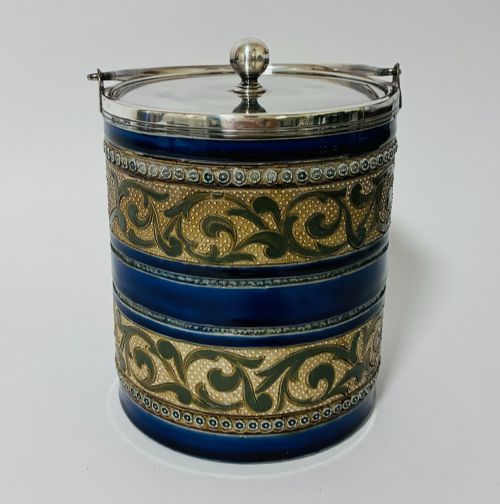
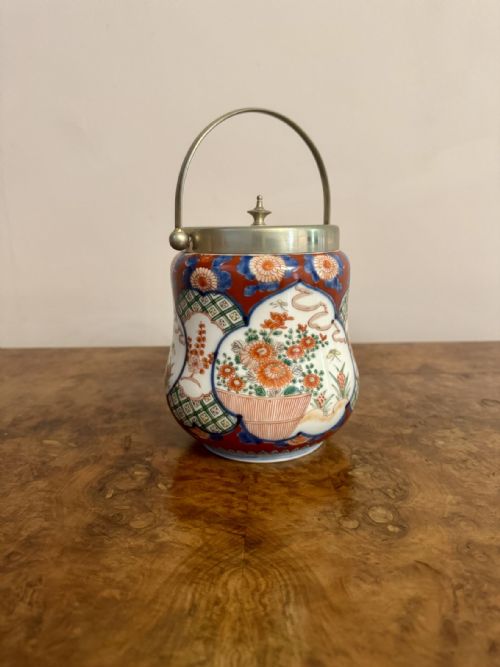
A victorian ceramic cookie jar typically takes the form of a biscuit barrel, combining a ceramic body with metal fittings for the lid and swing handle. These vessels served a practical purpose on dining tables and in parlours during the late nineteenth and early twentieth centuries.
The pieces appearing on this page span the Victorian and Edwardian eras, alongside related styles such as Neoclassical, Japanese Imari, and Victorian Arts & Crafts. Makers ranging from Doulton Lambeth to Wedgwood and Carlton Ware produced these domestic items.
Forms vary from stoneware and earthenware bodies to delicate Jasperware and porcelain, frequently complemented by silver plate mounts or brass elements. Buyers will encounter both classical moulded reliefs and hand-painted Japanese-inspired patterns.
How they were made
Makers utilised ceramic techniques including stoneware throwing, earthenware moulding, and applied Jasperware reliefs to form the main bodies. Skilled artisans fired these clay bodies before mounting them with metal hardware.
Metalworkers fitted silver plate or brass mounts, lids, and hinged handles to secure the ceramic containers and facilitate serving. The combination of ceramic bodies and metalwork required precise engineering to ensure proper sealing.
Victorian Ceramic Cookie Jar Retail Price Guide 2026
Typical asking prices for victorian ceramic cookie jar among the pieces listed under this phrase on Sellingantiques today, from the lower quarter to the upper quarter. They describe what is for sale here now, not the wider market.
What varies in quality
Quality in a victorian ceramic cookie jar rests upon the crispness of the moulded details, the skill of the hand-painting, and the integrity of the ceramic body. Pieces with sharply defined Jasperware appliqués or intricate Imari motifs represent higher manufacturing standards.
The condition and finish of the silver plate or brass mounts also influence the overall standard of the vessel. Original hardware that retains its matching parts and secure hinge mechanism elevates the piece.
The Victorian Ceramic Cookie Jar Glossary
- Biscuit barrel
- A covered ceramic or glass container designed specifically for storing dry biscuits at the table. These vessels usually feature a metal lid and a swing handle.
- Jasperware
- A type of fine stoneware developed by Josiah Wedgwood, characterised by a matte unglazed surface and contrasting applied white reliefs. It appears in various solid or multiple body colours.
- Silver plate
- A layer of silver applied to a base metal core, commonly used for the rims, covers, and handles of nineteenth-century tableware. This technique provided the appearance of solid silver at a lower cost.
- Imari
- A decorative style originating in Japan, traditionally featuring rich underglaze blue and overglaze iron red, gold, and green. English potteries frequently adapted these patterns for domestic ceramics.
Victorian Ceramic Cookie Jar: Frequently Asked Questions
What is a biscuit barrel?
A biscuit barrel is a covered container traditionally used to hold dry biscuits and crackers during tea service or after-dinner hospitality in the Victorian home. These lidded jars kept baked goods fresh while being passed around the table.
They sit comfortably on sideboards or dining tables today as both decorative objects and functional storage for sweets or small items.
How do I date a cookie jar?
Dating these jars involves examining the ceramic body, maker marks, decorative style, and metal mounts. Victorian examples often display registration numbers, specific potter's marks, or stylistic cues like Neoclassical reliefs or Arts and Crafts motifs.
Comparing the manufacturing technique and material combinations against known production periods helps narrow down the decade of creation.
Were these jars used daily?
Middle and upper-class households utilised biscuit barrels daily for formal tea ceremonies and informal family gatherings alike. The addition of a lid and metal handle made them practical for regular transport between the kitchen and the parlour.
Today, modern owners can continue using them for storage or simply display them to appreciate their historical craftsmanship.
What ceramics are most common?
The listings feature a range of ceramic bodies including stoneware, earthenware, porcelain, and Jasperware. Potteries such as Wedgwood and Doulton Lambeth produced many of the notable examples found in this category.
Each ceramic type offered different decorative possibilities, from fine moulded white reliefs on coloured clay to hand-painted Oriental designs.