

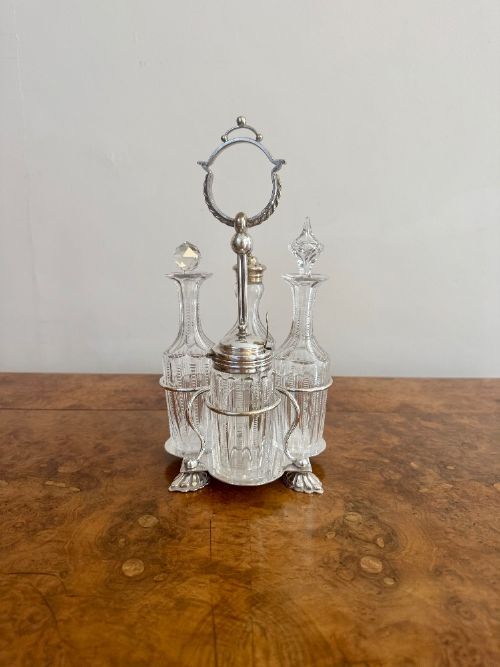


Victorian Silver Plate Caster
These Victorian silver plate caster pieces are table condiments designed to hold bottles and pots, bringing functional elegance to any formal dining room.
Victorian Silver Plate Caster
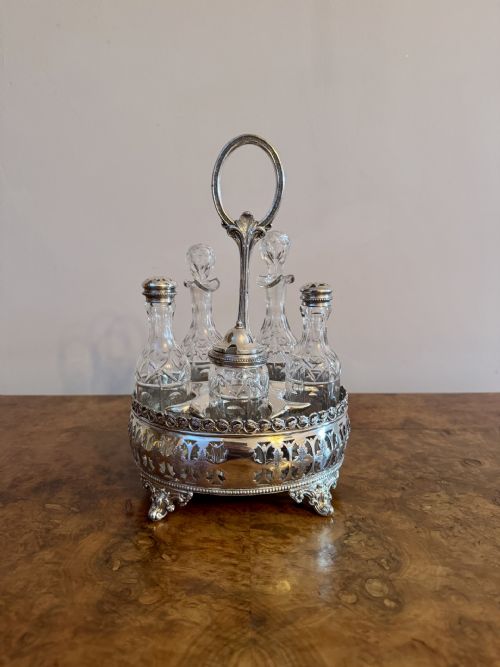
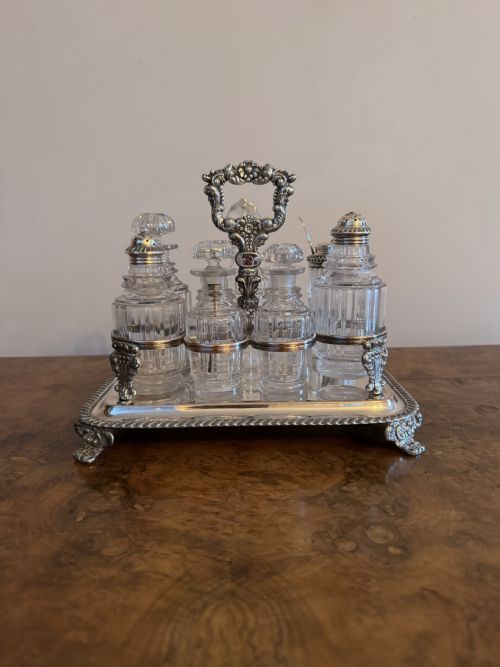
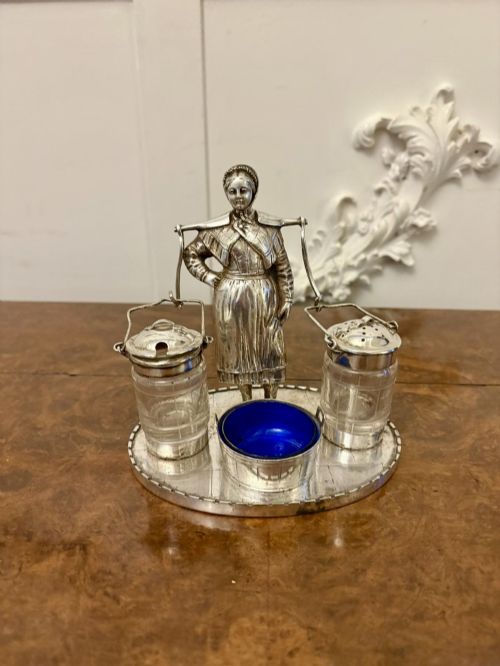
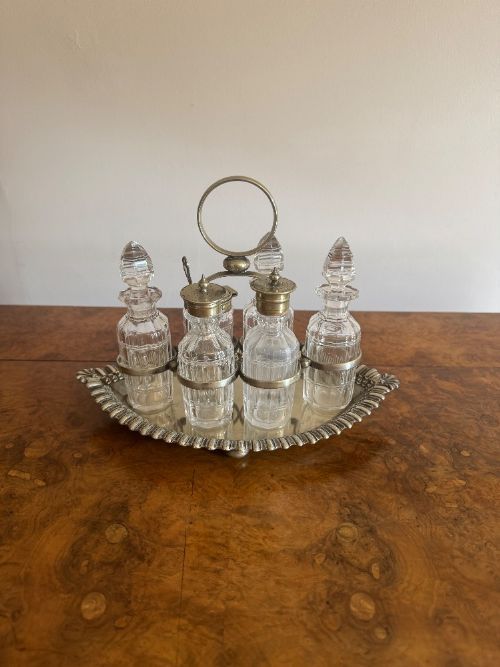
A victorian silver plate caster and associated cruet sets form the core of these listings, originating primarily from the Victorian and Edwardian periods alongside the nineteenth century. Buyers typically encounter multi-bottle frames designed for oil, vinegar, mustard, and pepper, fabricated in forms ranging from standard stands to novelty farmyard and hunting pieces.
The objects span varied configurations, including bachelor cruet sets, five, six, and seven bottle stands, and condiment stands housed in oak and silver plate. These items reflect the elaborate dining customs of the era, where matching sets adorned the centre of the table for guests to season their food.
Materials and Construction
The primary construction relies on electroplated nickel silver combined with silver plate to give the appearance of solid silver at a lower cost. Frames often incorporate oak for trays or mounts, while the individual bottles feature cut glass and cobalt glass.
Makers utilised gilding to accent specific metal elements, contrasting the bright polished silver plate against dark glass bottles. Metalwork techniques involved casting frames into novelty shapes such as farmyard animals or equestrian themes alongside traditional wirework and stamped stands.
Victorian Silver Plate Caster Retail Price Guide 2026
Typical asking prices for victorian silver plate caster among the pieces listed under this phrase on Sellingantiques today, from the lower quarter to the upper quarter. They describe what is for sale here now, not the wider market.
Listings feature periods spanning from the Georgian era through to the Edwardian period, with Victorian pieces forming the majority.
Factors of Quality
Quality rests heavily upon the integrity of the silver plating and the completeness of the original bottle set. Examples that retain matching cut glass or cobalt glass bottles without replacement demonstrate superior desirability.
The complexity of the metalwork distinguishes standard frames from exceptional pieces, particularly in novelty designs representing animals or hunting scenes. Crisp casting details and robust handle construction separate robust workshop output from simpler production.
Mappin Brothers·Walker And Hall·Wade Wingfield Wilkins·Mappin And Webb
The Victorian Silver Plate Caster Glossary
- Cruet set
- A matched stand holding multiple bottles or jars for condiments such as oil, vinegar, mustard, and pepper. These assemblies sat centrally on the dining table during formal meals.
- Electroplated nickel silver
- A base metal alloy of copper, nickel, and zinc coated with a thin layer of pure silver through an electrolytic process. This method became widespread during the nineteenth century.
- Cobalt glass
- Deep blue glass produced by adding cobalt oxide to the molten batch. It frequently appears in condiment bottles to protect light-sensitive contents.
- Bachelor cruet set
- A smaller scale cruet set designed for single diners or smaller households. These compact stands typically hold fewer bottles than standard family sets.
Victorian Silver Plate Caster: Frequently Asked Questions
What is a silver plate caster?
A silver plate caster is a small container with a perforated top used for sprinkling sugar or spices over food. In historical settings, they formed part of larger condiment and cruet arrangements on the dining table.
These pieces utilised a silver plated metal body to provide the decorative appeal of solid silver at a more accessible cost for Victorian households.
How were cruet sets used?
Cruet sets held liquid and dry seasonings like oil, vinegar, mustard, and pepper during meals. Diners used them at the table to adjust flavours to their personal taste.
Servants would replenish the glass bottles between courses and polish the silver plated frames to maintain their bright appearance.
How do I clean silver plate?
Cleaning requires a soft cloth and a specialised silver polish formulated for plated items rather than harsh abrasives. Vigorous scrubbing strips the thin silver layer over the underlying base metal.
Wash the glass bottles separately in warm soapy water and dry them completely before returning them to the metal frame.
How can I date these pieces?
Dating relies on stylistic clues, manufacturing techniques, and maker marks stamped into the metal frame. Victorian pieces often display heavier cast decoration and more ornate bottle cutting.
Edwardian items tend toward lighter frames and simpler geometric glass cutting while maintaining the tradition of silver plated metalwork.