
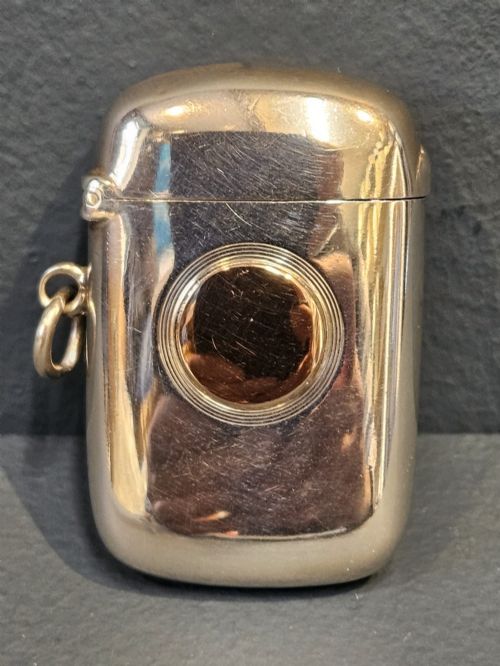
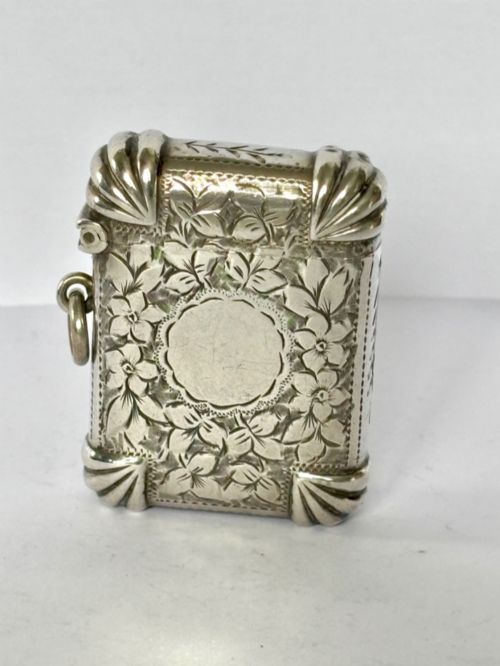


Victorian Silver Match Container
These Victorian silver match container examples are pocket-sized pocket companions shaped for daily utility and novelty display.
Victorian Silver Match Container
When you search for a Victorian silver match container, you are looking at small metallic cases designed to hold and protect safety matches in the pocket or on a desk. The pieces listed on this page appear primarily as vesta cases and toothpick holders, spanning the nineteenth and twentieth centuries.
The most common forms you will meet here are silver vesta cases, including novelty shapes and enamel decorated pieces. These objects reflect the Victorian appetite for combining personal utility with decorative charm.
How they were made
These items are shaped from sterling silver, occasionally accented with enamel work to create coloured details on the exterior surface. Silversmiths utilised stamping, chasing and engraving techniques to form the hinged bodies and decorative motifs.
Novelty pieces required specialist metalworking skills to form specific shapes such as animals and sentry boxes while maintaining the functional compartment for matches.
Cats and elephants guard your matches just as faithfully as any nineteenth-century sentry box.
What varies in quality
The precision of the hinge mechanism and the survival of original enamel work further separate standard examples from superior specimens. Pieces bearing clear hallmarks add a layer of documentary reliability that collectors value.
EV PLEDGE & SON·Sampson Mordan
The Victorian Silver Match Container Glossary
- Vesta Case
- A small pocket container designed to hold matches, typically featuring a striking strip on the base. These devices became essential accessories during the Victorian period for carrying matches safely.
- Sterling Silver
- A silver alloy containing ninety-two point five percent pure silver by mass, with the remainder consisting of other metals. This standard grade is the primary material for the pieces found on this page.
- Hallmark
- An official stamp applied by an assay office to indicate the purity of the metal and the year of manufacture. British pieces often display marks for the maker and the town of testing.
- Enamel
- A glassy substance fused to the surface of metal through firing to provide smooth coloured decoration. In these listings, enamel appears on specialty items to enhance the visual design.
Victorian Silver Match Container: Frequently Asked Questions
What is a vesta case?
A vesta case is a small pocket container built to hold matches securely and keep them dry. They were carried daily in pockets or attached to watch chains before the widespread availability of lighters.
Most versions feature a hinged lid and a striated panel on the bottom for striking the match upon removal.
How do I spot a novelty piece?
Novelty pieces are cast or shaped into specific figures, such as animals or architectural forms, rather than standard rectangular boxes. They show high levels of sculptural detail while still functioning as match holders.
These designs often required more complex silversmithing techniques to conceal the opening mechanism within the sculptural form.
What metal are they made from?
The containers are formed from sterling silver, providing a durable and polished exterior surface. Some examples incorporate enamel to add contrasting colour to the metal body.
Assay marks stamped into the silver typically confirm the material standard and origin.
Are hallmarks important?
Hallmarks provide official confirmation of the metal purity, the maker, and the year the piece was tested. They serve as a reliable reference for dating Victorian silver items accurately.
Clear stamps add historical context to each container by identifying the workshop responsible for its creation.