


Victorian Silver Letter Rack
These Victorian silver letter racks bring orderly charm to a desk, holding correspondence with the bright permanence of nineteenth-century metalwork.
Victorian Silver Letter Rack
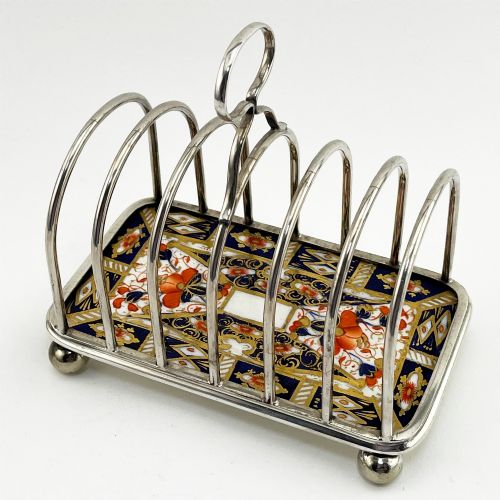
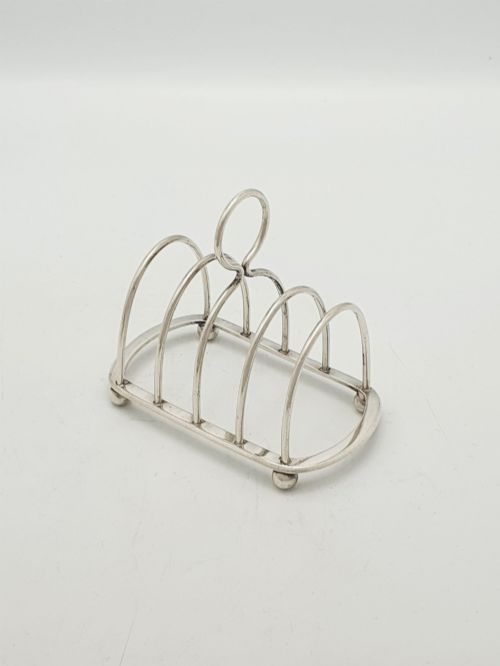
A victorian silver letter rack is a desk accessory designed to hold correspondence upright, though many period pieces serve equally well as toast racks in form and function. You will encounter both sterling silver and silver plate examples originating from the nineteenth century, often sharing wirework or novelty designs.
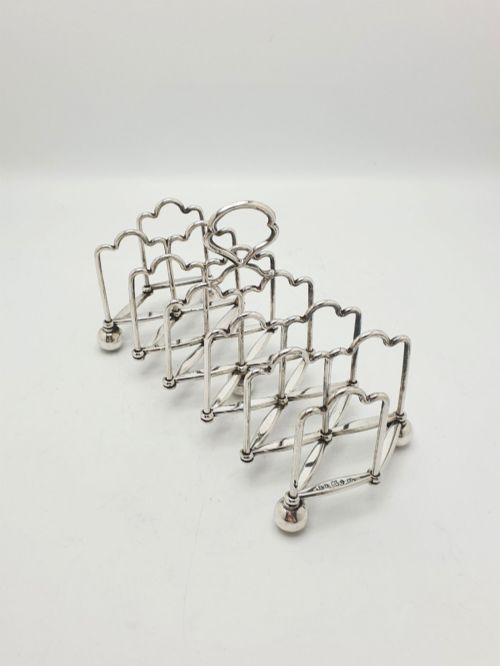
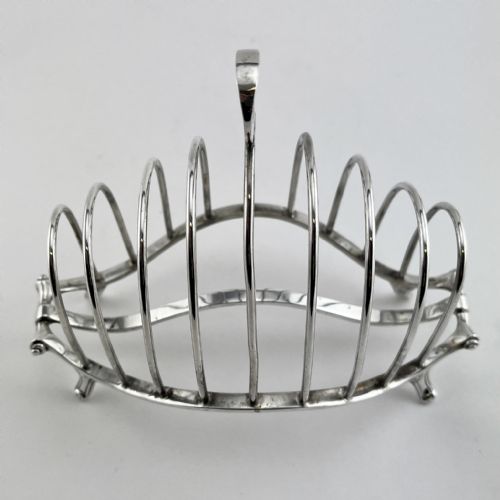
The pieces available span from simple wirework frames to elaborate novelty items such as wishbone or equestrian motifs. Makers utilised versatile forms that doubled for toast and letters, meaning you must look closely at the proportions and dividers of each piece.
While the search points strictly to letter racks, the historical record shows a heavy crossover with toast racks from the same Victorian decades. These dual-purpose objects reflect the domestic habits of the period, where silver wire frames kept paper or pastry upright and accessible.
Materials and construction
Silversmiths employed sterling silver and various grades of silver plate, including electroplated nickel silver laid over a base metal core. Solid sterling examples bear hallmarks for assay offices like London and Sheffield, detailing the exact year of production.
Wirework construction dominates the surviving examples, requiring skilled soldering to join individual silver bars into rigid arches or trefoils. Some workshops incorporated organic materials like tortoiseshell or walnut alongside the silver framework for decorative contrast.
Listings feature items spanning the Victorian era, Georgian period, and Edwardian years, executed in sterling silver and silver plate.
Assessing quality and design
Quality rests heavily on the crispness of the wirework and the integrity of the soldered joints connecting the dividers to the base. Heavy sterling silver gauge work commands attention over thin silver plating that has worn down to the base metal underneath.
Novelty forms and pieces bearing recognised maker marks stand apart from unmarked commercial production. The presence of tortoiseshell panels or distinct aesthetic movement styling elevates the visual weight of the piece.
Elkington·Hukin & Heath·Martin Hall & Co·Fox
The Victorian Silver Letter Rack Glossary
- Sterling silver
- A silver alloy containing 92.5 percent pure silver by mass, ensuring durability and a bright finish.
- Silver plate
- A layer of pure silver fused to a base metal core, common in nineteenth-century domestic wares.
- Wirework
- A construction technique using bent silver wires to create lightweight, open-framed architectural dividers.
- Hallmark
- A series of official stamps punched into precious metal indicating the maker, assay office, and year.
- Toast rack
- A domestic table accessory featuring parallel metal loops, frequently utilised historically as a dual-purpose letter holder.
Victorian Silver Letter Rack: Frequently Asked Questions
Were these used for letters or toast?
Period workshops frequently produced dual-purpose designs that served both functions interchangeably on the nineteenth-century desk or breakfast table.
The spacing of the wire loops determines whether a specific piece holds stiff correspondence or folded toast slices better.
How do I spot silver plate?
Silver plate consists of a thin layer of silver bonded to a base metal rather than being solid silver throughout.
Over decades of use, the underlying metal may show through where the plating has worn thin on high points.
What is wirework construction?
Wirework involves shaping individual silver bars into arches or geometric loops and soldering them to a flat metal base.
This technique kept the objects lightweight while providing enough rigidity to keep papers standing upright.
How do I date these pieces?
Sterling silver examples often carry clear hallmarks indicating the assay office and the exact year of manufacture.
Pieces lacking hallmarks must be judged by their overall style, materials, and manufacturing techniques recorded in the period.