








Victorian Silver Decanter Set
These curated gatherings of glassware and metalwork bring period entertaining straight to the sideboard.
Victorian Silver Decanter Set
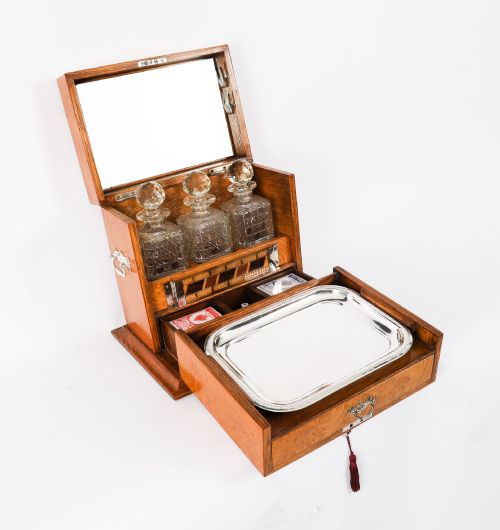
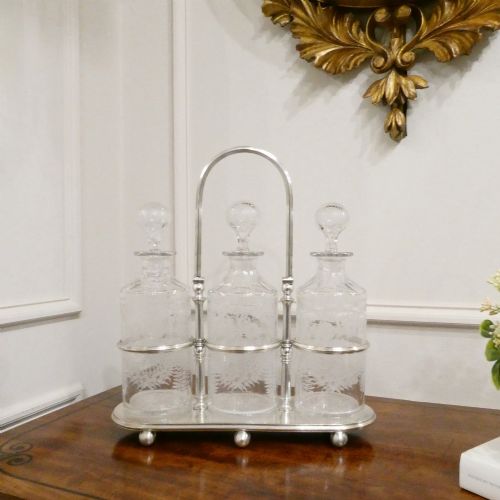
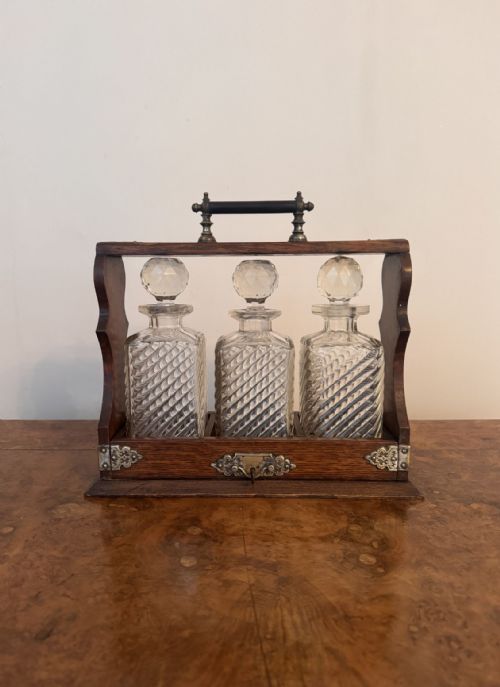
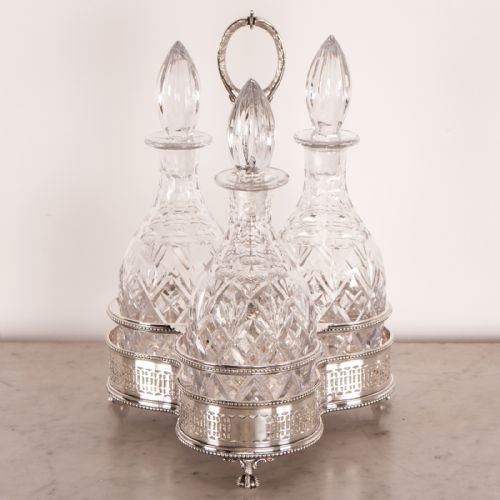
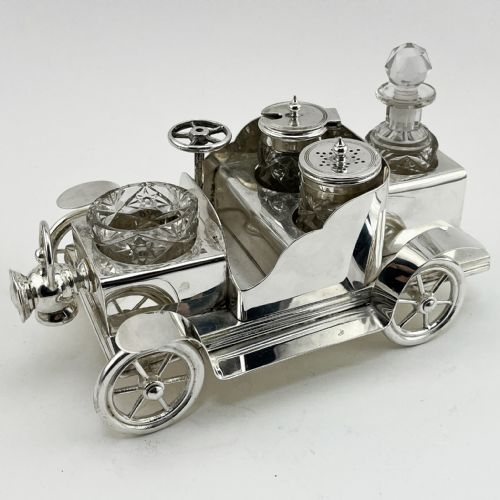
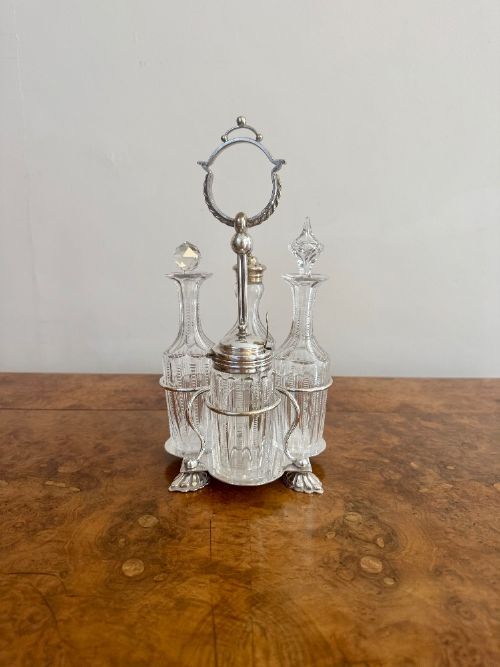
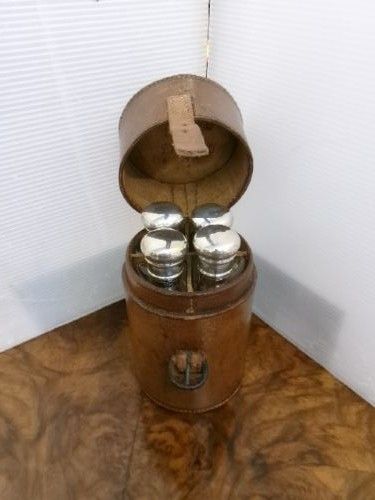
A victorian silver decanter set encompasses everything from locking tantalus frames and spirit barrels to framed cruet bottles and fitted trays designed for formal dining and drawing room hospitality. You will most frequently meet silver plated stands holding cut glass decanters or oak-housed tantalus units spanning the nineteenth century.
The selections bridge multiple decades of hosting traditions, incorporating Edwardian variations alongside Victorian and Georgian pieces. Alongside traditional spirit decanters, the forms include portable travelling bars, games compendiums, and multi-bottle cruet frames.
Materials and Technique
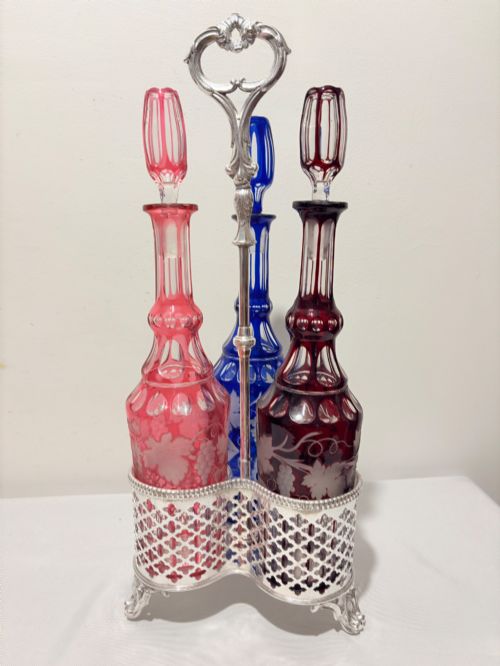
Makers utilised solid oak, mahogany, and coromandel as structural housings, mounting them with cast and chased silver plated frames, handles, and lock mechanisms. Cut glass and crystal vessels were heavily faceted or blown in distinctive hues like ruby, green, and blue.
Metalwork involved silver plating over base metals, complemented by fitted hardware such as locking bar tops and engraved silver labels to identify individual spirits.
Victorian Silver Decanter Set Retail Price Guide 2026
Typical asking prices for victorian silver decanter set among the pieces listed under this phrase on Sellingantiques today, from the lower quarter to the upper quarter. They describe what is for sale here now, not the wider market.
Listings feature items spanning the 1850s to the Edwardian period, utilising oak, mahogany, coromandel, silver plate, cut crystal, and coloured glass.
What Varies in Quality
The distinction between standard utility items and finer pieces lies in the crispness of the glass cutting, the weight of the silver plating, and the complexity of the internal mechanism. Integrated accessories like games compendiums, matching spirit labels, and fully operational locking bars elevate an assembly.
Joinery execution in the wooden cases, from blonde oak to coromandel veneer, along with the retention of the original matching bottles, dictates the standing of each assembly.
Walker & Hall·Elkington·Wade Wingfield Wilkins·Hukin and Heath·The Goldsmith Co.·Philip Ashberry·Mappin Brothers·Henry Wilkinson & Co
The Victorian Silver Decanter Set Glossary
- Tantalus
- A locking drink stand that secures decanter stoppers in place behind a metal bar, preventing the removal of contents without a key.
- Cruet Set
- A frame holding glass bottles or jars intended for condiments, oils, or vinegars at the dining table.
- Games Compendium
- A fitted box containing boards and pieces for pastimes, frequently integrated into the base of a nineteenth century tantalus.
- Silver Plate
- A manufacturing technique applying a thin layer of silver over a base metal foundation, common in nineteenth century barware.
- Spirit Barrel
- A cask-shaped glass or wooden vessel mounted on a stand for dispensing liquor.
Victorian Silver Decanter Set: Frequently Asked Questions
What is a tantalus?
A tantalus is a locking bar frame designed to hold decanters securely by their necks, keeping expensive spirits safe from unauthorized access while displaying them clearly.
The locking mechanism engages the stoppers so they cannot be removed until the frame is unlocked with a key.
How were these sets used?
These sets served spirits, wines, and condiments in the dining room, study, or drawing room during formal hosting and after-dinner rituals.
Hosts kept liquors ready for guests while maintaining control over the household stores through locking mechanisms on the stands.
How do I care for silver plate?
Maintain silver plated frames and mounts by dusting gently and using specialised silver care products sparingly to avoid wearing through the plating.
Keep wooden housings conditioned and away from direct heat sources to preserve the finish of oak, mahogany, and coromandel.
How do I date these pieces?
Dating relies on stylistic clues, framing techniques, wood types, and any accompanying hallmarks stamped onto the silver plate or mountings.
Victorian pieces often feature heavier cast ornament, while Edwardian examples can display lighter framing and different cut glass patterns.