


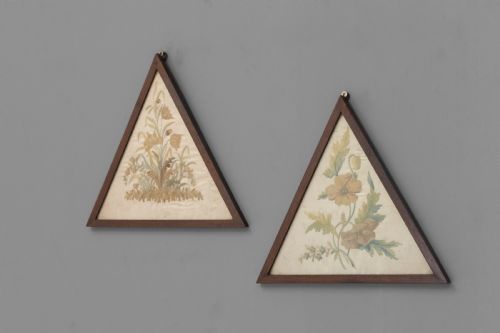


Victorian Silk Picture
These Victorian silk picture examples capture needlework artistry through silk thread stitched onto linen within period frames.
Victorian Silk Picture
A victorian silk picture brings together textile art and wall art, presenting embroidered scenes framed behind glass in wood or gilt wood surrounds. The selection on this page ranges from framed pairs and panels to needlework samplers and bookmarkers created across the nineteenth century and into the early twentieth century.
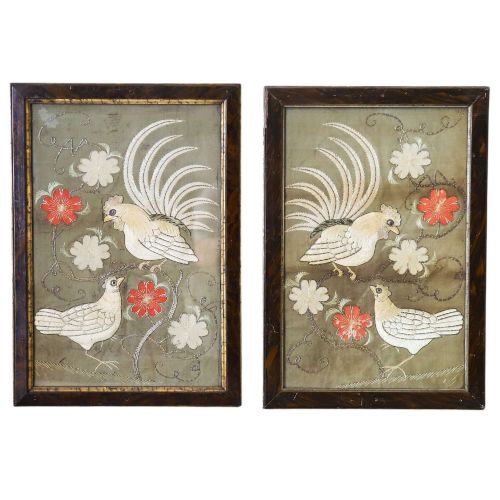
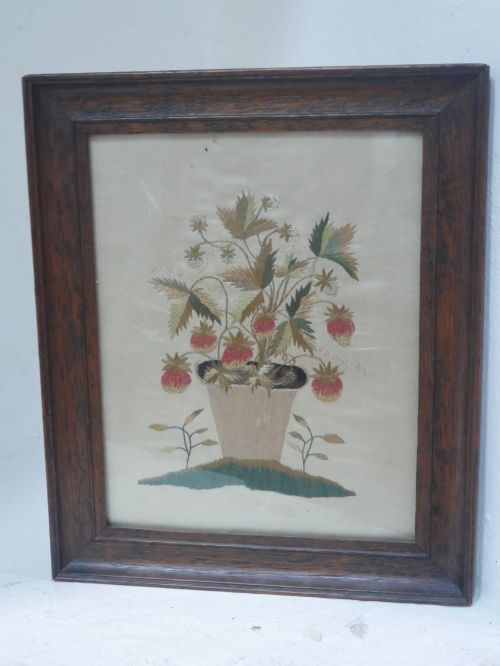
Buyers will encounter subjects including birds, cockerels and hens, botanical studies of strawberries, and horse racing tracks such as Epsom Park. Other examples depict topographical views of Abingdon, theatrical subjects, and commemorative pieces dedicated to military units like the Royal Artillery.
Origins span English country house works alongside French Napoleon III pieces and Japanese silk textiles by makers such as the Iida Takashimaya Company. Pieces date primarily from the nineteenth century, including Georgian eras, Victorian styles, and later works into nineteen twenty.
Materials and construction
Makers utilised silk thread and wool stitched onto a linen backing to build detailed pictorial compositions and samplers. Selected works combine silk embroidery with watercolour painted elements to add depth to landscapes and architectural subjects.
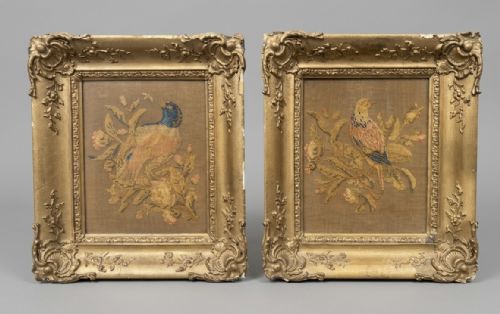
Finished textiles were mounted inside wooden frames, frequently utilising glass protection alongside gilt wood and faux tortoiseshell surrounds. Many pieces rely on traditional framing methods contemporaneous with the needlework.
Stitched poultry takes to faux tortoiseshell frames with surprising dignity.
Assessing quality in needlework
Quality rests upon the precision of the needlework and the complexity of the silk thread pictorial composition. Finer examples display meticulous stitch density and sophisticated rendering of subjects like horses, birds, and architectural landmarks.
The choice of framing contributes significantly to the overall merit of a piece. Original gilt wood, faux tortoiseshell, or period wooden frames that house the textile securely elevate the integrity of the artwork.
Stevens of Coventry·Iida Takashimaya Company
The Victorian Silk Picture Glossary
- Needlework sampler
- A piece of textile art created to demonstrate proficiency in various embroidery stitches and patterns, often bearing a maker name and date.
- Silk bookmarkers
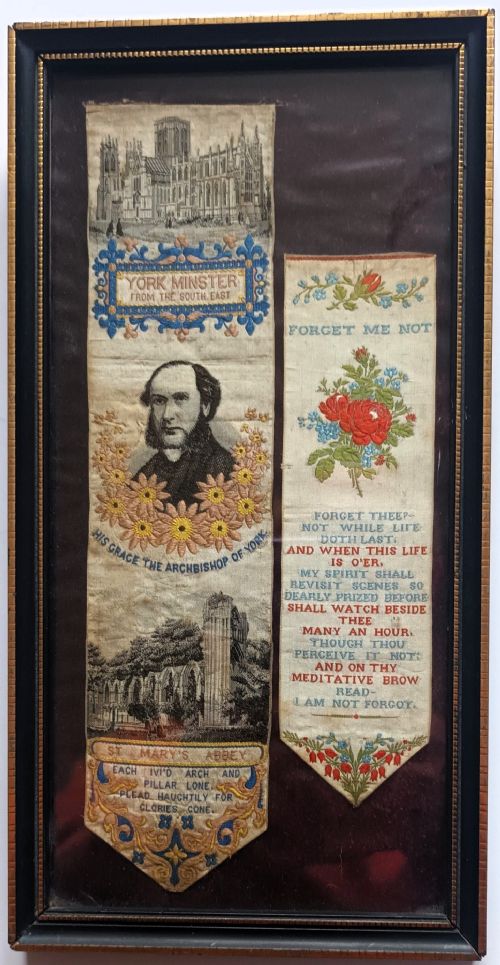
- Woven silk ribbons produced as decorative markers, often associated with specific manufacturers such as Stevens of Coventry.
- Gilt wood
- Wood coated with a thin layer of gold leaf or gilt paint, commonly used for nineteenth-century picture frames.
- Factual provenance
- Documented history regarding the origin, maker, or previous ownership of an antique textile piece.
Victorian Silk Picture: Frequently Asked Questions
How should I hang a victorian silk picture?
Hang your textile artwork away from direct sunlight to prevent the silk threads from fading over time.
Ensure the wall is dry and use fixings appropriate for the weight of the wood and glass frame.
What subjects appear on these framed embroideries?
Common subjects include birds, botanical studies, horse racing tracks, and topographical scenes.
Military commemoratives and theatrical compositions also feature among nineteenth-century examples.
Are these needlework panels English or foreign?
The selection includes English country house works alongside French Napoleon III pieces.
Japanese silk textiles also appear within the wider nineteenth-century selection.
How do I care for antique silk needlework?
Keep the piece behind its original glass to protect the delicate silk thread from dust and moisture.
Avoid humid environments that could affect the linen backing and wooden frame.