
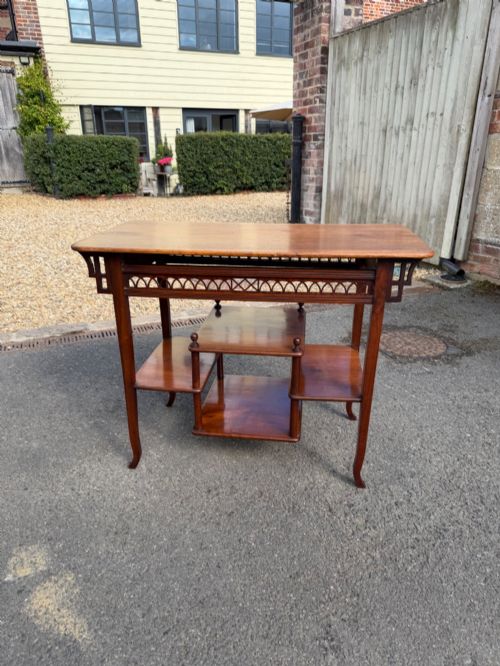
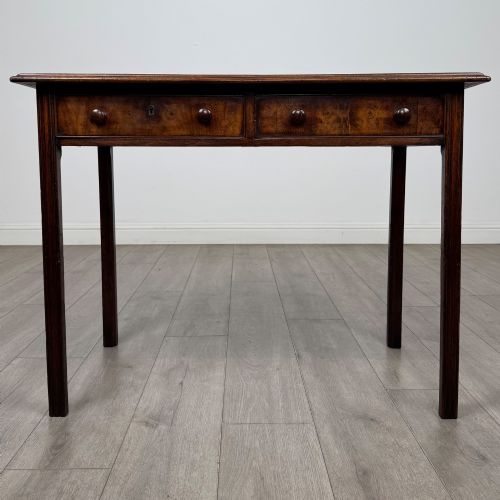
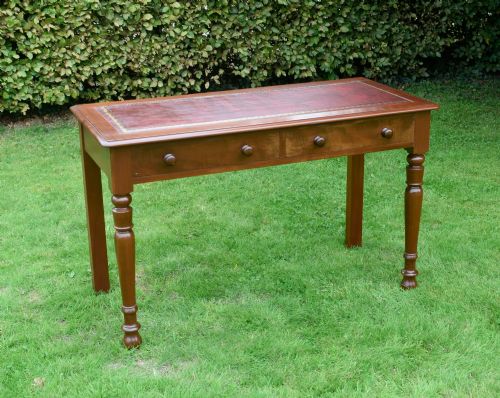
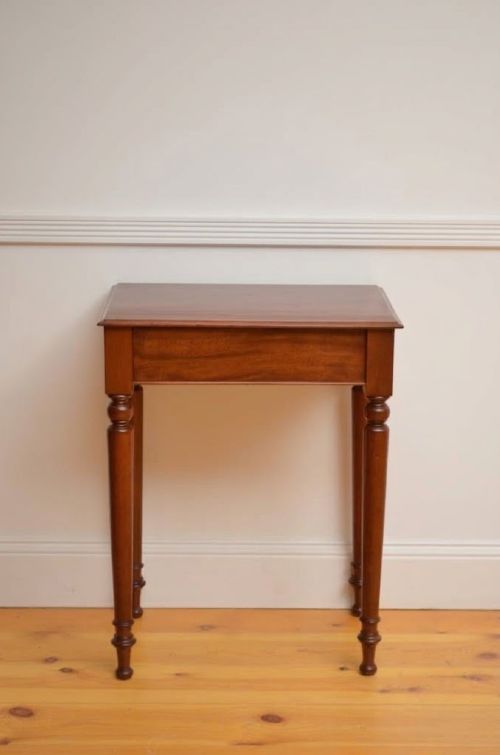


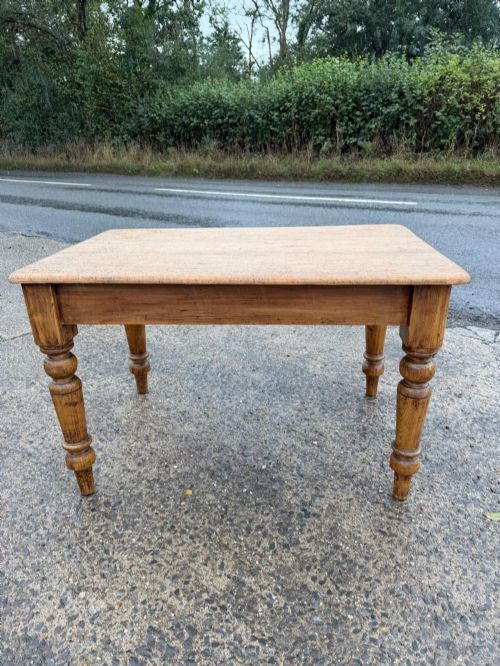
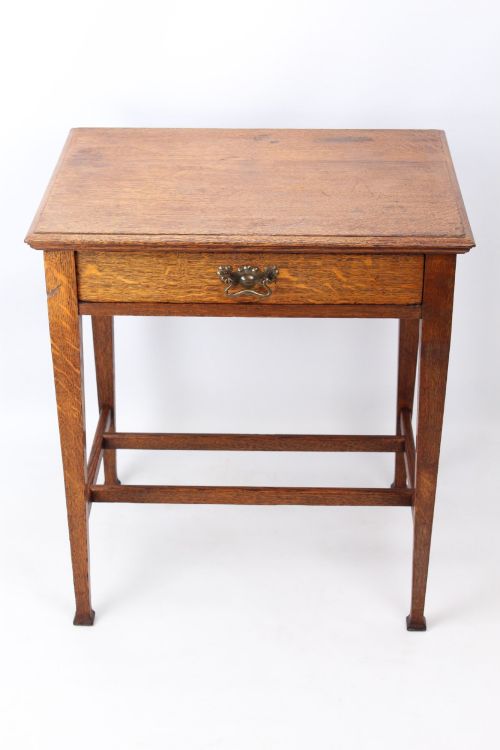
Victorian Side Console Table
When you search for a victorian side console table, you are looking at practical nineteenth-century furnishings built for the hallway, parlour and drawing room.
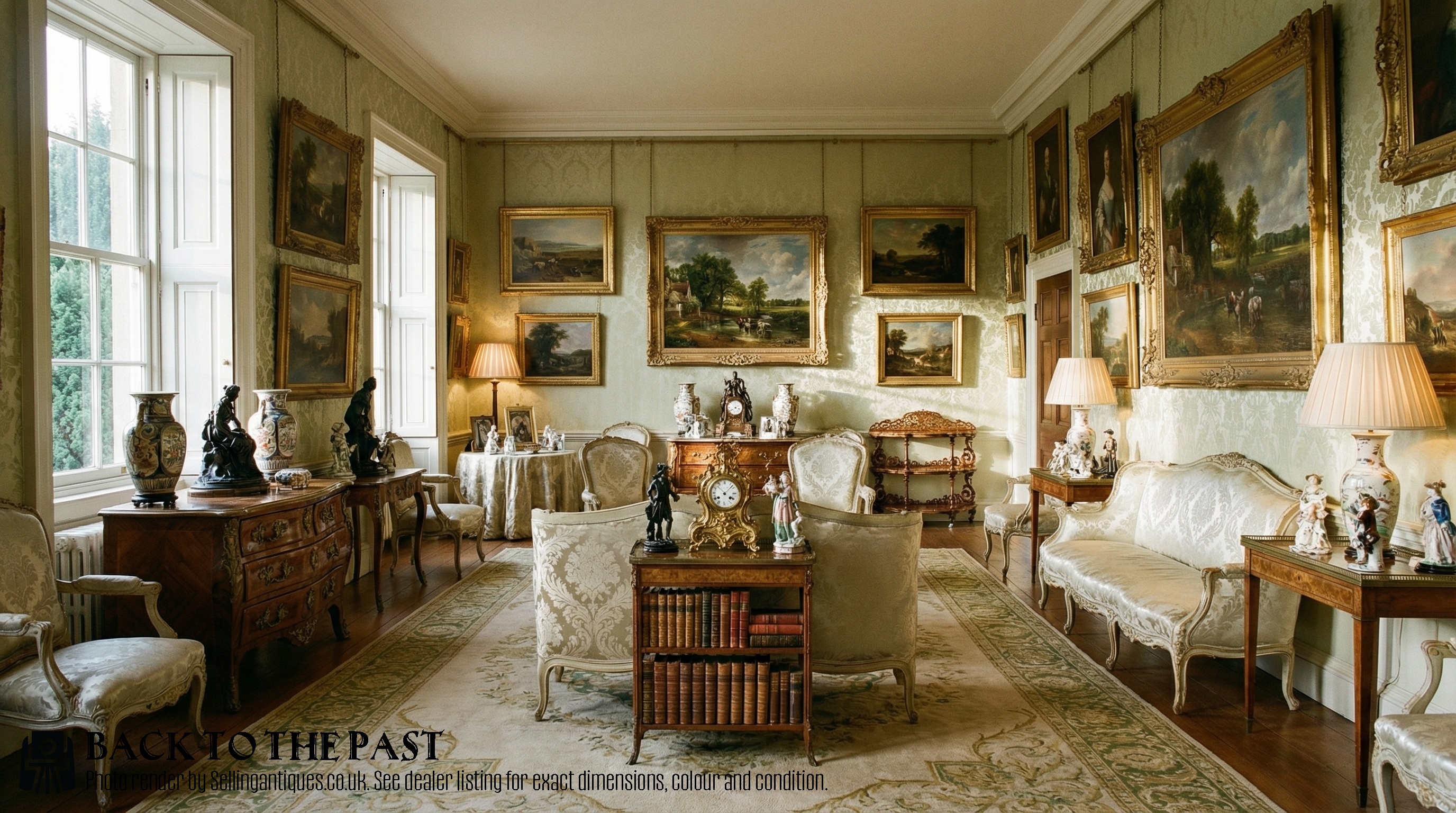
Victorian Side Console Table
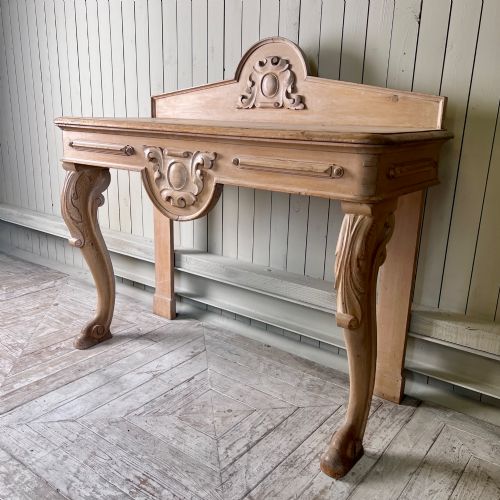
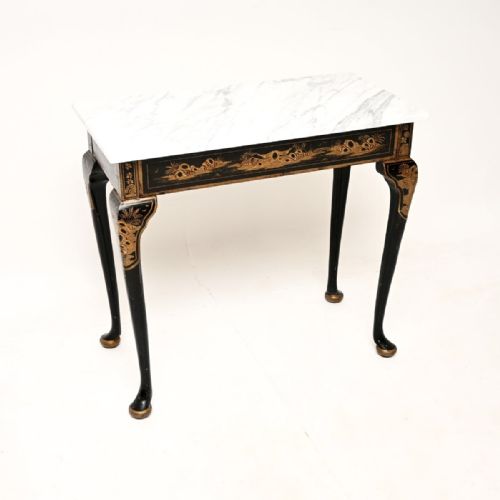
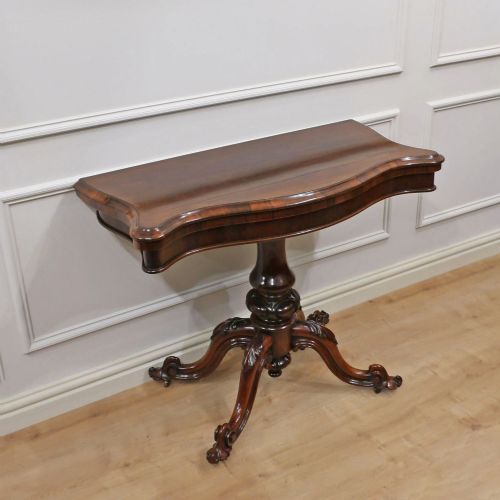
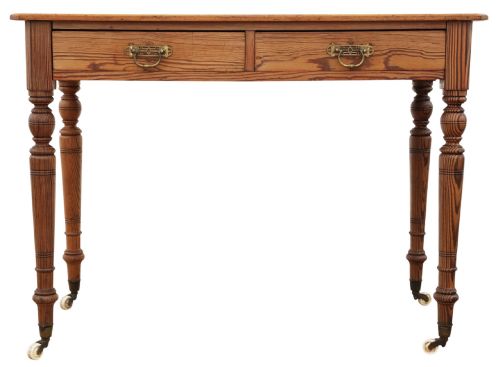
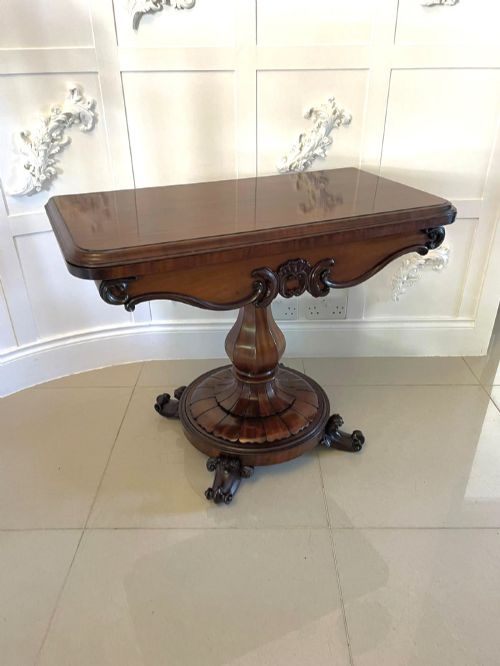
A victorian side console table serves as a sturdy surface for lamps, letters and ornaments, frequently appearing in forms like demilune sideboards, narrow hall desks and card tables. The examples met most often on this page date from the middle to the late nineteenth century and span styles from plain country pine to elaborate revival designs.
Makers and regional cabinet-makers built these pieces to fit domestic spaces where depth was limited, resulting in narrow rectangular and curved profiles. Many incorporate single drawers, folding tops or tiered shelves, reflecting the varied functional demands of Victorian households.
How they were made
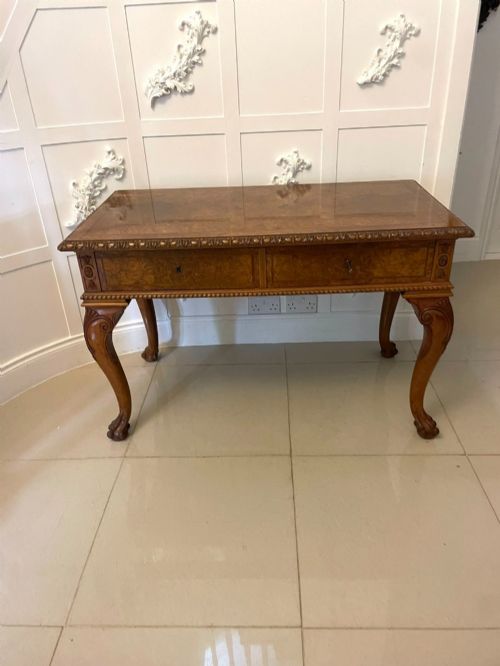
Cabinet-makers relied heavily on dense timbers such as mahogany, walnut and oak, often selecting burr veneers for decorative tabletops and drawer fronts. Secondary woods like pine appear on drawer linings and internal framing.
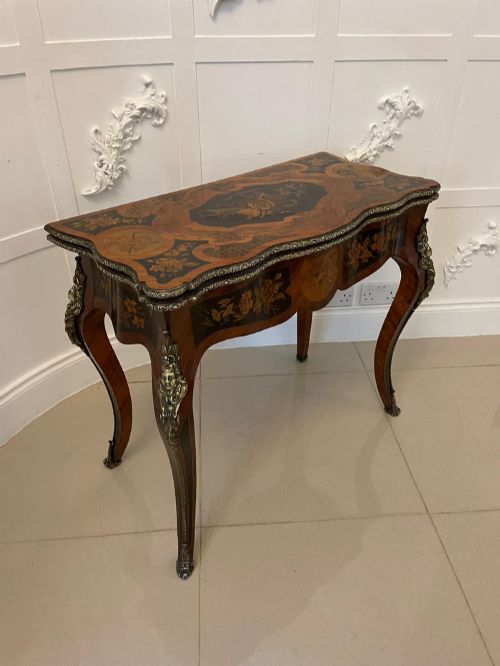
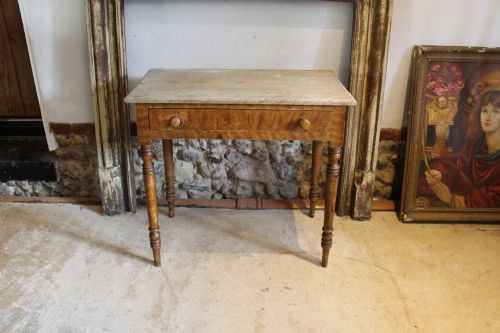
Construction techniques combined traditional dovetailed drawer joints with turned or carved legs, ranging from bobbin-turned supports to bold scrollwork. Surface treatments included polished French polish, marquetry inlay, or scumble paint over softer woods.
Green Man carvings peer from several Victorian oak tables, keeping a watchful eye over the household post.
What varies in quality
The distinction between standard domestic items and high-end exhibition pieces rests upon timber selection and the precision of the carving. Finely figured burr walnut and flame mahogany indicate superior workshop origin compared to utilitarian pine.
Secondary detailing such as hand-cut dovetailing, original brass hardware and crisp, unblemished marquetry separate workshop-produced furniture from mass-manufactured equivalents.
Edward’s And Robert’s·Gillows
The Victorian Side Console Table Glossary
- Demilune
- A half-moon shape used for tables designed to sit flush against a wall. This profile became particularly popular for hall tables and card tables.
- Ormolu
- Gilded bronze mounts applied to furniture edges and legs. This decorative technique appears on French-inspired revival pieces.
- Scumble
- A decorative paint technique used to simulate grain on cheaper woods. It creates a patterned surface finish over a solid base coat.
- Frieze
- The horizontal architectural band situated directly beneath the tabletop. Drawers are frequently integrated into this section.
Victorian Side Console Table: Frequently Asked Questions
Where did these tables stand?
These tables were designed principally for hallways, reception rooms and grand staircases where floor space was restricted. They provided a convenient drop-off point for calling cards, letters and lighting.
In larger houses, matching console tables were paired beneath mirrors or flanking doorways to create symmetrical interior schemes.
How do I spot a fake?
Examine the timber shrinkage, drawer construction and fixing methods to determine age. Machine-cut screws and modern adhesives point to later reproductions rather than nineteenth-century workshop production.
Genuine pieces display natural wear patterns and hand-finished joints consistent with period hand-tools.
Can I use one as a desk?
Many surviving examples feature integrated drawers and flat writing surfaces suited for occasional correspondence. Models described as writing tables or desks provide adequate knee clearance for seated use.
Shallow console versions without drawers function better as display surfaces rather than active workspaces.
What is burr walnut?
Burr walnut refers to wood taken from a tree growth or wart where the grain has swirled into intricate, knotted patterns. Cabinet-makers sliced this timber into thin veneers to ornament tabletops and cabinet doors.
Because of its decorative impact, burr walnut was reserved for higher-quality Victorian parlour furniture.