
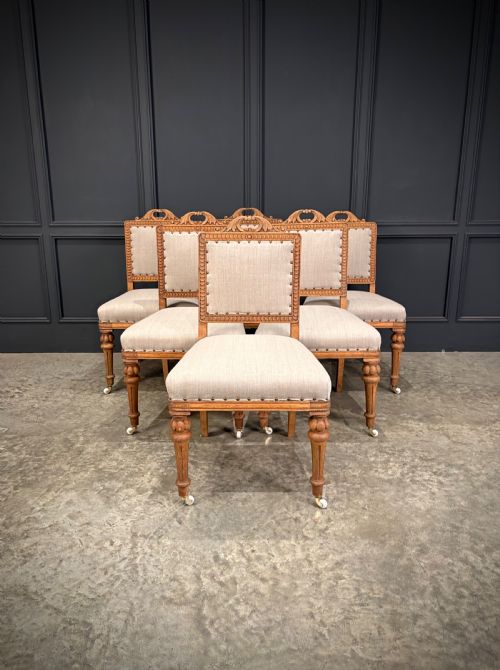


Victorian Side Chair Castors
Victorian side chair castors anchor period seating, offering mobility and period craftsmanship for everyday use in traditional interiors.
Victorian Side Chair Castors
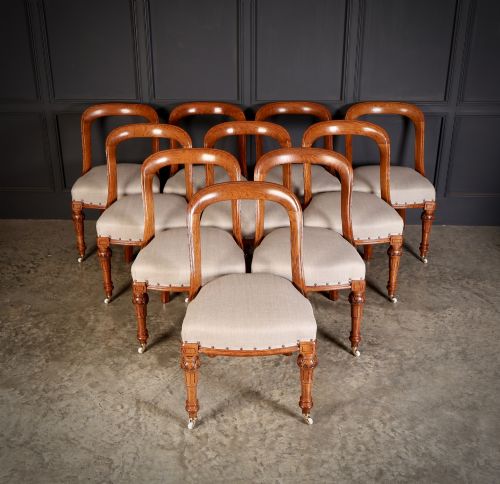
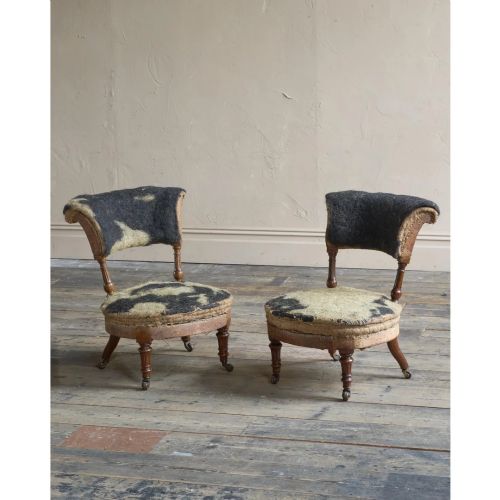
When buyers search for Victorian side chair castors, they encounter functional period seating designed for mobility and ease in nineteenth-century rooms. These pieces include bedroom chairs, nursing chairs, and dining seats elevated on small wheels for repositioning across carpets and heavy floorboards.
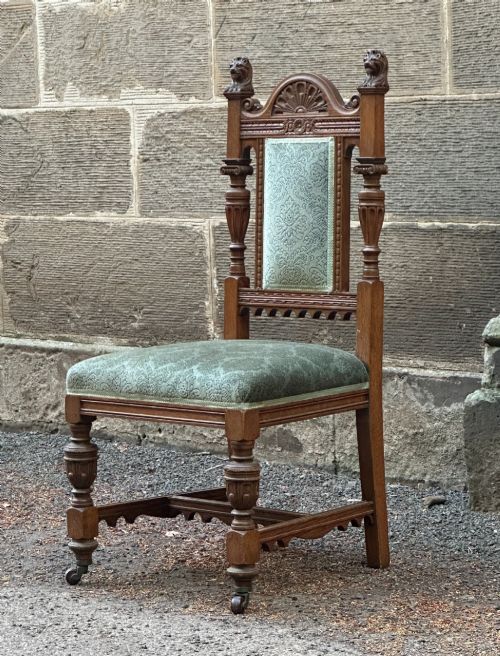
Makers integrated castors primarily beneath front legs on styles ranging from plain Victorian designs to Gothic Revival and Chippendale Revival forms. These fittings allowed homeowners to move heavy upholstered chairs without damaging floor coverings.
Materials and construction
Joiners and cabinet makers constructed these chairs using hardwoods such as oak, mahogany, walnut, and birds eye maple. Frames were frequently carved, turned, or scroll-shaped before being fitted with metal and ceramic castor assemblies.
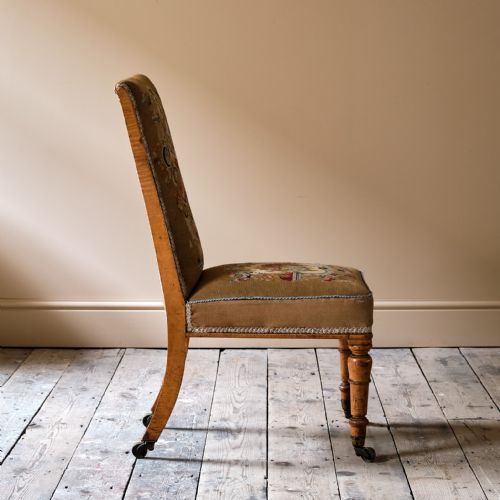
Upholstery techniques involved traditional stuffing finished with fabrics like wool tapestry, patterned velvet, or buttoned leather. Castors were then secured to the base of turned front legs to support the weight of the frame and user.
Listings feature oak, mahogany, walnut, and birds eye maple frames upholstered in velvet, leather, and tapestry across the nineteenth-century periods.
Judging quality and craft
Quality rests in the timber selection and the integrity of the frame construction, where dense oak, walnut, or mahogany displays crisp carving and solid joints. Lesser examples feature softer woods or heavier, less refined turning on the legs.
The integration of the castor mechanism reveals superior manufacturing when the metal or ceramic wheels move smoothly within their original housings. Replacement hardware or compromised timber around the castor mounts differentiates standard workshop production from finer cabinet work.
Bruce Talbert·Gillows
The Victorian Side Chair Castors Glossary
- Castor
- A small wheel fitted to the base of a furniture leg to allow easy movement across floors. These fittings commonly combine brass fixings with ceramic or metal rollers.
- Showwood
- Exposed polished timber on an upholstered chair frame, often seen on Victorian spoon back or scroll designs. This highlights the grain of mahogany or walnut around the padded sections.
- Nursing chair
- A low-seated Victorian chair originally designed for comfort near a nursery hearth or bedroom fireplace. They frequently feature turned front legs set on castors for repositioning.
- Gothic Revival
- A nineteenth-century design style drawing on medieval architectural motifs, appearing on oak dining and hall chairs. Characteristics include pointed arches, heavy linenfold carving, and robust proportions.
- Tapestry
- Woven decorative fabric used for period upholstery, often depicting floral or figurative scenes. It provides a durable, textured surface on nineteenth-century bedroom and side chairs.
Victorian Side Chair Castors: Frequently Asked Questions
What periods do these chairs represent?
The listings span the nineteenth century, encompassing William IV, mid-Victorian, and late Victorian eras between eighteen-fifty and nineteen hundred. Various pieces reflect regional cabinet making and shifting stylistic revivals.
Craftsmen adapted traditional forms across these decades, incorporating stylistic influences from Gothic Revival to Chippendale Revival while maintaining functional castor arrangements.
How were castors used originally?
Victorian households utilised castors to easily reposition heavy upholstered seating across thick carpets and rugs during cleaning or social gatherings. This mobility was particularly valued in bedrooms, drawing rooms, and dining spaces.
Placing wheels on the front legs allowed occupants to tilt and slide chairs with minimal effort while protecting delicate flooring materials.
What woods appear most frequently?
Mahogany, oak, and walnut form the structural basis for the majority of these pieces, alongside occasional examples in birds eye maple. Cabinet makers selected these durable hardwoods for their strength and suitability for turning and carving.
Each timber offered distinct grain patterns that defined the aesthetic of the dining, bedroom, or nursing chairs.
How do I identify a nursing chair?
Nursing chairs are defined by their low seats and supportive, often button-upholstered backs designed for seated comfort near a fireplace. They frequently feature turned front legs fitted with castors for close positioning.
These compact proportions distinguish them from standard dining or hall seating within Victorian interiors.