
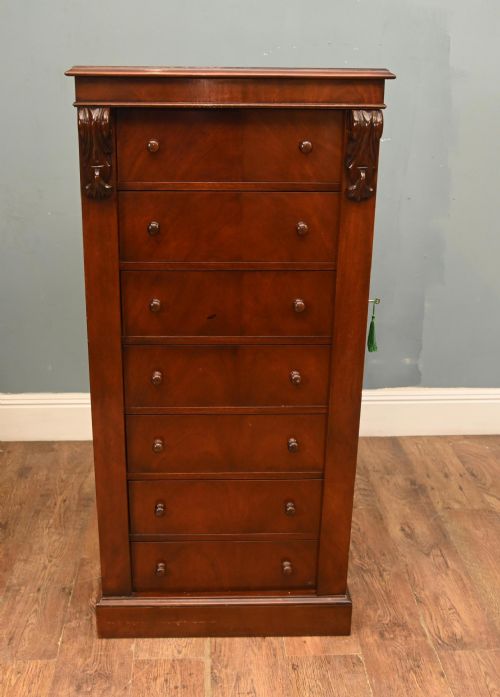


Victorian Seven Drawer Tallboy
A victorian seven drawer tallboy is a slender tall chest built to hold daily linen, meeting the demand for upright storage.
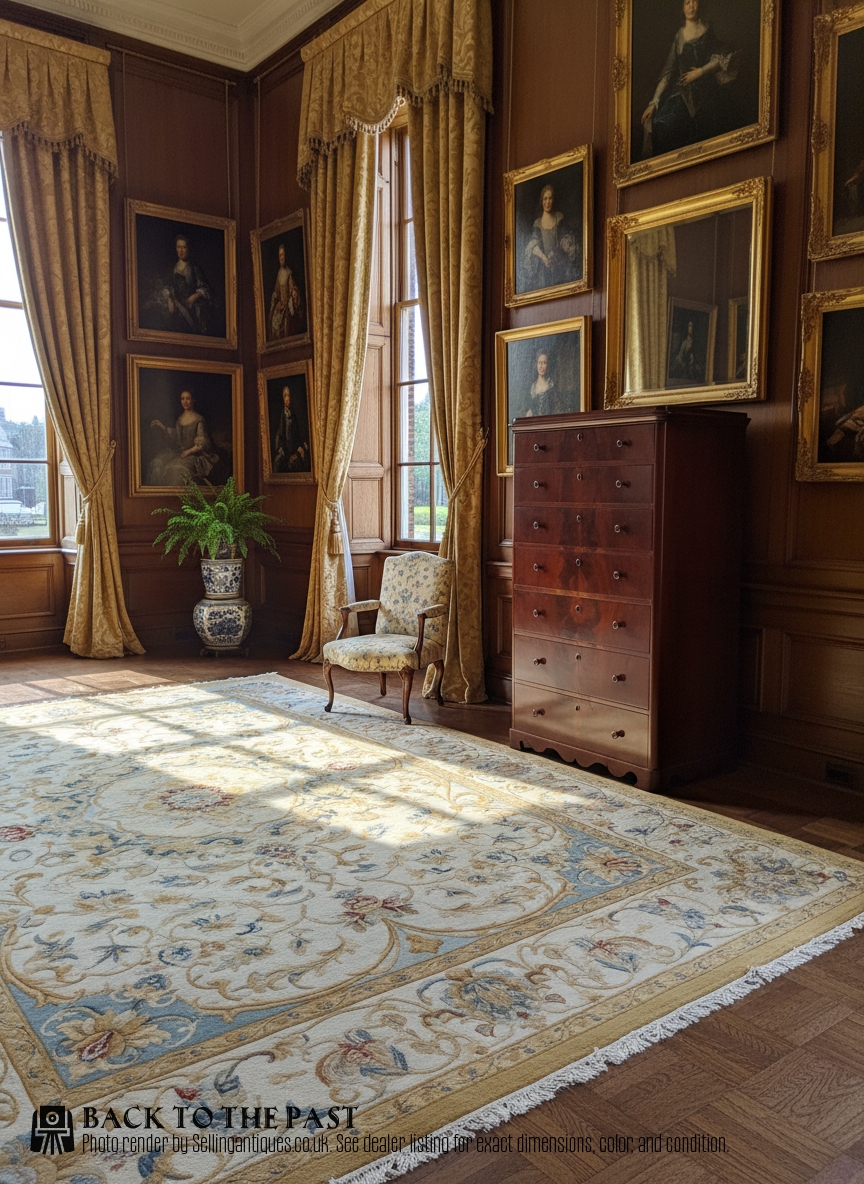
Victorian Seven Drawer Tallboy
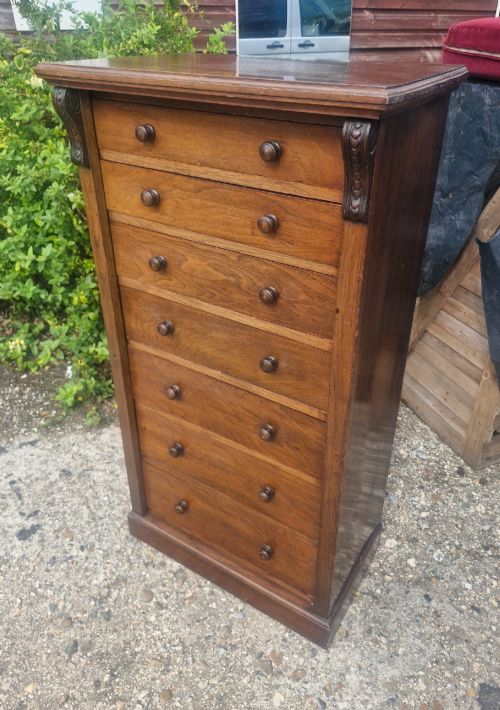
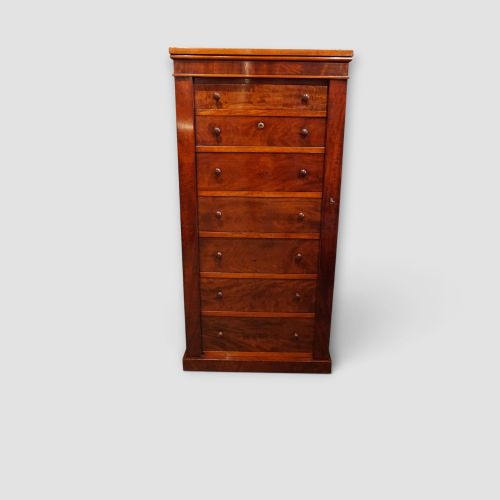
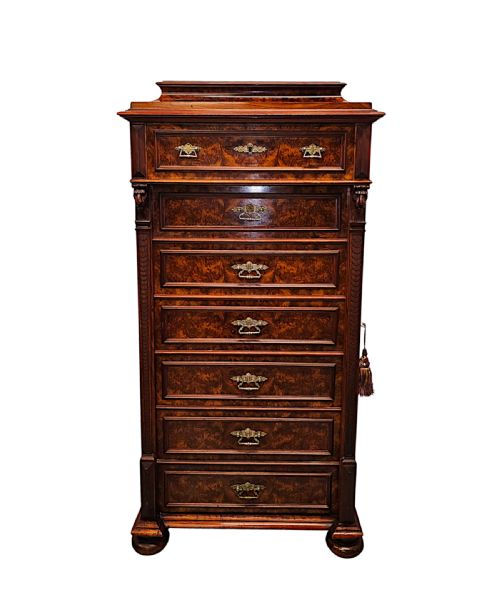
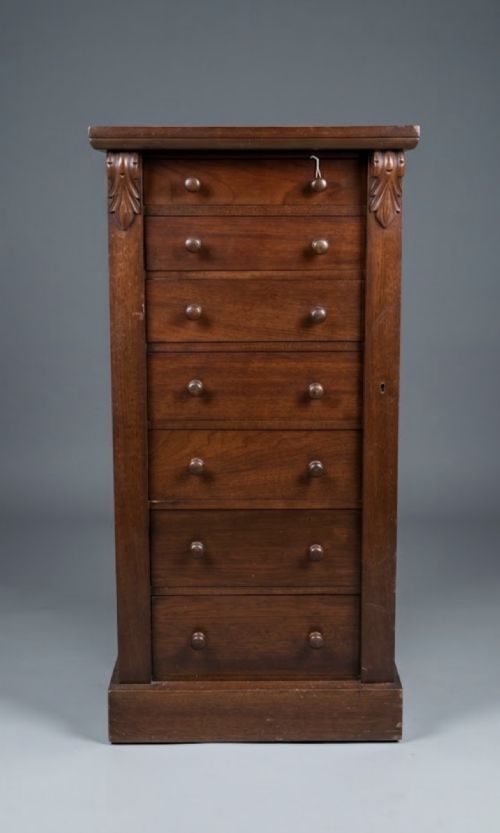
A victorian seven drawer tallboy typically takes the form of a Wellington chest or semainier, designed with a narrow upright body to save floor space. These pieces serve as tall chests of drawers that accommodate considerable storage without occupying a wide footprint in a room.
Mahogany and walnut dominate the selection, often rendered in flame veneers or burr figures that catch the light across the seven graduated tiers. Examples range from compact walnut designs to massive nineteenth-century pieces fitted with secret locking mechanisms.
Materials and Construction
Cabinet makers utilised dense hardwoods such as mahogany, walnut, and oak for the primary structures, applying flame mahogany and burr walnut veneers to the drawer fronts for visual depth. Pine frequently appears as a secondary timber for internal drawer construction.
Many examples incorporate a hinged locking flap or side stile secured by a working key, which fastens all seven drawers simultaneously. Brass pulls and drawer hardware finish the vertical arrangement.
Listings feature periods spanning the nineteenth century, including Victorian, William IV, and Regency eras alongside continental styles.
Quality and Construction
The choice of timber and veneer figures sets pieces apart, with burr walnut and flame mahogany examples displaying superior decorative grain across the facade. Finely figured surfaces require expert timber selection by the cabinet maker.
The integrity of the locking flap mechanism and its key operation distinguishes finer pieces. Solid secondary timbers and precise drawer dovetailing indicate higher workshop standards.
The Victorian Seven Drawer Tallboy Glossary
- Wellington chest
- A tall, narrow chest of drawers secured by a hinged locking stile on one side. This form originates from the nineteenth century.
- Semainier
- A French term for a tall chest traditionally holding seven drawers, one for each day of the week. These pieces match the upright proportions of the Wellington chest.
- Secretaire
- A desk form featuring a fitted drop-front drawer for writing. Some tall chests combine this writing compartment with standard drawer tiers.
- Flame mahogany
- Timber veneer cut to reveal a characteristic flamelike grain pattern. Cabinet makers applied this to prominent surfaces for visual impact.
- Burr walnut
- Wood taken from the warted growths of a walnut tree, yielding a highly swirled grain. It marks the more decorative nineteenth-century pieces.
Victorian Seven Drawer Tallboy: Frequently Asked Questions
What is a seven drawer tallboy?
A seven drawer tallboy is a slender upright chest designed to maximise storage in a compact footprint. These pieces provide seven tiers of drawers within a narrow frame.
They frequently employ a side locking bar to secure the entire stack with a single key.
How do I use a tallboy in a room?
These tall chests fit into narrow wall spaces where standard wide chests cannot go. They suit bedrooms and dressing rooms for storing folded garments and linens.
The vertical design offers substantial capacity while taking up minimal floor area.
How do I date these chests?
Dating relies on timber selection, structural styles, and recorded periods. Nineteenth-century examples often display mahogany or walnut construction.
Specific details like William IV styling or later Victorian inlaid decoration help narrow the decade of production.
Why do some chests have locking flaps?
The hinged locking flap acts as a security bar that covers the drawer edges. Turning the key locks the entire column of drawers simultaneously.
This mechanism guarded private papers and valuables in nineteenth-century households.