

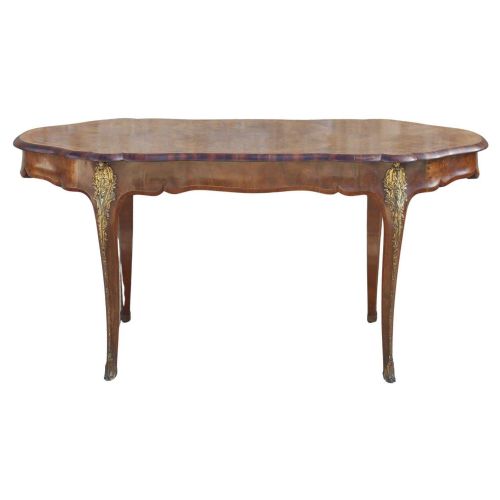


Victorian Serpentine Writing Table
A victorian serpentine writing table brings fluid curves and rich timbers to a study, offering a graceful surface for correspondence.
Victorian Serpentine Writing Table
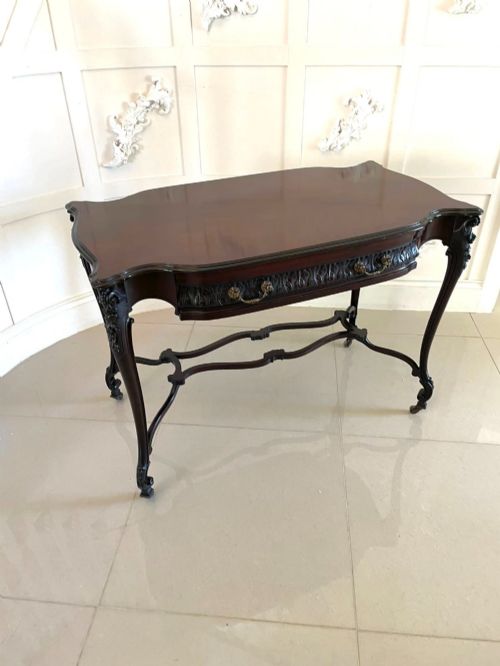
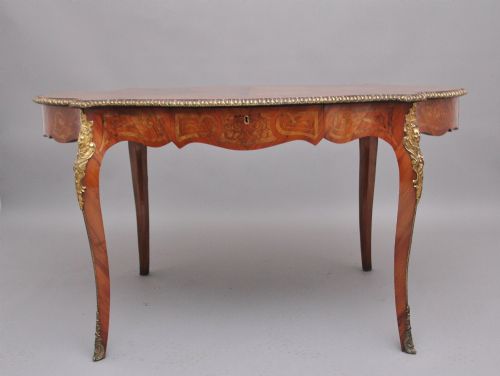
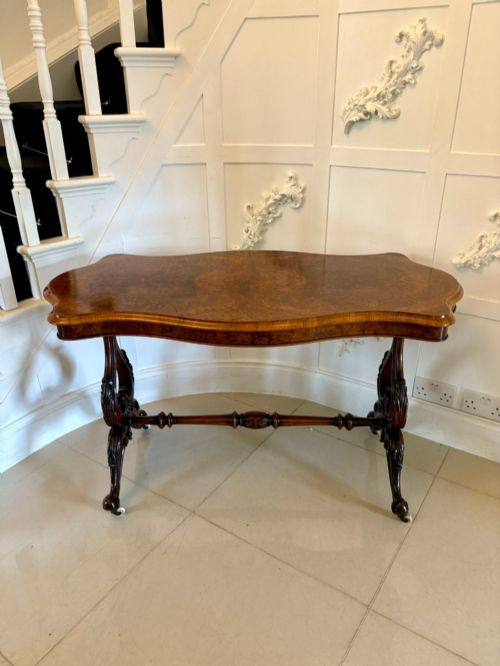
A victorian serpentine writing table combines a distinctive undulating frontal outline with a dedicated writing surface, often designed to stand free in the room. These pieces emerge primarily from the nineteenth century, spanning decades from eighteen-fifty to nineteen-hundred, and occasionally stretch into the Edwardian era.
The forms on this page range from compact kneehole desks and partners pedestals to freestanding centre tables and side tables. Walnut, burr walnut, mahogany, rosewood, and satinwood form the predominant carcasses, reflecting the varied tastes of Victorian cabinet makers.
How they were made
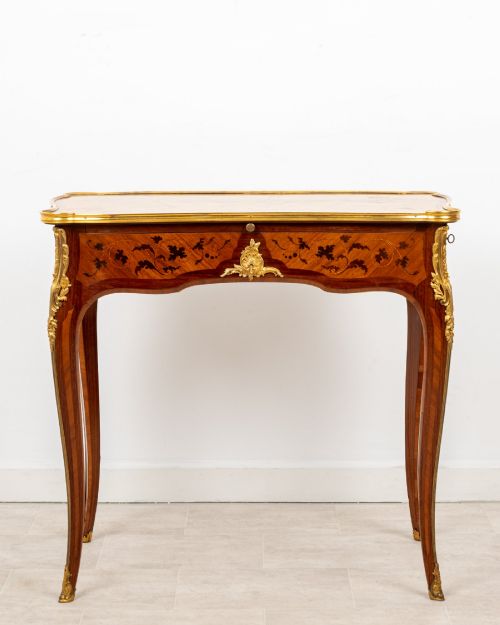
Craftsmen shaped dense hardwoods like mahogany and walnut to form the undulating serpentine curves characteristic of these desks. Marquetry, parquetry, and delicate inlay work in satinwood adorn many surfaces, alongside brass and ormolu mounts.
Leather inserts frequently define the writing areas of these tables, whilst cabriole legs or stretcher supports provide structural foundation. Hand-decoration and carved details complete the construction of finer examples.
Listings feature pieces spanning the nineteenth century, utilising walnut, mahogany, rosewood, satinwood, and ormolu.
What varies in quality
The sophistication of the timber figure largely dictates the distinction between standard and superior pieces, with burr walnut and figured mahogany commanding particular attention. The intricacy of marquetry inlay and the crispness of carved wooden or cast ormolu details also elevate the work.
Construction methods and the degree of hand-finishing separate everyday items from exceptional examples. Tables finished on all sides for freestanding placement demonstrate a higher ambition in design.
Durand·Druce and Co London
The Victorian Serpentine Writing Table Glossary
- Serpentine
- A front edge or outline curved in a wave shape, concave in the centre and convex at the ends. This contour requires precise woodworking skill to execute properly.
- Marquetry
- Decorative veneer applied to furniture in patterns using different woods, metals, or shells. It creates pictorial or geometric designs across the top surface.
- Ormolu
- Gilt bronze mounted onto furniture for decorative effect. It adds bright metallic contrast against dark woods like walnut and mahogany.
- Partners desk
- A large double-sided desk designed for two people to work opposite one another. These often feature drawers and cupboards on both sides.
- Kneehole desk
- A desk with a recessed central space for the legs beneath a set of drawers. They offer practical storage whilst maintaining a compact footprint.
Victorian Serpentine Writing Table: Frequently Asked Questions
What is a serpentine writing table?
A serpentine writing table is a nineteenth-century desk featuring an undulating front edge and a dedicated writing surface. These pieces combine practical workspace with decorative cabinet making.
They appear in various timbers including walnut, mahogany, and satinwood, often adorned with marquetry inlay or ormolu mounts.
Where should I place a centre table?
Freestanding centre tables are finished on all sides, making them suitable for positioning in the middle of a room rather than against a wall. They function well in studies, libraries, and large hallways.
Ensure there is adequate clearance around the piece to appreciate the curved serpentine outline from multiple angles.
How do I identify a Victorian desk?
Victorian desks are identified by their nineteenth-century manufacturing techniques, period timber selections, and characteristic revival styles such as Louis XV or Rococo. Examining the secondary woods inside drawers helps confirm the era.
The presence of hand-cut dovetails and traditional polishes further distinguishes genuine nineteenth-century examples from later reproductions.
What is the difference between a partners desk and a kneehole desk?
A partners desk provides workspace and storage drawers on both sides so two people can sit face-to-face. A kneehole desk is smaller, designed for a single user facing a wall or window.
Both forms frequently incorporate serpentine fronts and fine veneer work across the listed inventory.